

New Delhi. The central government has claimed a major success under Operation Trishul being run against fugitive criminals. According to the government, a total of 274 wanted criminals have been brought back to India from 36 countries in the last seven years. These criminals include accused wanted in serious cases like terrorism, organised crime, economic crime, drug trafficking, murder, rape and POCSO. The government says that due to modern technology, international cooperation and strong legal system, the extradition process has become more effective than before.
According to the Home Ministry, technologies such as satellite inputs, digital footprints, profile tracking, and geo-location were extensively used to trace criminals hiding abroad under different identities. These efforts resulted in the extradition of several major criminals to India through coordination with agencies from various countries. The government reported that the highest number of fugitives, 70, were extradited in 2025, while 45 criminals had been brought back to India till July 2026.
The government also reported that assets worth ₹17,874 crore belonging to fugitive criminals have been seized under the Prevention of Money Laundering Act. An additional ₹18,762 crore has been repatriated. According to officials, crackdown on illegal assets acquired through economic crimes has been made a key part of this campaign to eliminate criminal proceeds and ensure effective enforcement of the law.
The process of issuing Red Corner Notices has also accelerated significantly with the cooperation of Interpol. According to available data, 182 Red Corner Notices have been issued so far in 2026. A total of 401 notices have been issued in the last three years, covering matters such as financial crimes, terrorism, organized crime, murder, drug trafficking, sexual offenses, and cybercrime. The government believes that increased international cooperation has significantly facilitated the search and arrest of fugitives.
In January 2026, a special group was formed to further strengthen intelligence coordination. It is working to coordinate between various agencies and expedite action on priority cases. According to the government, the combination of technical surveillance and diplomatic efforts in complex cases has accelerated the extradition process. Consequently, significant progress has been made in several high-profile cases.
The government states that new criminal laws and amended legal provisions implemented in recent years have made action against fugitive criminals more effective. In some cases, prosecutions are now available even in the absence of the accused, ensuring the judicial process is not disrupted. The Center claims that modern technology, global cooperation, intelligence coordination, and a robust legal framework have strengthened action against criminals and that such operations will continue to be prioritized in the future.
-
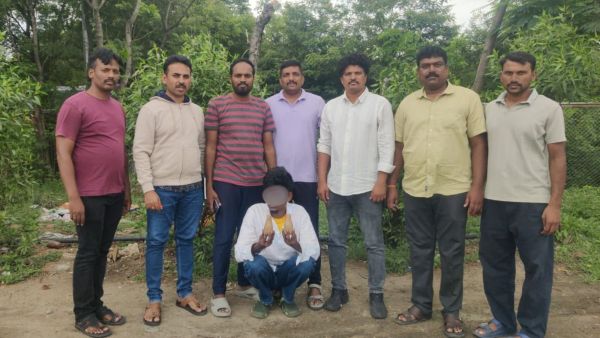
EAGLE nabs peddler in Hyderabad, seizes hash oil worth Rs 2.5L
-
Jharkhand CM vows justice, flags bid to disrupt democracy

-
Want white skin like Japanese women? Then prepare Japanese Night Cream at home, your skin will glow.

-
Want white skin like Japanese women? Then prepare Japanese Night Cream at home, your skin will glow.

-
Multiple Partners: What effects does having more than one partner have on the body and mind? Learn from Sadhguru.