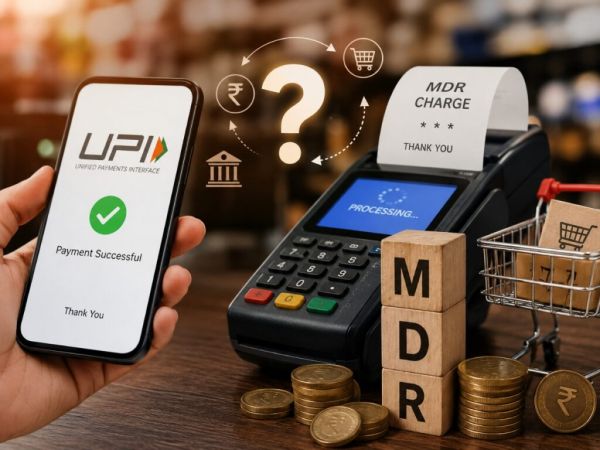
Millions of Indians use UPI to pay for everything from groceries to electricity Bills by default. It’s fast, smooth and, best of all, free. But a new amendment proposed by the centre has raised concerns that this could change soon.
The short answer is no—not yet.
Finance Minister Nirmala Sitharaman tabled the Taxation and Other Laws (Amendment) Bill, 2026, in Parliament, which does not levy any tax on UPI transactions. It does not do that. What it does is change the legal framework in such a way that could allow the government to impose a Merchant Discount Rate (MDR) on certain digital payments in the future if it desires to.
So, What Exactly Is Changing?
Banks and payment solution providers cannot levy charges or impose fees on such modes of electronic payments as defined under section 269SU of the Income Tax Act, 2007, read with section 10A of the Payment and Settlement Systems Act, 2007. This includes BHIM-UPI, UPI QR code payments, and RuPay Debit Cards.
The proposed amendment removes this fixed reference and instead allows the Centre to notify, from time to time, the modes of payment that would continue to be protected from such charges.
In simple words, UPI is not becoming payable as of today. The Bill only provides discretion to the government to decide later through separate notifications whether any mode of payment should be kept outside the purview of MDR.
Will UPI Users Have To Pay?
The answer is, for now, no.
Even if the Bill is passed by Parliament no fee can be introduced automatically The government would have to issue a separate notification specifying whether, when and on which transactions MDR may be applicable.
This means reports claiming that UPI has already become chargeable are misleading.
Why MDR Is In Focus Again?
The debate is back because India’s digital payments ecosystem has grown at an extraordinary speed.
To promote digital payments, the government banned MDR on UPI and RuPay debit card transactions since January 2020. A compensation scheme was offered to banks and payment companies but it was mostly focused on low-value merchant transactions of up to Rs 2,000 and smaller businesses.
But the payments industry says operating UPI is far from free. Banks and payment service providers have to pay for transaction processing, fraud detection, cybersecurity, cloud infrastructure, customer support, settlement systems and regulatory compliance.
Industry estimates peg the cost of maintaining the UPI ecosystem at Rs 10,000 crore to Rs 20,000 crore every year and the government incentives have covered a small part of the cost.
Even the Parliamentary Standing Committee on Finance had earlier this year noted that the present model is financially unsustainable in the long run.
Could Big Retailers Be The First To Be Hit?
When it comes, experts say the introduction of MDR is more likely to initially involve big merchants rather than the average user or the corner shop.
Industry estimates are that any future MDR is likely to be applicable mostly to organised retailers and e-commerce platforms; talks focused on businesses with annual turnover above Rs 50 crore. Some have suggested lower thresholds for turnover, but the Bill itself makes no reference to merchant size or MDR rates.
The government will announce any such details separately.
Will Customers End Up Paying?
The traditional model is that banks charge merchants for processing digital payments, known as the “merchant discount rate” or MDR, rather than consumers.
But merchants can pay the cost or pass it on in their product prices, depending on their business strategy and regulatory environment.
For consumers, there is no immediate change. No transaction fee was announced; UPI transactions continue as normal.
The amendment is simply a legal vehicle for future policy decisions. So, Indians can continue to use UPI without any extra charge until a separate notification is issued by the government.
Priyanka Roshan
Priyanka Roshan is a business writer and assistant editor at the NewsX website who tracks everything from stock market swings and corporate earnings to personal finance trends and policy shifts. Known for turning fast-moving business developments into sharp, reader-friendly stories, she combines speed, accuracy, and a data-driven approach to break down complex financial news for everyday audiences.
With over 9.5 years of newsroom experience, Priyanka has worked with leading media organisations, including Bussiness, Times Now, and Ping Digital, covering diverse beats such as business, politics, technology, auto, travel, sports, and the world. From live breaking news desks to SEO-led digital storytelling, she specialises in creating engaging content that keeps readers informed without overwhelming them.
The post Will UPI Payments Become Chargeable? Who Will Pay As Per New bill And What Users Need To Know appeared first on NewsX.