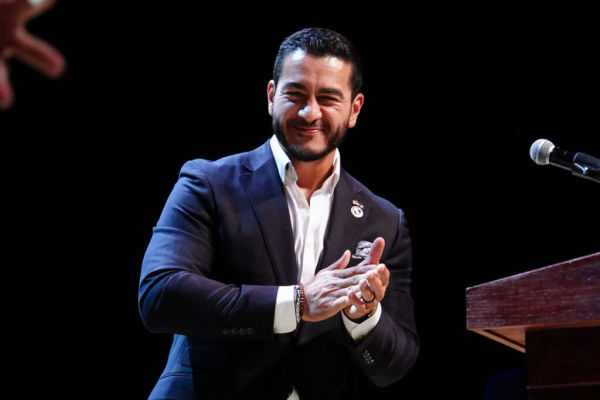
Abdul El-Sayed Wins Michigan Senate Primary in Major Progressive Breakthrough/ TezzBuzz/ WASHINGTON/ J. Mansour/ Abdul El-Sayed narrowly defeated Rep. Haley Stevens in Michigan’s Democratic Senate primary, completing a remarkable political comeback and delivering progressives a major victory. The former public health official prevailed by fewer than 15,000 votes despite more than $60 million in outside spending supporting Stevens and opposition from Democratic leaders. El-Sayed now faces Republican Mike Rogers in a battleground-state race that could determine control of the Senate and test whether progressive politics can prevail statewide.
Quick Look
- Abdul El-Sayed defeated Haley Stevens by less than 1 percentage point.
- His lead was 14,893 votes when the AP called the race.
- More than 1.5 million primary ballots were counted.
- El-Sayed will face Republican Mike Rogers in November.
- The race could help determine control of the U.S. Senate.
- El-Sayed had never previously held elected office.
- He lost Michigan’s 2018 gubernatorial primary by more than 20 points.
- His 2025 Senate campaign began with four staff members.
- The campaign says El-Sayed held more than 500 events in 110 cities.
- His volunteer organization grew to approximately 12,000 people.
- Outside groups supporting Stevens spent more than $60 million.
- AIPAC and its affiliates accounted for more than $30 million.
- Bernie Sanders and Alexandria Ocasio-Cortez supported El-Sayed.
- El-Sayed campaigned on Medicare for All and ending military aid to Israel.
- Republicans have reserved $45 million in Michigan advertising.
- Stevens conceded and pledged to support El-Sayed in November.
Deep Look
El-Sayed Scores Narrow Michigan Victory
DETROIT — Abdul El-Sayed narrowly defeated U.S. Rep. Haley Stevens in Michigan’s Democratic Senate primary, delivering a major victory for the party’s progressive movement.
The former public health official will face Republican Mike Rogers, a former congressman, in November.
The battleground-state contest could play a central role in determining which party controls the Senate.
El-Sayed Faces Immediate Unity Challenge
El-Sayed’s first task will be bringing together Michigan Democrats after a bitter primary campaign that exposed competing visions for the party.
El-Sayed presented himself as a progressive outsider willing to challenge the Democratic establishment.
Stevens emphasized her congressional experience, moderate record and previous success in competitive elections.
Nearly half of Democratic primary voters backed Stevens, underscoring the divisions El-Sayed must overcome before November.
Race Decided by Fewer Than 15,000 Votes
The contest remained too close to call throughout election night.
El-Sayed left the stage at his Tuesday night campaign event without declaring victory.
The AP called the race early Wednesday after election officials had counted nearly all ballots statewide.
At that point, El-Sayed led Stevens by 14,893 votes, a margin of just under 1 percentage point.
More than 1.5 million votes were cast, the largest recent primary turnout in Michigan.
Sanders Calls Win Extraordinary
The political significance of El-Sayed’s victory extended beyond its narrow margin.
Sanders had endorsed El-Sayed early and campaigned for him as the race attracted national attention.
El-Sayed Overcomes Establishment Support for Stevens
El-Sayed, 41, has never held elected office.
He entered the Senate race seven years after losing Michigan’s Democratic primary for governor by more than 20 percentage points.
This time, he ran on an explicitly progressive platform and overcame more than $60 million in outside spending.
Stevens had the support of many prominent Michigan Democrats, outgoing Sen. Gary Peters and Senate Democratic Leader Chuck Schumer.
Former Rivals Join El-Sayed After Victory
State Sen. Mallory McMorrow, who previously competed in the Senate primary, joined El-Sayed at his Wednesday appearance.
Michigan Democratic Party Chair Curtis Hertel also stood with him.
Their appearance represented an initial attempt to project unity following the increasingly contentious primary.
It also highlighted El-Sayed’s rapid transformation from a politician largely outside the Democratic power structure into the party’s Senate nominee.
2018 Defeat Sent El-Sayed Into Political Wilderness
El-Sayed lost the 2018 Democratic gubernatorial primary to Gretchen Whitmer.
After the defeat, he stepped away from electoral politics and built a public profile through other platforms.
He launched a podcast, wrote a book and became a regular guest on television and YouTube.
Over several years, El-Sayed gradually developed a following while waiting for a political opportunity that he did not know would arrive.
Peters’ Retirement Creates Opening
That opportunity emerged when Peters unexpectedly announced that he would not seek reelection.
The decision created an open Senate seat in one of the country’s most competitive political states.
El-Sayed launched his campaign in April 2025 with a staff of only four people.
His early events often attracted small audiences.
Campaign Grows From Five-Person Rooms
During his victory speech Wednesday, El-Sayed recalled the campaign’s modest beginning.
El-Sayed said he traveled to 110 Michigan cities and organized more than 500 events.
According to his campaign, the volunteer network eventually grew to 12,000 people statewide.
Volunteers Saw Campaign Gain Momentum
Julie Brink, a 29-year-old volunteer from the Detroit area, joined the campaign in February.
She said the organization still felt like an “underdog” at that point but began “gaining momentum really consistently.”
Campaign Uses Traditional and Online Media
El-Sayed pursued a media strategy shaped by the years he spent outside elected office.
His campaign sought coverage from traditional news organizations while also emphasizing podcasts, YouTube programs and other online platforms.
The approach helped El-Sayed reach younger voters and audiences that might not follow conventional political reporting.
Some appearances generated criticism, including multiple interviews with controversial online streamer Hasan Piker.
McMorrow’s Exit Becomes Turning Point
McMorrow ended her campaign on July 5, reducing the primary to a two-candidate contest between El-Sayed and Stevens.
Shortly afterward, El-Sayed addressed canvassing volunteers at a park in Grand Rapids.
He declared that “we have a chance of winning this election.”
El-Sayed Leans Into Influencer Strategy
El-Sayed intensified his unconventional campaign strategy during the final days.
He marched through downtown Detroit with social media influencers and later attended a private pool party with content creators, including Piker.
On Election Day, he completed three interviews with online creators at Detroit’s Eastern Market.
He then participated in three more interviews with traditional news organizations, including The Associated Press and MS NOW.
Hours later, a campaign that once struggled to fill small meeting rooms packed Detroit’s Majestic Theatre for its election night gathering.
Progressives See Swing-State Breakthrough
El-Sayed’s victory gave progressive Democrats evidence that their candidates could succeed outside reliably liberal cities and congressional districts.
The win came in the Democratic primary of Michigan, one of the country’s most important presidential and congressional battlegrounds.
Progressive leaders view the result as an opportunity to test their political strategy in a difficult statewide general election.
November Becomes Test for Progressive Movement
Green described the November contest against Rogers as “put up or shut up time” for the movement.
A victory could strengthen the progressive argument that populist economic policies can attract swing-state voters.
A defeat could undermine that claim and give moderate Democrats new ammunition in the party’s ideological debate.
El-Sayed Runs on Progressive Platform
El-Sayed campaigned on “Medicare for All,” campaign finance reform and ending U.S. military aid to Israel.
He received support from national progressive leaders, including Sanders and Rep. Alexandria Ocasio-Cortez.
They framed the primary as both a grassroots organizing campaign and a broader confrontation with the Democratic establishment and large political donors.
Outside Groups Spend More Than $60M
Organizations supporting Stevens spent more than $60 million during the primary.
The American Israel Public Affairs Committee and its affiliates contributed more than $30 million of that spending.
The financial advantage made El-Sayed’s narrow victory especially significant to progressive activists who have criticized the influence of outside money in Democratic primaries.
Van Hollen Calls Win Wake-Up Call
Progressives argue that the outcome demonstrates the strength of volunteer organizing and small-donor politics against well-funded outside groups.
However, the narrow margin makes it difficult to reach sweeping conclusions about the direction of the Democratic Party.
Republicans Reserve $45M for Michigan
El-Sayed has approximately three months to transform his primary coalition into a general election campaign capable of defeating Rogers.
The Senate Republicans’ campaign organization has already reserved $45 million in Michigan advertising.
That figure could increase as Republican groups invest in a race critical to control of the chamber.
Republicans have indicated that they prefer facing El-Sayed rather than Stevens.
AIPAC Plans to Oppose El-Sayed
AIPAC spent more on Michigan’s Democratic primary than on any other race.
The organization signaled Wednesday that it would remain involved in the general election.
It said it would oppose El-Sayed and “his radical anti-Israel agenda” in November.
The group’s participation ensures that U.S. policy toward Israel will remain a major issue in the campaign against Rogers.
Stevens Concedes and Pledges Support
Stevens called El-Sayed early Wednesday to concede.
El-Sayed characterized the call as a “great conversation.”
Stevens pledged to support the Democratic nominee in the general election despite their bitter primary contest.
Michigan Democrats planned a unity breakfast Thursday and a public rally Friday.
Michigan Democrats Promise to Unite
Hertel said an ideological debate within the Democratic Party was not inherently damaging.
He argued that voters, rather than party leaders, should decide the party’s direction.
More on US News
-
Man booked for stalking flight attendant at Hyderabad Airport

-
Man caught with 4.2 kg ganja chocolates in Rangareddy district
-
Mamata attacked during visit to deceased TMC worker’s house
-
'I Know How To Stand My Ground': Netanyahu Rejects 'Great Friend' Trump’s Gaza Plan

-
Apple iPhone 18 Pro Max: Apple iPhone 18 Pro Max will get the biggest battery ever, learn about camera and connectivity