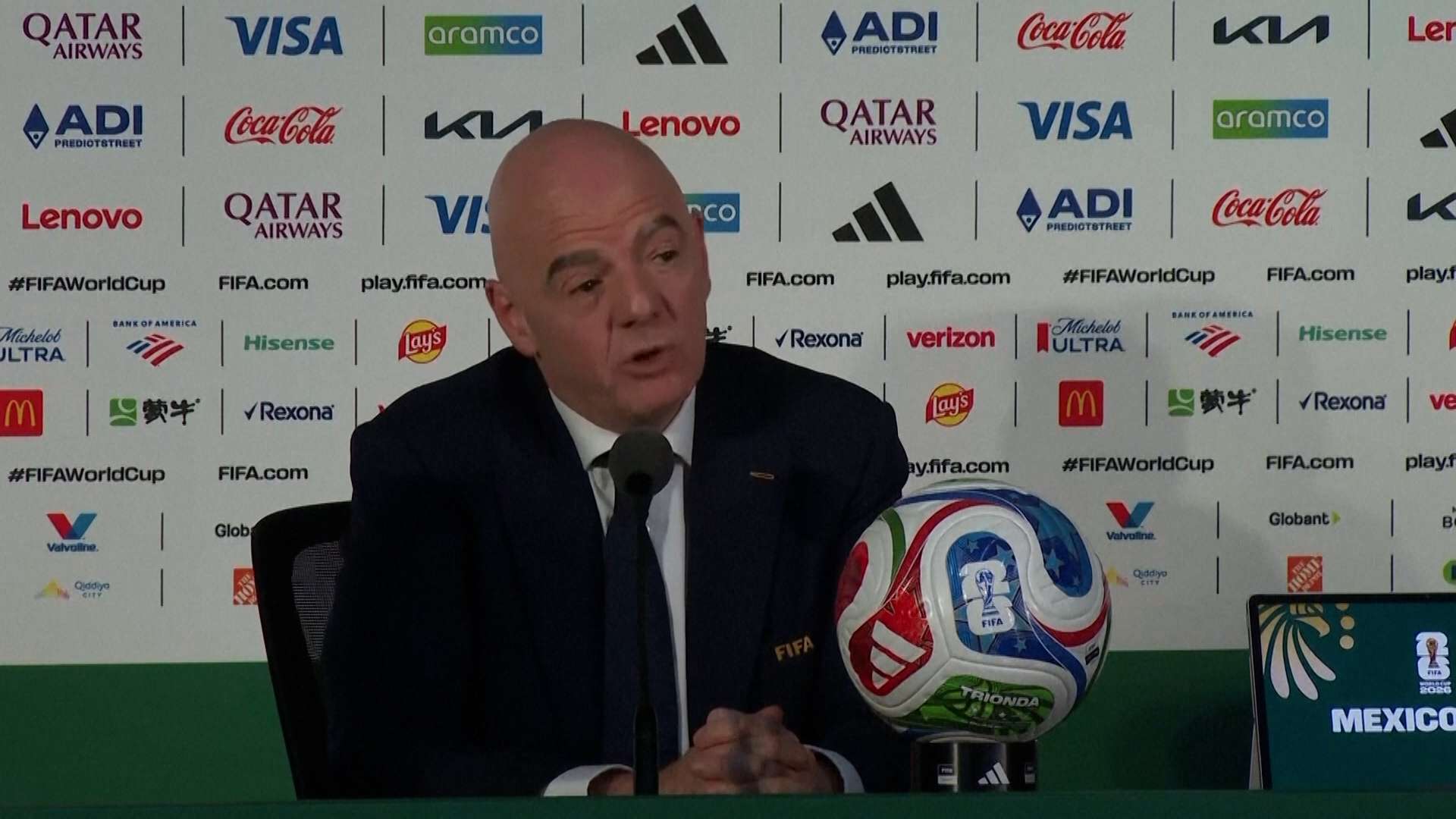
‘FIFA Gate’ shadow returns: battle over digital records could open the door to Infantino’s removal
UEFA has effectively opened a fresh front against the FIFA president.
Gianni Infantino is in an increasingly difficult position. The FIFA president is facing pressure from UEFA and several national federations, all intent on stopping his plan to sell off a portion of the World Cup tournament.
A detailed report published by Foot Mercato has examined Infantino’s current standing and the possibility that he could leave in the coming months because of the scandal surrounding the “FIFA Forward project”.
UEFA had already compelled Infantino to back away from his proposal to create a commercial structure that would bring private-sector investors into future FIFA competitions. It has now escalated matters by demanding the immediate preservation of every document connected to the affair.
This is a serious threat. Europe’s governing body is no longer speaking only in terms of strategic disputes or differences in governance. It is now pointing towards legal action, arbitration and regulatory complaints.
In its formal notice to FIFA, UEFA calls for the preservation of emails, electronic records, internal communications, financial offers, documents linked to investors, and all digitally stored material that could clarify how the “FIFA Forward” project originated and how it was assembled.
The resemblance to the “FIFA Gate” scandal
At the heart of this request is a decisive question that could bring Infantino’s presidency to an end: who actually knew what, at what time, and how deeply were they involved? The central issue is no longer only why FIFA wants to open part of its commercial assets to private capital. It is also about how that idea was developed, approved and presented to the 211 member associations.
The issue is now beginning to resemble an institutional investigation, in which every digital file could become evidence. Comparisons with the “FIFA Gate” scandal of 2015 are difficult to avoid, even though the two crises were driven by different processes. At that time, American investigations into corruption networks and concealed payments brought down Sepp Blatter and caused major damage to FIFA’s reputation.
This time, the risk lies elsewhere: in governance, in the concentration of power, and in the way reforms worth billions were allegedly prepared. Infantino’s critics are asking a straightforward question: did FIFA’s administrative bodies fully participate in the process, or were some discussions conducted behind closed doors?
If legal proceedings are launched, several elements could become crucial: the possible arrival of private-sector investors, the talks held with financial actors, and the economic projections surrounding the International Federation of Association Football.
In a dispute of this nature, the fight is not limited to courtrooms or boardrooms. It is also fought through servers, email archives, metadata and internal files that make it possible to reconstruct a precise timeline of decision-making.
Cyberattacks: FIFA’s nightmare
This focus on digital evidence comes at a time when sport has become a major target for cyberattacks and influence operations. Modern football now revolves around commercial, financial, personal and political data. That makes it attractive to cybercriminals and to anyone seeking to destabilise institutions.
The greatest risks surround major international tournaments, because of the money, worldwide visibility and diplomatic importance they bring together. In the build-up to the 2026 World Cup, several cybersecurity authorities warned about fake FIFA websites, phishing campaigns, data theft and manipulation operations connected to the event.
Football has not been spared. In 2025, a cyberattack struck the French Football Federation and exposed data belonging to its members. Recent studies indicate that most sports organisations have been targeted at some point.
At this stage, there is no proof of a hack or a large-scale leak in the Infantino matter. But even the possibility that internal documents might emerge could completely alter the balance of power. Leaked private correspondence, financial forecasts or exchanges with partners could transform a political crisis into a major institutional crisis.
More than anything else, FIFA fears a “data scandal”. Not a crisis triggered by a conventional legal case, but one driven by the slow release of internal documents that could reveal the inner workings of its disputed project.
A look at the biggest cases of recent years shows that the most sensitive information often comes from traces left within digital systems. Draft contracts, correspondence with banks, strategic memos, revenue simulations, presentations for investors and internal discussions could all provide answers to UEFA’s questions.
In that context, the official notice sent to Infantino carries particular symbolic significance. UEFA explicitly warns that any destruction, deletion, modification or disappearance of relevant documents could be treated as theft of evidence.
And where does the law stand in all this?
At an organisation as powerful as FIFA, internal statements can sometimes serve as the final restraint on decisions made at the highest level. This battle over evidence goes beyond the “FIFA Forward Enterprise” programme. It reaches the heart of how world football is governed, and how a private body with global economic influence can be held accountable.
If the European football body or other parties choose to move forward, they could rely on several European legal frameworks.
Articles 101 and 102 of the Treaty on the Functioning of the European Union offer two possible legal tools.
The first bans agreements and practices that are likely to distort competition. The second punishes abuse of a dominant position. FIFA holds a unique place, combining the role of organiser of international competitions, regulator of world football, and controller of commercial assets worth billions of euros.
European law is now in a position to scrutinise this concentration of power, especially after the landmark ruling by the Court of Justice of the European Union in the Super League case in December 2023.
That court had previously underlined the need for sports bodies engaged in economic activity to follow rules of transparency, objective criteria and oversight mechanisms when making decisions that affect the market.
Article 165 of the Treaty on the Functioning of the European Union could become a central argument for those opposing FIFA’s project. It recognises the special status of sport within the European Union and supports a model built around its social, educational and cultural functions.
Behind this confrontation is a clash between two different visions of football. FIFA’s opponents can draw on the principles of good governance established by the Council of Europe through the 2014 Macolin Convention on the integrity of sport, which emphasises the need for transparent mechanisms to protect competitions.
There is also the European regulation on foreign subsidies, adopted in 2023, which could come under examination if investors benefiting from state support buy stakes in commercial structures linked to world football. In 2015, investigators were looking for money. In 2026, opponents are looking for digital traces.
-
Glowing Skin Tips: Skip the expensive scrubs, use these 5 kitchen ingredients to scrub your face clean, soft, and glowing.

-
7 August Horoscope: Who will be troubled, Cancer zodiac sign will benefit, people of this zodiac sign will get good news from their in-laws.

-
Raksha Bandhan 2026 Gift Ideas: What to gift on Raksha Bandhan? These 7 great ideas will make the day even more special.

-
Hair Fall: Does a lack of protein in the body cause rapid hair loss? Learn the connection.

-
Horoscope: What changes will the influence of Saturn and Mars bring to your life?