By Obnews Editorial Staff
India successfully test fired its nuclear capable Agni 4 ballistic missile from the Integrated Test Range at Chandipur in Odisha on August 6, marking another operational validation of the country’s strategic missile forces.
The Indian Ministry of Defence confirmed that the launch validated all operational and technical parameters. The test was conducted under the authority of the Strategic Forces Command, which manages India’s strategic missile systems and nuclear deterrent.

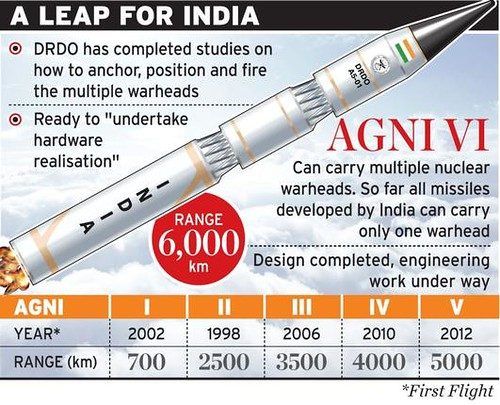
The government officially describes Agni 4 as a Medium Range Ballistic Missile. With a reported maximum range of approximately 4,000 kilometres, however, it is also commonly classified internationally as an Intermediate Range Ballistic Missile.
The involvement of the Strategic Forces Command and the emphasis on operational parameters indicate that the August 6 firing was a readiness and reliability trial of an existing weapon system rather than an early developmental test. Such launches allow military personnel to confirm the performance of missiles already forming part of India’s strategic capabilities.
Developed by the Defence Research and Development Organisation, Agni 4 is a two stage, surface to surface missile powered by solid propellant. It is approximately 20 metres long, weighs about 17 tonnes and is designed to carry a strategic payload of up to one tonne.
The missile incorporates composite rocket motors, a re entry heat shield and a road mobile launching system. Its mobility allows the system to be relocated and deployed from different positions, improving its survivability and making it more difficult for an adversary to track.
Agni 4 also uses an indigenous Ring Laser Gyro based Inertial Navigation System supported by a Micro Navigation System. According to earlier Ministry of Defence information, these systems work together to guide the missile and correct for disturbances during flight while maintaining a high level of accuracy.
During re entry into the atmosphere, the missile’s heat shield is designed to withstand temperatures of approximately 4,000 degrees Celsius while protecting its internal electronics. Previous tests have also used coastal radar stations, optical tracking systems and naval vessels to monitor the missile throughout its flight.
Agni 4 was first successfully launched under its current designation in November 2011. A 2014 test completed its principal development phase and cleared the system for induction and serial production. The Strategic Forces Command has conducted several subsequent launches to validate reliability and maintain operational preparedness.
The missile extends India’s strategic reach beyond the shorter range Agni 1, Agni 2 and Agni 3 systems while remaining below the longer range Agni 5. Together, the different versions provide India with multiple levels of strategic coverage and response capability.
India maintains that its nuclear forces are structured around a policy of credible minimum deterrence. The country periodically tests missiles from the Agni series to demonstrate that its systems, crews and command structure remain dependable without suggesting any immediate plan for their combat use.
The successful August 6 launch confirms that the Agni 4 remains an active and operationally significant part of India’s strategic forces. It also demonstrates the country’s continued ability to develop, maintain and validate advanced long range missile technology domestically.
-
EAGLE nabs peddler in Hyderabad, seizes hash oil worth Rs 2.5L

-
Jharkhand CM vows justice, flags bid to disrupt democracy

-
Want white skin like Japanese women? Then prepare Japanese Night Cream at home, your skin will glow.

-
Want white skin like Japanese women? Then prepare Japanese Night Cream at home, your skin will glow.

-
Multiple Partners: What effects does having more than one partner have on the body and mind? Learn from Sadhguru.