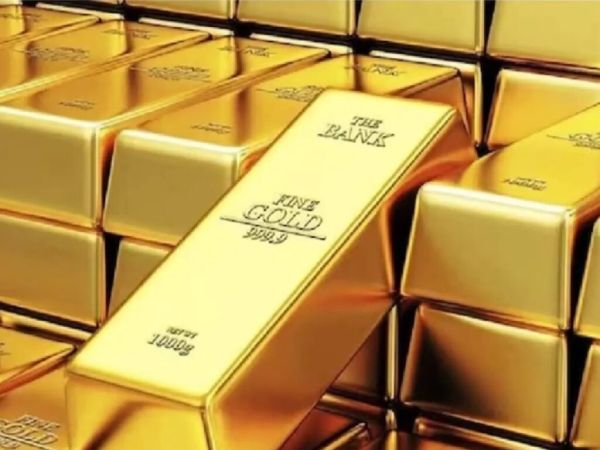
The global bullion market is witnessing a major strategic shift as the People’s Bank of China (PBOC) begins moving substantial portions of its massive gold reserves away from traditional Western vaults in London and depositing them directly into Hong Kong. While global central banks have historically stored the lion’s share of their physical gold in London—home to the world’s largest bullion market—Beijing’s latest move highlights a calculated push to bring its sovereign assets closer to home and establish Hong Kong as a preeminent global gold trading and clearing hub. Meanwhile, in the domestic Indian market, precious metal prices have resumed their upward march, tracking global macroeconomic cues and sustained institutional demand.
PBOC’s Continuous Gold Buying Spree and Strategic Shift to Hong Kong
The People’s Bank of China has maintained an aggressive acquisition strategy, purchasing gold continuously for 20 consecutive months. Over the past few months, the Chinese central bank has quietly transferred significant amounts of physical gold into secure vaults across Hong Kong. Although Beijing has not officially disclosed the exact volume of gold shifted, Bloomberg sources indicate that this reallocation is part of a long-term strategy to counter potential geopolitical risks and secure its financial assets in Asia. To cement Hong Kong’s status as a new global rival to London, New York, and Singapore, local authorities have recently rolled out an advanced gold clearing system and a new pricing benchmark. Furthermore, Hong Kong has actively invited other central banks—particularly those aligned with the Belt and Road Initiative—to store their gold reserves locally, with reports confirming that countries like Cambodia have already accepted the offer.
Domestic Gold and Silver Rally on MCX: Prices Climb in India
Amid these global geopolitical realignments, domestic precious metal prices in India witnessed a sharp upward trend. During morning trading hours, gold futures on the Multi Commodity Exchange (MCX) climbed 0.53 percent to trade around ₹1.50 lakh per 10 grams. Industrial and precious white metal silver also registered strong gains, surging 1.14 percent to scale ₹228,401 per kilogram. Analysts note that after experiencing mild corrections due to fluctuating Middle East tensions, energy price adjustments, and evolving signals from the US Federal Reserve, consistent central bank buying by institutional players like China has successfully helped international gold prices hold firmly above the crucial $4,000 per ounce threshold. Looking ahead, market participants and institutional investors remain laser-focused on three core drivers: future gold accumulation announcements by the PBOC, unfolding geopolitical tensions, and the upcoming interest rate trajectory of the US Federal Reserve.
-
Pooran's 22-ball fifty steers MI London to seven-wicket Hundred win

-
MI London Cruise to Seven-Wicket Victory at the Oval

-
US-India trade talks face uncertainty amid new Russia sanctions bill
-
Rahul Gandhi to hold ‘Chhatron Ki Goonj’ student outreach in Prayagraj

-
Army Jawan Strangles 7-Month Pregnant Wife Before Leaving For J&K, Family Alleges Affair