The closing moments of last season’s Scottish Premiership title race will, in time, fade into the background, swallowed up by the vast collection of Celtic trophies.
But for a few weeks, Scotland had the football world watching. The possibility of Celtic clinching a 56th league title was not, in itself, what captured that attention.
A midweek fixture between Motherwell and Celtic drew interest because Celtic had genuine competition, yet what followed became little more than a passing moment for most neutral observers.
It will never be forgotten in Edinburgh, though, where a fully-kitted Heart of Midlothian side returned barely an hour after the final whistle had not yet formally ended their dream in Glasgow on the final day.
The Premiership is far from the only European league where the top end feels closed off, but it may be one of the most committed examples of that pattern. Celtic and Rangers have now collected 111 league titles between them.
However enjoyable that may be for their supporters, and however much it intensifies the rivalry between the two clubs, it will take more than Rangers mounting a meaningful title challenge to truly reinvigorate the Scottish game.
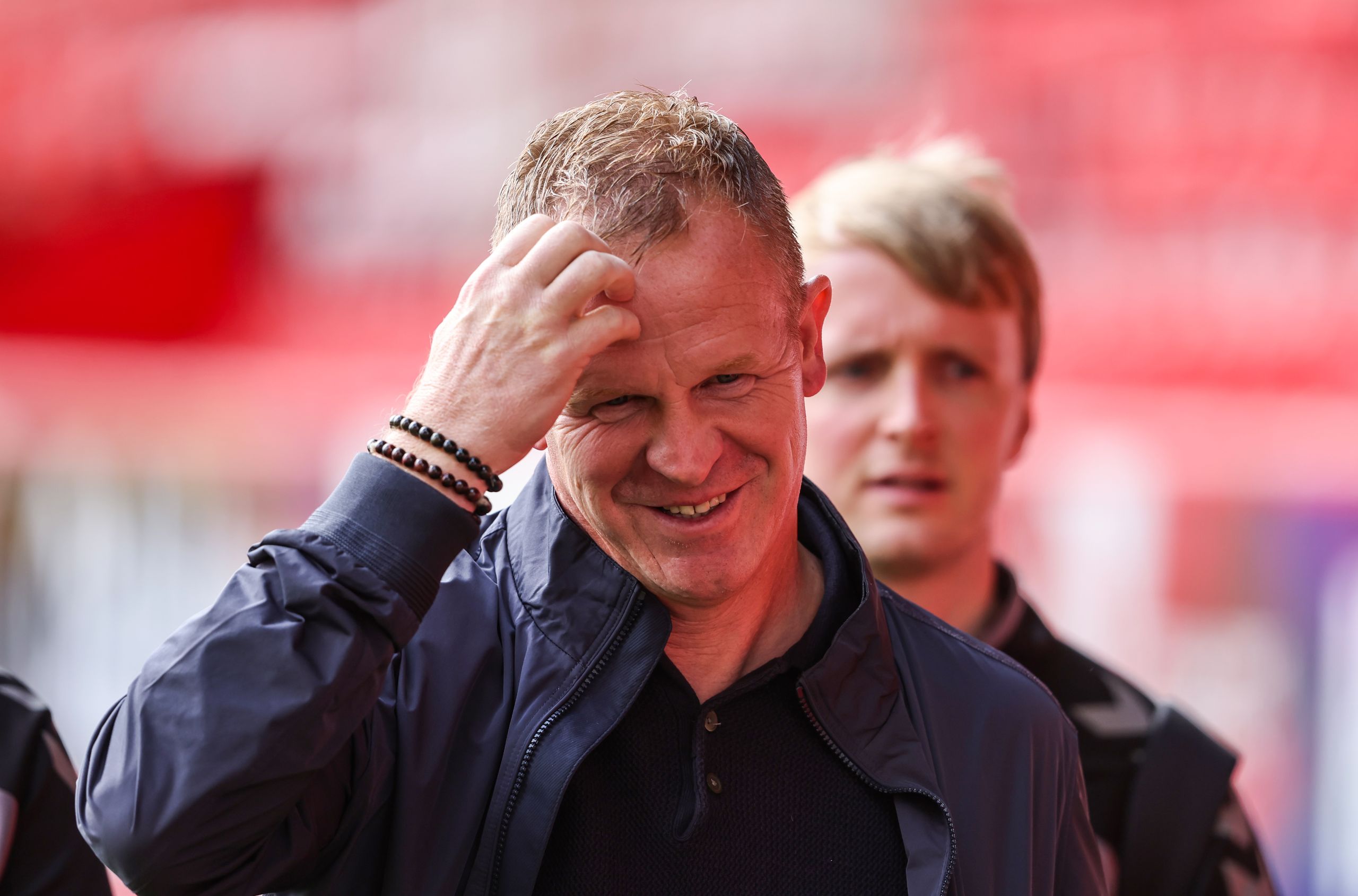
Derek McInnes and Lawrence Shankland, the manager and captain who guided Hearts to within touching distance of a fifth title, are now the manager and captain at Ibrox.
They are both Rangers men, but it is still difficult to ignore the sense that the more erratic half of the Old Firm were able to watch Hearts push Celtic all the way and then simply help themselves to the Jam Tarts without much resistance.
The health of Scottish football is a deeply complex issue. A strong game does not just mean a broader title race, but also a better national team, greater depth in the top flight and below, more spectators in the stands, and a lasting bond between clubs and the communities they represent.
To say the Premiership simply needs title challengers beyond the usual suspects is too simplistic – football still matters enormously to life in Scotland regardless – but last season did hint at a compelling alternative.
Occasional surges from outside Glasgow will not be enough. In the past 10 seasons, the Old Firm have occupied the top two places seven times. Rangers were still rebuilding when Aberdeen finished second in successive seasons.
The last time a club from outside Glasgow broke into the top two, Celtic and Rangers then went on to monopolise first and second place for the next seven years. Celtic won all but one of those titles, yet the trigger for a more open Premiership has to be more than just a strong city rival for one of the Glasgow giants.
Aberdeen do occasionally influence the picture but, in FourFourTwo’s view, Edinburgh is the crucial factor. Hearts came close to demonstrating what can be achieved. Hibernian – who also have four league titles – possess a similar level of potential.
Hearts and Hibs are never going to match the financial power of the Old Firm clubs. They are attempting to outthink rather than outspend, and that is their only realistic route. Given the disorderly running of Celtic and Rangers over the past two years, the challenge facing Edinburgh may not be quite as overwhelming as it ought to be.
Their models have not emerged in Scotland, but on England’s south coast, where two of the Premier League’s more progressive modern clubs have been reshaping the landscape.
Black Knight, Bill Foley’s multi-club group that includes AFC Bournemouth along with Lorient and Moreirense, invested in Hibs in 2024. Foley’s involvement lasted for less than two years, but it still provided a glimpse of the fresh thinking needed to bring success to Easter Road.
Hearts now have Brighton & Hove Albion owner Tony Bloom among their shareholders. Bloom’s co-ownership means Hearts are the only club in Scotland using Jamestown Analytics, Bloom’s data platform and the secret behind Como’s success under Cesc Fabregas.
Wouter Vrancken, the new Hearts manager, is unlikely to have been appointed without significant predictive data strongly supporting that decision at Tynecastle.
Old Firm supporters will not welcome the idea of surrendering any part of their dominance, but football is a living sport and a social force that flourishes through competition. Stagnation is the enemy of progress, and greater unpredictability would lift the entire game.
Glasgow’s hold is not disappearing, but it can be – and must be – weakened by more progressive thinking in Edinburgh. Perhaps that starts with having one of football’s leading poker minds in the boardroom. Perhaps it needs a visionary manager at Hearts or Hibs.
Wherever it begins, Scottish football would be richer from top to bottom if the capital’s clubs were at least properly prepared to take advantage when Celtic and Rangers are in a period of uncertainty.
If Edinburgh can stand up and compete with the bigger powers, it could help shape the modern Scottish game, raising the entertainment level and bringing more people into the stands.
Hearts took their shot last season and only just missed. Every community initiative and every weary supporter wondering whether their devotion still matters must be hoping, desperately, that it was only the first attempt of many.
-
Winners and losers after Manchester United sacked Ruben Amorim: Fresh start for Kobbie Mainoo, but Mason Mount and Amad Diallo could now lose their starting spots
-
Festival Skincare Tips: How to prepare your skin before the festival, it will bring a natural glow to your face without makeup.

-
Life Gets So Much Better For 3 Zodiac Signs On August 8, 2026

-
How to Impress a Girl: 5 Easy Ways

-
What Does ‘Service Ceiling’ Mean On A Fighter Jet?