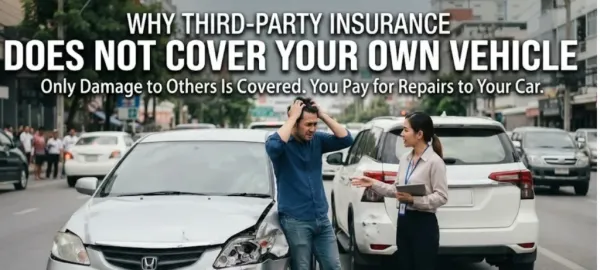
Third-Party Insurance Explained: If you own a bike, scooter, car, or any other motor vehicle, you have likely heard of third-party motor insurance. Insurance is considered essential for anyone driving on the country’s roads. Driving without third-party insurance can lead to action under the Motor Vehicles Act, potentially resulting in fines or other legal complications.
Many people believe that once they insure their vehicle, all damages to it will be covered. However, this is not the case. If you hold only third-party insurance, it does not cover the cost of repairs, theft, or self-inflicted damage to your own vehicle. Its primary purpose is to compensate for damages caused to another person. Therefore, it is crucial to understand what third-party insurance is, how it works, and its benefits.
What is Third-Party Motor Insurance?
Third-party motor insurance is a policy that covers the financial liability for damages your vehicle causes to another person. If your bike or car causes injury or death to someone, or damages another person’s vehicle, shop, wall, house, or other property, your insurance company bears the responsibility of paying compensation. For this reason, it is also known as liability insurance.
Why is this insurance mandatory in India?
In India, the Motor Vehicles Act mandates that every vehicle plying on public roads must have at least third-party insurance coverage. If a vehicle is found operating without this insurance, the owner may face heavy fines and legal action. Repeated violations can lead to even harsher penalties. Consequently, obtaining third-party insurance is considered a priority immediately after purchasing a vehicle.
How does third-party insurance work?
Suppose your car collides with another car, or your bike causes injury to a person. In such a situation, the aggrieved party seeks compensation. The accident is reported to the police and the insurance company. Additionally, if necessary, the matter may be taken to the Motor Accident Claims Tribunal (MACT). The court or the relevant authority assesses the damages, after which your insurance company pays the determined compensation to the victim. This means you do not have to bear the entire financial loss out of your own pocket.
Key Benefits of Third-Party Insurance
This is mandatory insurance in India. Holding this policy ensures compliance with legal regulations and helps you avoid fines. Road accidents can often result in compensation claims amounting to lakhs of rupees; in such cases, the insurance company makes the payment on your behalf, preventing a sudden, heavy financial burden on you.
Compensation is a major concern following an accident. If you have valid third-party insurance, the insurance company handles a significant portion of this liability. The premium for this insurance is relatively low because it covers only third-party risks, making it the most affordable type of motor insurance available.
What Does It Cover?
Third-party insurance covers the following situations: benefits are provided in the event of bodily injury to a person or a fatality. It also covers damage to another vehicle and to property such as shops, houses, walls, and other assets. Compensation determined by the court is paid through the insurance company.
What Is Not Covered?
It is crucial for vehicle owners to understand that if you hold only third-party insurance, certain losses are not covered. Damage to your own car or bike—such as repair costs, engine failure, normal wear and tear, vehicle theft, or damage caused by fire—is not covered.
Why Doesn’t the Vehicle Owner Receive Direct Benefits?
Many people mistakenly believe that purchasing insurance means their vehicle repairs will also be covered for free. However, the purpose of third-party insurance is not to protect your own vehicle. Its objective is to compensate for damages suffered by another person on the road. Therefore, the benefit goes directly to the affected party rather than the vehicle owner.
Difference between Comprehensive and Third-Party Insurance
In the case of third-party insurance, only the loss suffered by the other person is covered; your vehicle is not. The premium for this type of insurance is lower, and it is a legal requirement. Comprehensive insurance, on the other hand, covers third-party losses as well as your own vehicle. It covers damage to the vehicle resulting from accidents and provides protection against theft. Coverage is also available for damage caused by natural disasters such as fire, floods, and storms. Additionally, ‘add-on’ covers can be included.
Will you get a payout if the vehicle is stolen?
If you only have third-party insurance, you will not receive a payout; no payment is made under this policy in the event of vehicle theft. Theft coverage is available only with comprehensive motor insurance. Furthermore, costs associated with engine failure, gearbox issues, or general technical malfunctions are not covered under third-party insurance.
What to do in the event of an accident?
If your vehicle is involved in an accident, do not panic; instead, prioritise helping the injured person. Call an ambulance if necessary and inform the police. Additionally, file an FIR at the nearest police station. Immediately notify your insurance company about the accident. Keep all relevant documents, photos, and videos safe. If required, submit the documents requested by the insurance company.
Conclusion
Third-party motor insurance is mandatory for every vehicle owner in India. Its primary objective is to provide financial compensation for bodily injury or property damage caused to another person by your vehicle. It offers legal and financial protection at a low premium but does not cover repairs to your vehicle or losses from theft, fire, or natural disasters. Therefore, if you desire complete protection for your vehicle, opting for comprehensive motor insurance might be a wise choice.
-
How to grow better lavender every year by planting 4 flowers

-
Hariyali Teej 2026: Are you observing the Hariyali Teej fast for the first time? Keep these important things in mind.

-
Surya Gochar 2026: These 5 zodiac signs will be blessed by the Sun God, promising massive financial gains and job advancement.

-
Is a 10-minute walk more effective than a gym? Experts reveal the impact of blood sugar, weight, and type 2 diabetes.

-
Mouth Ulcer: Do you have frequent mouth ulcers? Don’t ignore them; These 5 could be signs of serious diseases