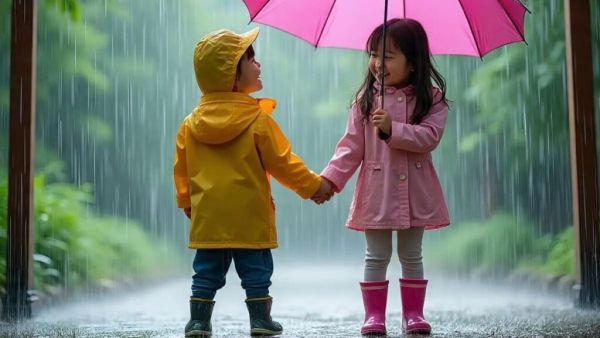
First, change wet clothes immediately.
After getting wet in the rain, don’t let your child stay in wet clothes for long. Remove wet clothes and dry them thoroughly with a clean, dry towel. Then, dress them in dry, comfortable clothes. Staying in wet clothes for long periods can cause the child to catch a cold and increase discomfort.
Clean the feet thoroughly
Rainwater can contain mud and other contaminants. Therefore, wash your child’s feet thoroughly with clean water after returning home. If the feet have been in dirty water or mud for a long time, it’s best to clean them with soap. It’s also important to dry them thoroughly after washing.
Let the body cool down
There’s no need to bathe the child in very hot water immediately after getting wet in the rain. If the child is very wet, change the clothes first and let the body cool down. After this, bathe the child with lukewarm water as needed. Avoid exposing the child to cold air or directly in front of an air conditioner.
Offer lukewarm water or warm drinks
If the child is older and their diet allows it, lukewarm water can be given after returning home. This provides relief and maintains hydration. For younger children, provide fluids according to their age and regular diet. Any hot drinks should be appropriate for the child’s age.
If hungry, offer light and warm food
Avoid giving fried or outside food immediately after getting drenched in the rain. If hungry, offer light and nutritious home-cooked meals. Options like dal-rice, khichdi, vegetable soup, or soup can be offered according to the child’s age and preferences. This will provide the body with the necessary energy and nutrition.
Take care of mosquito protection
Stagnation of water during the rainy season can increase mosquito populations. Therefore, avoid water accumulation around the house and use mosquito nets or age-appropriate repellents to protect the child from mosquitoes. Wearing full-sleeved clothing can also be helpful, especially in the evening.
Don’t ignore symptoms if they appear.
It’s not necessary that every child develops a cold or fever after getting wet in the rain. However, if a child shows signs of persistent fever, difficulty breathing, extreme lethargy, vomiting, diarrhea, rashes, or dehydration, consult a doctor. It’s not advisable to give children antibiotics or other medications without medical advice.
It’s not always possible to completely keep children out of the rain during the rainy season. However, small steps like changing clothes after returning home, cleaning the body and feet, proper hydration, nutritious food, and mosquito protection can help keep children healthy. With a little caution, children can enjoy the monsoon season while remaining largely safe from the risk of infection.
-
Dodgers’ Losing Streak Reaches Seven After Diamondbacks’ Walk-Off Homer

-
Dodgers’ Losing Streak Reaches Seven After Diamondbacks’ Walk-Off Homer

-
SKN बनाम TKR, CPL 2026, मैच भविष्यवाणी: आज के खेल में St Kitts and Nevis Patriots और Trinbago Knight Riders में से कौन जीतेगा? | Read

-
Joao Pedro scores brace as Chelsea thumps Amorim’s AC Milan

-
End of an Era: No Indian Umpire at Hockey World Cup After 28 Years, Veterans Express Deep Disappointment: