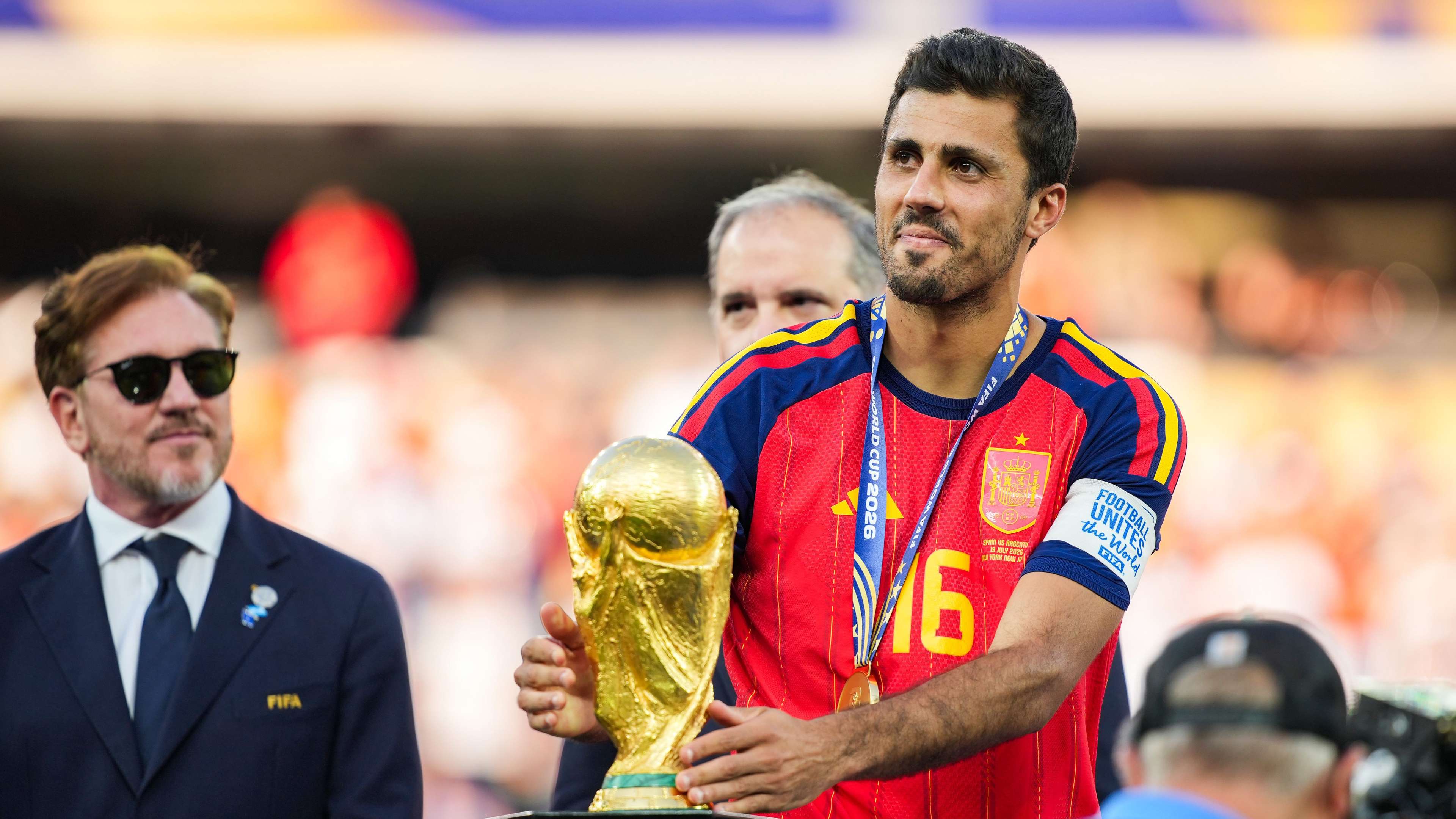
Missing out on Rodri to Barcelona would undoubtedly feel like a major blow for Real Madrid, but it does not amount to the end of the world.
Real Madrid certainly did not want the Rodri situation to end this way. This was not a routine transfer that collapsed right at the end of the window, nor was it a case of a player studying his options and choosing another proposal. Los Blancos wanted the Spain midfielder, and for a while everything appeared to be moving in the right direction before an unexpected twist caught everyone at the club by surprise.
They were too slow. By hesitating when decisive and swift action was required, they gave Rodri the room to reconsider his future.
Then came the heaviest blow of all: Rodri chose Barcelona.
That is where the pain lies for Real Madrid. Clubs lose transfer targets all the time in football. But losing a player of this calibre to your fiercest rivals, after your own interest had been so prominent throughout the pursuit, is a very different matter.
It is a slap in the face.
Even so, it is not the end of the world.
The key issue now is no longer why Real Madrid failed to land Rodri. What matters is the way they react to missing out on him.
Rodri was not just another signing
To grasp the size of the issue, it is first necessary to understand why Real Madrid wanted Rodri so badly.
This was never simply about adding another star name to the squad.
Los Blancos were pursuing an answer to one of the clearest technical weaknesses in their set-up: who is going to control the midfield?
Real Madrid have outstanding names in attack, and their offensive quality needs no introduction. But controlling games is a different challenge. Against opponents who press aggressively or possess a powerful midfield unit, they need someone who can take the ball under pressure, move play on efficiently, organise the build-up from deep, shield the side when possession is lost, and then help recover it quickly.
Rodri offered extraordinary value in precisely that department.
So replacing him is not a matter of finding someone who wears the same shirt number or occupies the same zone on paper.
The real task is to replace the role he would have carried out.
José Mourinho’s job has now become far more complicated.
Bastoni: an outstanding option, but not a complete answer
After losing out on Rodri, the Madrid media have started discussing alternative names who could enter Real Madrid’s thinking, with AS editor-in-chief Jose Felix Diaz mentioning players such as Ayoub Bouaddi, Adam Wharton and Kees Smit.
There has also been discussion around Mourinho’s wish to bring in a left-sided defender. Alessandro Bastoni is the target, and a player of his level could help give Real Madrid’s defence its final structure.
In my view, that is where there is a very positive angle: Bastoni would be an excellent signing for Real Madrid, even if he is not the midfielder the side have been seeking.
He would not only strengthen the back line defensively. He would also provide a footballer capable of helping with the build-up.
When you have a player who can carry the ball out from the back, drive forward with it and then break opposition lines with a pass, you reduce part of the burden placed on the midfielders.
His presence could make playing out from the back more adaptable, while also giving the midfielders and wide players greater freedom.
That, in turn, could allow someone like Bernardo Silva or Arda Guler to assume bigger responsibilities in creating from deeper areas, rather than putting the full weight of construction on either of them and forcing one to drop excessively into deep positions.
There is a problem, though: Bastoni is not a replacement for Rodri, and Real Madrid cannot afford to lose sight of that distinction.
Signing an elite defender who is comfortable progressing the ball will not automatically solve the issue of midfield control.
It would undoubtedly improve the team in other respects, but it would not offer the full solution to the problem Rodri was meant to solve.
What about Tchouaméni?
There is one question Real Madrid cannot avoid: can Mourinho build his midfield around Aurélien Tchouaméni?
Put simply, no.
The more relevant question is whether Tchouaméni can provide everything Rodri would have brought to the team.
That answer is more complicated.
Tchouaméni offers physical power, ball-winning ability, defensive protection and the versatility to perform more than one role.
But turning him into the single answer to all of Real Madrid’s midfield issues would be a considerable risk.
Rodri was not an ordinary holding midfielder. He was the central pivot of an entire system.
Relying on Tchouaméni alone would ask the French midfielder to win the ball, organise the build-up, act as the passing hub and shield the defence all at the same time.
That is exactly the worst scenario Real Madrid could drift into.
Adam Wharton: not Rodri, but perhaps the right fit
If Real Madrid decide to return to the market in search of a genuine midfielder, Adam Wharton strikes me as one of the most compelling options available.
He is not Rodri, of course.
Any comparison with the Spain star at this stage would be unfair on the Englishman. But the objective is not to find a clone of Rodri.
What matters is identifying a player with the qualities Real Madrid need, and Wharton has many of them: calmness under pressure, the ability to keep the ball, passing range from deep, sharp vision, and a willingness to counter-press and recover possession.
Most importantly, he is still only 22. That is an advantage that cannot be ignored.
If Real Madrid sign Wharton, they would not be purchasing a player who has already reached his ceiling. They would be signing someone who could grow significantly in the years ahead and perhaps develop into one of the finest players in his position anywhere in Europe.
The move might require patience. Wharton may not offer a Rodri-level version of himself from the very first day, but his technical ceiling is extremely high.
In a Mourinho-led project, that kind of profile could become hugely important.
Mourinho is facing a difficult equation
What makes this situation so interesting is that losing Rodri may force Mourinho to rethink the structure of Real Madrid rather than merely search for a like-for-like replacement.
Bastoni could become part of the solution, but not all of it.
A defender who can build from the back would take some pressure off the midfield. Combine that with a holding player like Tchouaméni to provide defensive balance, and the creative burden could then be shared by players such as Bernardo Silva and Arda Güler.
Sign Wharton, and Mourinho would gain another route: a midfield better suited to controlling possession.
In other words, the answer does not necessarily have to be Rodri out and a new Rodri in.
Redistributing responsibilities may be the smarter way forward.
Real Madrid have two clear choices
Ultimately, I see Real Madrid confronting two obvious options.
The first is that the club decides the current midfield is capable of doing the job, uses its money to reinforce the defence by signing Bastoni, gives Bernardo Silva or Arda Güler greater creative responsibility, and relies on Tchouaméni as the holding midfielder.
That route is possible. But it requires complete belief that the current group can truly cover everything Rodri would have provided.
The second option, and in my opinion the more ambitious one, is that Real Madrid accept that losing Rodri has revealed a genuine need in midfield and return to the market for a player who can help develop the system. Adam Wharton would be among the best options available.
Not because he is Rodri, but because he could become the Wharton that Real Madrid need.
The real slap is not losing Rodri itself
Losing Rodri to Barcelona may hurt Real Madrid supporters.
It is also fair to call it a slap in the face. The blow came from their historic rivals, in a transfer where Real Madrid had a real opportunity before hesitating and allowing it to slip away.
But football does not give anyone much time to mourn the deals that escape.
Real Madrid now have a new coach, a new project and a squad to shape. The true issue is not that Rodri chose Barcelona. The real danger lies in what happens if Real Madrid allow that setback to drive them towards the wrong decision.
Imagine the worst-case scenario. The club lose Rodri and then simply decide that Tchouaméni can handle everything on his own. In that case, the question becomes entirely valid: are Real Madrid genuinely trying to solve their problems, or merely trying to persuade themselves those problems are not there?
No one should describe this as the end of the world.
What will determine so much is how Real Madrid respond to the blow.
Either losing Rodri becomes just one transfer that slipped away and pushes the club towards building a more balanced side, or Real Madrid may realise in a few months that Barcelona did not just take a player from them. They exposed an issue the club had been delaying for too long.
-
Argentina back Infantino: "A clear, stable and transparent model"
-
Tony Cascarino on his 1994 switch to Marseille: ‘Leaving Chelsea was incredibly hard, but it was also the most beautiful thing’
-
Delhi crosses August rainfall average in first eight days

-
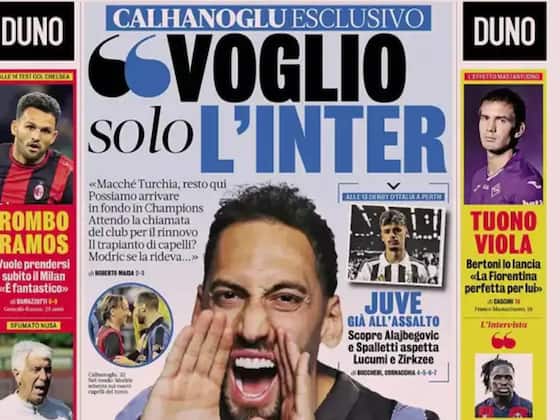
Calhanoglu pledges future to Inter as McKennie reaffirms Juventus commitment
-
Juventus: Spalletti on Di Gregorio, "Maybe he could have saved the second goal"