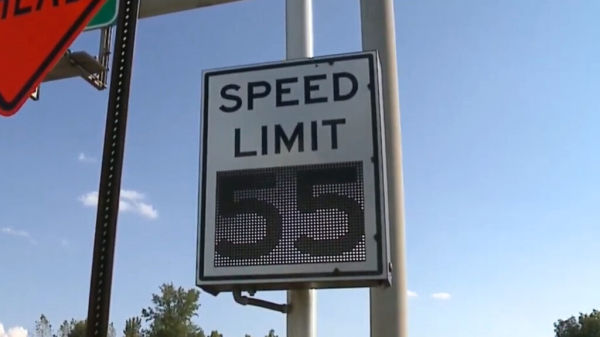
Variable speed limit signs are popping up across America as state and local governments work to improve traffic conditions on roads and highways. But Indiana is actually removing its variable speed limit signs because of a new state law that took effect on July 1, 2026. Lawmakers supporting the change believed that the Indiana Department of Transportation (INDOT) had overstepped its authority by using the system in the first place.
The problem dates back to 2025 when the speed limit on most of I-465, where 1,000 traffic tickets were dished out a day in 2025, was changed from 55 mph to 65 mph by the state legislature. However, the variable speed limit system used by INDOT could reduce that limit depending on highway conditions. So even though the new 65 mph limit was in place, drivers could potentially be notified to go under that limit, allegedly contradicting the speed limit change. This is what led to the conflict between INDOT and Indiana lawmakers.
The variable speed limit system was initially part of a traffic management project in the southeast area of I-465 around Indianapolis. The system gave INDOT the ability to adjust posted speeds based on changing conditions. Purdue University researchers partnered with INDOT to evaluate the project once it was implemented, using traffic patterns and connected vehicle data to determine the system’s effectiveness.
Indiana’s variable speed limit system leaves questions after shutdown
Though INDOT is no longer allowed to use the variable speed limit system in the state of Indiana, the physical signs are still in place. INDOT has turned off the signs and plans to leave them where they are in case the system can be used again at some point in the future. Despite their deactivation, the variable speed limit signs were effective, according to Purdue University researchers. The study found that drivers experiencing hard-braking events in the busiest merge areas decreased by 61%.
The study also found that along the 7.5-mile stretch of I-465 used for the analysis, hard-braking events declined across different severity levels. Researchers observed median reductions of 70% in mild hard-braking events, 41% in moderate events, and 33% in severe events. These findings showed that the safety improvements attributed in part to the variable speed limit system extend even beyond areas where the biggest reduction occurred.
Indiana’s decision to stop using the system has sparked a bigger debate over whether it was the right move. According to WTHR 13, INDOT’s initial purchase of the variable speed limit signs cost the state $446,400, leading some to question the value of removing a system that had only been in place for a short time. Additionally, others argued that the speed limit technology gave the state a valuable tool for improving highway safety.