Summary
- The drama explores how ambition, relationships and personal choices can shape a person’s future.
- The drama presents ambition as something meaningful while also showing the personal cost of pursuing a career in a difficult environment.
- Across four decades, these dramas demonstrate how Pakistani television has portrayed women in changing ways.
AI Generated Summary
Pakistani television has produced many memorable female characters. Some of them stood out because they were not written simply as victims waiting to be rescued.
Over the decades, several dramas showed women working, making difficult choices, facing social pressures and rebuilding their lives. These characters were ambitious, emotional and flawed. Most importantly, they were allowed to shape their own stories.
Here are six dramas that created some of Pakistani television’s most memorable female leads.
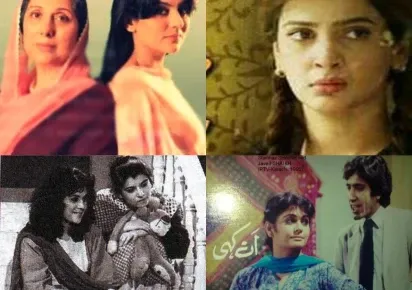
Ankahi (1982)
Written by Haseena Moin, Ankahi introduced audiences to Sana Murad, played by Shehnaz Sheikh.
Sana is confident, outspoken and determined. After her father’s death creates financial problems for the family, she decides to take responsibility.
Despite having limited qualifications, she manages to secure a job after an unexpected meeting with a company chairman. Her journey through professional life becomes a mix of humour, challenges and personal growth.
Sana’s character was significant because she was not defined by marriage or romance. She wanted to work and create a future for herself.
Tanhaiyaan (1985)
Haseena Moin’s Tanhaiyaan, directed by Shahzad Khalil, focused on two sisters who suddenly lose their parents and their family home.
Played by Marina Khan and Shehnaz Sheikh, the sisters are forced to rebuild their lives independently.
The drama presented women earning their own income without treating their decision to work as something unusual. Their struggles were balanced with friendship, humour and everyday challenges.
That combination helped the drama remain popular long after its original broadcast.
Maat (2011)
Umera Ahmad’s Maat followed two sisters whose different priorities eventually take them in completely different directions.
Saba Qamar played Saman, a woman strongly attracted to wealth, comfort and social status. Her sister Aiman, played by Aamina Sheikh, takes a quieter path.
Aiman is repeatedly underestimated and overlooked. She faces difficult circumstances but continues building her life with patience and resilience.
As the story progresses, the sisters’ fortunes change dramatically. The drama explores how ambition, relationships and personal choices can shape a person’s future.
Durr-e-Shehwar (2012)
Durr-e-Shehwar explored marriage from a perspective that was rarely shown without romanticising sacrifice.
The central character enters marriage expecting affection and companionship. Instead, she faces emotional distance from her husband and hostility from her mother-in-law.
The story is later viewed through the eyes of her daughter, Shandana. She initially believes her parents had a perfect marriage.
She eventually discovers the struggles her mother endured.
The drama raises questions about compromise, expectations and the sacrifices women make to preserve relationships.
Digest Writer (2014)
Saba Qamar played Fareeda, a young woman whose ambitions are often overshadowed by the expectations placed on her family’s son.
Writing becomes Fareeda’s escape and her way of expressing herself. She begins publishing stories under the name Rashk-e-Hina.
Her talent eventually attracts the attention of a television producer, giving her an opportunity to enter the drama industry.
However, success does not come easily. Fareeda faces professional rivalry, betrayal and pressure from her family.
The drama presents ambition as something meaningful while also showing the personal cost of pursuing a career in a difficult environment.
Udaari (2016)
Udaari tackled one of the most sensitive subjects in Pakistani television.
The story follows Zebo, whose childhood is shattered by abuse. However, the drama does not define her entire identity through her trauma.
Instead, Zebo gradually finds the courage to speak about what happened to her.
Her mother also undergoes a major transformation. After realising the danger her daughter faces, she chooses to protect Zebo and rebuild their lives.
Meera, a singer living nearby, also becomes an important source of support.
One of the drama’s most powerful moments comes when Zebo confronts her abuser in court. Rather than accepting shame for what happened to her, she identifies herself as a survivor.
Across four decades, these dramas demonstrate how Pakistani television has portrayed women in changing ways.
From Sana’s determination to build a career to Zebo’s courage to seek justice, these characters were given stories beyond romance and victimhood.
We welcome your contributions! Submit your blogs, opinion pieces, press releases, news story pitches, and news features to opinion@minutemirror.com.pk and minutemirrormail@gmail.com
-
Monsoon Skincare Tips: Say goodbye to stickiness and pimples this monsoon season! These 3 homemade natural face scrubs will restore your lost glow
-
Monsoon Skincare Tips: Say goodbye to stickiness and pimples this monsoon season! These 3 homemade natural face scrubs will restore your lost glow
-
Drivers risk 3 points under new rules overseen by Andy Burnham

-
‘My Sister Gave Birth Naturally At 39’: Surbhi Chandna Reveals Why She Doesn’t Want To Freeze Her Eggs
-
Independence Day 2026: Want to look stylish in college on Independence Day? Try these outfits