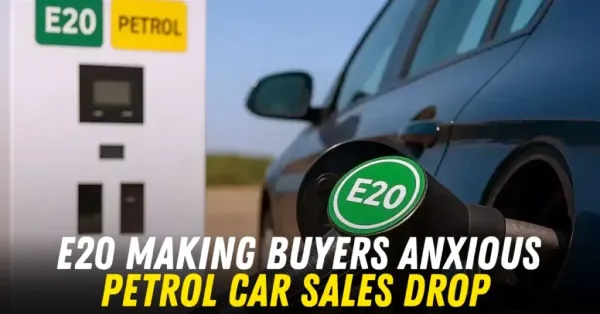
Concern around E20 petrol is now showing up in showroom conversations and may be influencing what some customers buy. In July 2026, petrol cars accounted for 41.68 per cent of passenger vehicle retail sales, while CNG, hybrid and electric vehicles together reached 40.59 per cent. A year earlier, petrol alone had a 47.6 per cent share.
The numbers do not prove that E20 is solely responsible for the shift. CNG models have expanded rapidly, EV choice has improved and hybrid options have become more visible. But dealers say questions about E20 compatibility, mileage and long-term ownership are now common enough to delay some petrol-car purchases or push customers towards another powertrain.
July passenger vehicle retail sales reached 4,16,555 units, up 19.1 per cent year on year. Within that larger market, petrol’s share fell to about 41.7 per cent. CNG climbed to roughly 24 per cent from about 21 per cent a year earlier, while EVs rose to nearly 8 per cent from around 5 per cent. Diesel remained broadly stable at about 18 per cent.
The direction was visible even before July. In June, CNG, hybrid and EV models together crossed 40 per cent of passenger vehicle retail sales for the first time, at 40.35 per cent. CNG alone accounted for 24.33 per cent, hybrids 8.27 per cent and EVs 7.75 per cent.
This makes the change larger than an E20 story. Carmakers now sell CNG versions across several mainstream segments, EV sales are no longer confined to a handful of models, and strong-hybrid cars offer petrol convenience with lower fuel consumption. E20 anxiety is arriving at a time when customers already have more alternatives.
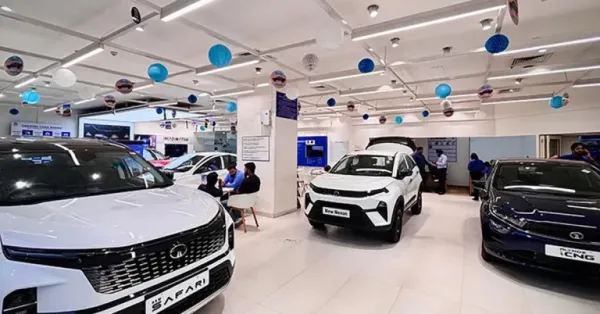
Dealers in Kolkata say petrol-car customers are increasingly asking about ethanol content before discussing features. Concerns are strongest among people comparing older vehicle designs or planning to keep a car for many years. Questions centre on whether E20 can affect seals and hoses, whether warranties remain valid and how much mileage may fall.
Some Kolkata outlets have reported potential petrol customers postponing bookings, with hatchbacks particularly exposed because they depend heavily on low running costs. Brands with strong diesel, CNG or EV alternatives have more ways to retain a customer who becomes uncomfortable with a pure-petrol purchase.
However, dealer organisations also say they are receiving far more queries than proven complaints. FADA has said dealers servicing thousands of vehicles have not recorded a confirmed pattern of engine damage attributable to E20. That distinction is important because social-media claims often mix older, non-E20-calibrated vehicles with new cars designed around the higher blend.
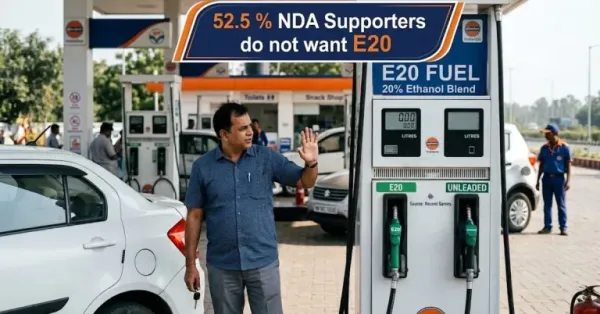
Ethanol contains less energy per litre than petrol, so some reduction in fuel economy is expected when the blend rises. The government has acknowledged a roughly 3 to 5 per cent mileage reduction for certain vehicles originally designed around E10. The actual change can vary with the engine, traffic, driving style and vehicle condition.
For a customer choosing a new car, even a small expected mileage difference can matter when CNG or hybrid alternatives are sitting in the same showroom. That makes E20 a sales-conversion issue even if the vehicle itself is fully compatible.
The current data therefore supports a narrower conclusion than the loudest online claims. Pure-petrol cars are losing share, alternative fuels are gaining quickly, and E20 uncertainty is one factor affecting purchase decisions. It is not yet possible to separate exactly how much of the shift comes from ethanol concerns and how much comes from better CNG, hybrid and EV choices.
-
Tariq Mansoor and Basit Ali: BJP’s key minority faces

-
BJP team to visit Hanur encounter site, report in a week

-
Israel Carries Out Eight Airstrikes On Unused Airbase In Northwestern Syria’s Idlib

-
Bangladesh Seeks More Diesel From India Amid Energy Crisis: Here's What MEA Responds

-
Scared of Snakes This Monsoon? Here’s How to Keep Them Away During Monsoon