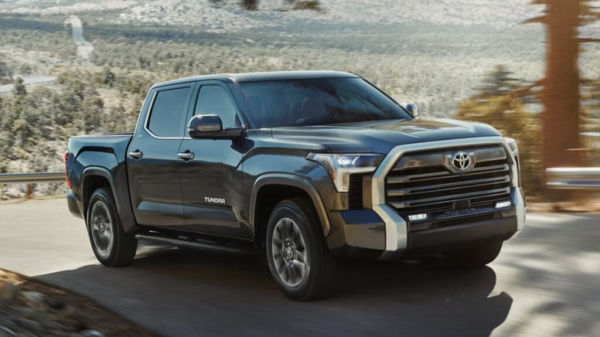
Most recalls send thousands of owners scrambling to check their VIN, but this time, only one 2026 Toyota Tundra truck owner drew the short straw. A single truck is being recalled because its payload sticker shows the wrong carrying capacity. Payload is the combined weight of the passengers, cargo, and equipment a truck can safely carry. Before this Tundra was sold, Southeast Toyota Distributors installed an accessory package that made the truck heavier.
The extra weight of that accessory, therefore, reduced the amount left for people and cargo, but the package was left out of the sticker’s final calculation. As a result, it did not properly reflect the change in the truck’s total carrying capacity.
This is not a common problem with the Toyota Tundra, as only one truck is affected, and nothing is mechanically wrong with it. Toyota also says the accessories did not use up all of its available payload. The concern is that the owner could trust the incorrect figure when loading the bed or cabin and unknowingly exceed the truck’s real limit and increase the risk of crash — one which insurance may not cover because of the overloading.
That gives recall SET26A a defect rate of 100-percent and puts the 2026 Tundra in the same exclusive one-vehicle recall club as a 2024 Ford Mustang, 2025 Audi SQ7, and 2026 BMW S 1000 RR motorcycle.
How one sticker became a recall
The mistake surfaced on April 10, 2026, when a dealer noticed the installed accessory package was missing from the Tundra’s build sheet, leading Southeast Toyota to find it had been accidentally deleted after installation. That was enough to put the truck out of compliance with FMVSS No. 110 called “Tire Selection and Rims.” Despite the name, the rule also covers the payload sticker to account for any accessories added before the truck is sold.
The rule applies when the added accessories weigh more than 100 pounds or more than 1.5 percent of the vehicle’s gross weight rating (GVWR), whichever number is lower. The label must then be updated, and the new figure cannot be off by more than one percent from the weight those accessories added. Southeast Toyota has not given further details about the error.
After its discovery, Southeast Toyota temporarily stopped producing these modified labels for accessorized vehicles until it fixed the deletion process and checked the calculations. The fix for the affected Tundra is a corrected, vehicle-specific label based on the actual weight of the installed accessories which will be mailed to the owner free of charge and can be placed over the old label. The notification letter scheduled to go out by September 4, 2026.