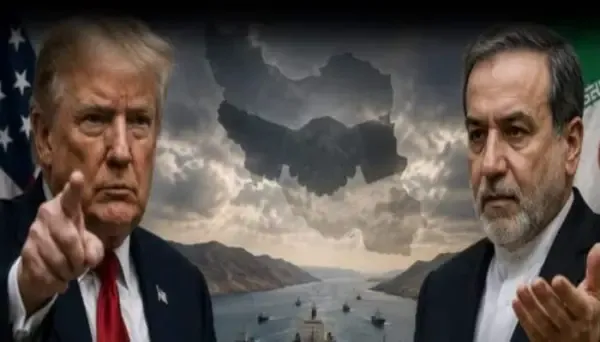
New Delhi: Iran has put six demands before the United States as a condition for reopening the Strait of Hormuz. Meanwhile, it is close to reaching an agreement with Oman on a new system for managing commercial traffic through one of the world's most important energy routes.
The proposed deal would create new shipping lanes and give Tehran and Muscat shared responsibility for managing traffic.
Iranian officials have said the agreement with Oman is nearing completion, but Tehran has also made clear that the deal by itself will not reopen the waterway.
The issue goes far beyond the Gulf. The Strait of Hormuz previously carried around 20% of the worlds oil and liquefied natural gas shipments. The disruption has pushed up energy prices and added to inflation worries in several economies.
Why the Strait of Hormuz is important
The Strait is a narrow waterway between Iran, the United Arab Emirates (UAE) and Oman. At its narrowest point, it is around 33 kilometres wide. The Strait connects the Persian Gulf to the Gulf of Oman and the Arabian Sea, making it an important passage for oil and other energy cargoes.
The US Energy Information Administration estimates show that around 20 million barrels of oil a day passed through the Strait in 2025. A large share of that oil was headed to Asian markets. EIA estimates for 2022 showed that about 82% of crude oil and other petroleum liquids passing through the Strait were headed for Asian countries.
China is also a major buyer of Iranian oil, taking around 90% of Iran's total oil exports according to the data cited in the original report. Any prolonged disruption therefore has implications for Asian refiners, international oil prices and shipping companies.
What are Irans six demands?
The six demands were listed in a statement published by Iran's state broadcaster IRIB by Mohammad Bagher Zolghadr, a former secretary of Iran's Supreme National Security Council and an adviser to Supreme Leader Ayatollah Ali Khamenei.
He said Washington must change its approach towards Tehran before the waterway can be reopened.
The first demand is that the United States must stop threatening Iran and avoid language that Tehran sees as an insult to the country. Iran wants a guarantee that such threats will not be made again. The demand is primarily political and security-related and goes beyond the basic requirement for restraint during a ceasefire.
The second condition deals with Iran's regional partners. Tehran wants the United States to end war and aggression against Iran and its allies in Lebanon, Palestine, Yemen and Iraq. The June memorandum between Washington and Tehran referred to all fronts including Lebanon, while Iran's latest demand extends the issue across several countries and seeks a broader regional security guarantee.
Iran's third demand is the removal of the naval blockade and the withdrawal of US naval and air forces from areas around it. The June memorandum had included a commitment for the United States to end its blockade within 30 days, according to the terms cited by Iranian officials. Tehran is now making that step a direct condition for the reopening of Strait.
The fourth demand is compensation for damage caused to Iran during two wars. Iranian officials have referred to the 12-day war in 2025 as well as the latest conflict. Compensation had been expected to form part of negotiations on a final agreement after the June memorandum. Tehran is now making it one of the conditions for reopening the waterway.
The fifth demand is the removal of what Iran calls cruel and illegal sanctions. Sanctions relief had been expected to be part of negotiations towards a final agreement. The new element is the direct connection between sanctions relief and the reopening of the Strait.
Iran's sixth demand is the unconditional release of Iranian assets that it says have been seized or stolen. The issue of frozen Iranian funds held abroad has been part of earlier negotiations between the two sides.
What Iran and US are saying
Tehran's position is that these conditions must be addressed before the Strait of Hormuz can return to normal commercial traffic. Iran's Foreign Minister Abbas Araqchi said on August 9 that Tehran would not enter direct talks with Washington while the United States was violating the interim agreement reached in June. He also confirmed that messages were being exchanged indirectly through intermediaries.
The Iran-Oman talks have made progress, with the two sides working on an arrangement covering new shipping routes. Reuters reported that a route map had been agreed, although technical issues still needed to be resolved.
Sanctions relief had been expected to be part of negotiations towards a final agreement. The new element is the direct connection between sanctions relief and the reopening of the Strait.
A US official told Reuters that Washington expected a deal between Iran and Oman to be announced shortly and said the aim was to allow commercial ships to pass through the Strait without obstruction. The official added that any US move to lift its blockade would depend on Iran fulfilling its commitments under the agreement.
There is another problem with the proposed deal. Reuters has reported that Iran wants to oversee inbound traffic and may seek fees from ships using the route. Shipping industry sources have warned that such a system could create legal, financial and insurance problems for vessel operators.
That makes the six political demands only one part of the problem. The practical question is also how the new shipping system would work, who would control vessel movements and whether international shipping companies would be willing and able to use it.
Why the demands are important now
The demands include several issues covered in the June memorandum between Iran and the United States. The difference is that Tehran is now directly connecting those issues to the reopening of the Strait.
Iran's position gives the Strait a place in broader negotiations over sanctions, military deployments, compensation and regional security. Meanwhile, Washington has been pushing for the resumption of commercial shipping while keeping its actions conditional on Iranian commitments.
Oil markets have reacted to uncertainty around the reopening. Prices rose about 3% after Iran made clear that sanctions relief, compensation and other concessions were needed before the waterway could reopen. Brent crude reached $86.03 a barrel, while US West Texas Intermediate rose to $80.61.
The next step will depend on whether Iran and Oman can complete their shipping plan and whether Washington accepts the broader conditions Tehran has laid down for reopening Hormuz. Governments and shipping companies waiting for normal traffic to resume are now watching whether the political agreement and the practical shipping plan can move forward together.
-
Watch: Rohit Sharma Show' Set To Hit TV Screens; Know All Details

-
Kia Syros EV Or MG Windsor: Which One Should Be On Your Radar?

-
Priyanka Gandhi Confronts Protesting BJP MLA Outside Parliament: WATCH

-
Top 10 | ABP LIVE Afternoon Bulletin: Top News Headlines from 11 August 2026 - Afternoon

-
FIFA may have paused its World Cup power grab, but UEFA’s intentions are plain to see