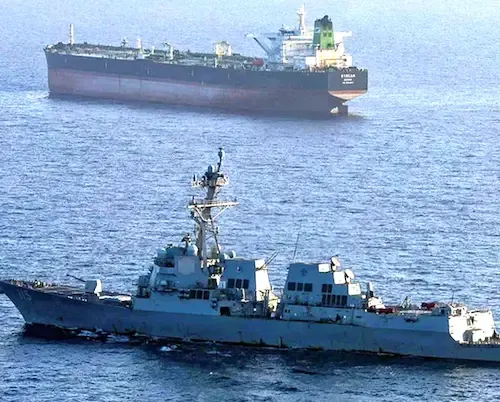
Dubai. Instead of reducing tensions between Iran and the US over the Strait of Hormuz, the talks appear to be getting more complicated. Iran has made it clear that there will be no agreement on reopening this important sea route without a change in the US attitude. Iran’s National Security Council has said that to restore the movement of ships, the US will have to change its policies and military activities. This statement from Iran has come at a time when there is growing international concern about the Strait of Hormuz. This route is considered very important for global oil and gas supplies.
Iran placed conditions before America
Mohammad Bagher Zulghadr, Secretary of Iran’s National Security Council and Commander of the Revolutionary Guard, said that the US should not threaten Iran in the future and that the ongoing military action against Iran and its armed allies in the region must be permanently halted. Iran has set several conditions for normalizing the movement of ships in the Strait of Hormuz. These include the lifting of US naval restrictions on Iranian ports, the withdrawal of US military presence from the region, and compensation for losses caused by the conflict.
Demand for return of seized Iranian assets
Iran has demanded the lifting of US sanctions and the unconditional release of frozen Iranian assets. Tehran maintains that unless concrete steps are taken on these issues, an agreement on opening the Strait of Hormuz is unlikely. These conditions from Iran make it clear that the decision to open the sea route is no longer merely a matter of navigation, but is also accompanied by broader political and military demands.
Why is the Strait of Hormuz so important?
The Strait of Hormuz is one of the world’s most important maritime energy routes. It transports large quantities of crude oil and natural gas to international markets. Therefore, a prolonged disruption to shipping along this route could increase pressure on global energy supplies. This is also likely to impact international oil and gas prices.
Pakistan appeals for solidarity against Israel
Meanwhile, Pakistan’s Defense Minister Khawaja Asif has called for unity against Israel, calling it a threat to Muslim countries. In a statement issued after the trilateral defense agreement with Saudi Arabia and Turkey, Asif said that Muslim countries need to form a united military front on the issue of Israel. He also questioned Israel’s legitimacy, citing historical events to its formation. According to Asif, Israel’s presence in the region could pose a threat to many countries.
Read also: Rahul Gandhi launches a major attack on BJP and RSS, levelling serious allegations regarding employment.
Pakistan maintains its stance on Israel
Khawaja Asif also clarified that the change in Israeli leadership will not alter Pakistan’s stance. He stated that Pakistan’s policy toward Israel will not be affected by the change in its leadership. Meanwhile, the international community is closely monitoring Iran’s strict conditions regarding the Strait of Hormuz and the ongoing tensions with the United States. Any prolonged disruption to this sea route could impact the global energy market.
-
Apple Pay to enter India in October: Everything you need to know

-
Tabu’s fierce first look from Slum Dog: 33 Temple Road

-
Inside Indian Cricketer's Multi-Crore Mansions: From Virat Kohli To Sourav Ganguly

-
Grave IPL Link Reported Following BCCI Review Of Team India’s Injury Crisis

-
LPG At Rs 942, But Who Is Paying The Difference? Govt Reveals Rs 59,000 Crore Burden