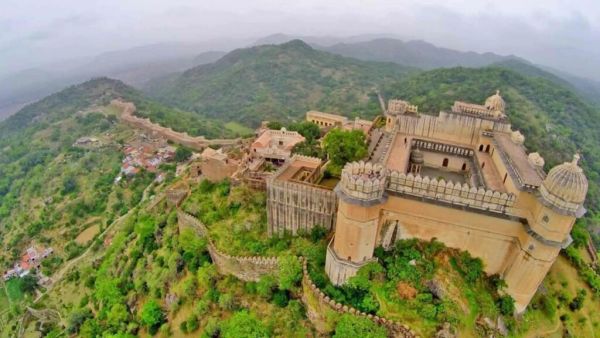
Kumbhalgarh Fort, situated amidst the high hills of Aravali in Rajsamand district of Rajasthan, is an important symbol of the glorious history of Mewar. Built by Maharana Kumbha in the 15th century, this fort is famous for its huge ramparts, strong security system and strategic location. According to Rajasthan Tourism, Kumbhalgarh was the second most important fort of Mewar after Chittorgarh and was used as a safe haven for the rulers of Mewar during times of conflict.
Maharana Kumbha had built the fort
The present form of Kumbhalgarh was built in the 15th century during the reign of Maharana Kumbha. According to UNESCO records, major construction of the fort took place between about 1443 and 1458. Its design is attributed to the architect Mandan, who was an architectural expert and writer associated with the court of Maharana Kumbha. This fort was not just a royal palace, but was a very important military center for security and shelter during war. Due to its natural position and strong fortifications it was not easy for the enemy to reach here.
36 kilometer long huge wall
The biggest identity of Kumbhalgarh is its huge ramparts. The fort wall extends for about 36 kilometers and moves along the natural undulations of the Aravalli hills. According to Rajasthan Tourism, its width is so great at many places that several horses could walk on it simultaneously. The fort was protected by seven huge security gates and strong bastions. Its high walls, mountain slopes and winding roads combined to provide it with a very strong defense system.
Birthplace of Maharana Pratap
The biggest historical importance of Kumbhalgarh is that it is considered to be the birthplace of Maharana Pratap. Rajasthan Tourism also describes Kumbhalgarh as the birthplace of this great warrior of Mewar. This is why this fort has a special place in the history and Rajput heritage of Rajasthan. The rulers of Mewar also used the fort to take shelter in times of crisis. According to Rajasthan Tourism, Kumbhalgarh provided protection to Mewar ruler Udai Singh even during his childhood.
Remained strong despite many attacks
Kumbhalgarh was attacked many times, but its strong security system kept it safe for a long time. According to Rajasthan Tourism, the fort's defenses were breached on a large scale only once, when the combined forces of the Mughals and Amer took advantage of the lack of water. Some construction and repairs were also carried out in the fort in later times. In the 19th century, Maharana Fateh Singh renovated some parts of it.
The fort is rich with temples and palaces
There are many Hindu and Jain temples present in the huge complex of Kumbhalgarh. The Badal Mahal here is included in the major attractions. Situated atop a hill, this palace offers a spectacular view of the Aravalli hills. The architecture of the fort not only displays military might, but also gives a glimpse of the religious, cultural and artistic traditions of that time.
Included in UNESCO World Heritage
Kumbhalgarh Fort is part of the 'Hill Forts of Rajasthan' group. In the year 2013, it was included in the UNESCO World Heritage List. This group includes six major hill forts of Rajasthan. Today Kumbhalgarh is included in the major tourist destinations of Rajasthan. Its 36 kilometer long ramparts, Aravalli hills, ancient temples, palaces and the history associated with Maharana Pratap give it a place among the most special historical forts of the country.