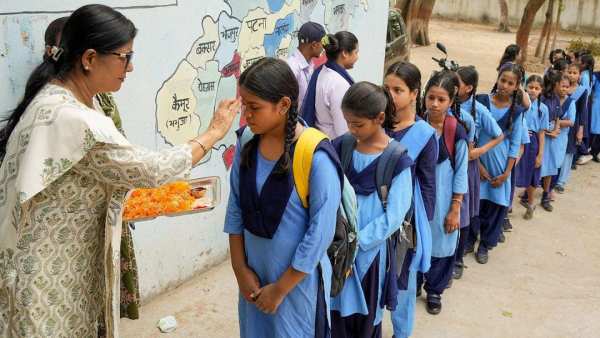
New Delhi: The National Education Policy (NEP) 2020 has led to a series of changes across India's school and higher education systems, the Ministry of Education informed the Lok Sabha.
In a written response on Monday, Minister of State for Education Sukanta Majumdar outlined several initiatives introduced since the policy was announced, covering areas ranging from foundational learning and digital education to flexible degree programmes, academic credit systems and skill development.
The reforms have been aimed at making education more accessible, flexible, and multidisciplinary while also strengthening digital learning opportunities for students.
NEP 2020 Changes In School Education
Several programmes have been introduced or strengthened in school education as part of the implementation of NEP 2020.
The PM SHRI (PM Schools for Rising India) initiative focuses on upgrading schools. The government has also implemented Samagra Shiksha to support quality education and promote inclusive and equitable learning environments for children.
For foundational education, the National Initiative for Proficiency in Reading with Understanding and Numeracy (NIPUN Bharat) has been introduced with the objective of ensuring that students attain foundational literacy and numeracy by Grade 3.
The ministry also highlighted Vidya-Pravesh, which provides a three-month, play-based school preparation module for children entering formal education.
Another major initiative is PM e-VIDYA, which brings together efforts in digital, online, and on-air education. The programme is designed to provide students with access to education through multiple modes.
Higher Education Gets New Academic Frameworks
The government has also introduced several reforms aimed at changing how higher education is structured and delivered.
These include the National Credit Framework (NCrF) and National Higher Education Qualification Framework (NHEQF), along with the Curriculum and Credit Framework for Undergraduate Programmes.
Higher education institutions have also been provided with frameworks for multiple entry and exit options in academic programmes. The government has additionally encouraged the development of multidisciplinary higher education institutions and enabled students to pursue two academic programmes simultaneously, subject to applicable provisions.
Another major development is the Automated Permanent Academic Account Registry (APAAR ID). The digital identity is intended to serve as a lifelong academic identifier, allowing a student's educational journey and achievements to be tracked from the pre-primary level through higher education.
PM-Vidyalaxmi Scheme To Support Students
Financial assistance for higher education has also been included among the initiatives highlighted by the ministry.
Under the PM-Vidyalaxmi scheme, meritorious students can access financial support, including collateral-free and guarantor-free education loans through a digital application process designed to be simple and student-friendly.
The initiative is intended to make access to higher education easier for eligible students who require financial assistance to continue their studies.
Digital Learning Platforms Expand Access
The ministry said digital platforms are playing an important role in widening access to academic resources.
Platforms including SWAYAM, SWAYAM Prabha, e-PG Pathshala and the UGC e-resource portal provide students with access to academic content.
The UGC e-resource portal has also been integrated with the Digital Seva Portal, allowing students in rural areas to access selected educational resources through Common Service Centres. Some of the content is also available in regional languages.
The government has also expanded flexible learning options through online and distance education. According to the ministry, 126 Higher Educational Institutions (HEIs) are currently offering around 802 online programmes, while 121 HEIs are offering approximately 1,699 Open and Distance Learning (ODL) programmes.
SWAYAM Plus Focuses On Future Skills
Skill development has emerged as another important component of education reforms.
The government has launched the SWAYAM Plus platform with a focus on upskilling and reskilling. The platform offers courses designed around emerging areas and industry requirements.
More than 500 courses have been developed and curated with contributions from 89 industry partners across 17 sectors. Subjects covered include emerging fields such as artificial intelligence (AI) and data analytics.
According to the government, more than 6,00,000 students have registered on the SWAYAM Plus platform so far.
The initiatives highlighted by the Ministry of Education indicate that the implementation of NEP 2020 has extended beyond changes to classroom teaching. The reforms span foundational learning, digital resources, flexible academic pathways, financial support, multidisciplinary education and job-oriented skills, with the stated aim of preparing students for changing educational and employment requirements.
-
GamingCon Bharat 2026 Adds MeepleCon, India’s Largest Board Game Convention, Targets 20,000+ Visitors In Mumbai

-
Meta's Mark Zuckerberg Lays Out Vision For 'Personal Superintelligence', Says Power Must Not Be Concentrated In A Few Hands

-
AFCAT 2 Provisional Answer Key 2026 Released At afcat.edcil.co.in; Check Response Sheet & Objection Details
-
UP Scholarship 2026-27: Registration Begins Today At scholarship.up.gov.in; Check Eligibility, Dates and Steps
-
Wamiqa Gabbi Roped In To Play Powerful Role In Rishab Shetty Starrer Jai Hanuman: Report