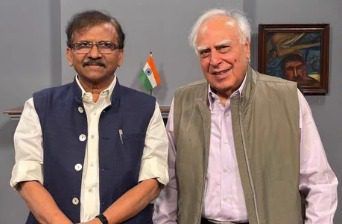
During the hearing of the ongoing dispute in the Supreme Court regarding Shiv Sena Party and election symbol, senior lawyer on behalf of Thackeray faction on Tuesday. Kapil Sibal Presented strong arguments. He put many important questions before the court, from the appointment of Eknath Shinde as ‘chief leader’ to the rights of the Election Commission and the party constitution of Shiv Sena.
After Sibal’s arguments, the confidence of the leaders of the Thackeray group has increased. Shiv Sena (Uddhav Thackeray faction) leaders after the hearing ended Sanjay Raut Said that they are satisfied with the hearing and hope to get justice.
The case pertains to the Election Commission’s decision to recognize the Eknath Shinde-led faction as the real Shiv Sena in 2023 and allot the party the ‘bow and arrow’ election symbol. Uddhav Thackeray faction has challenged this decision of the Election Commission in the Supreme Court.
Kapil Sibal raised questions on Shinde’s appointment as ‘chief leader’
During the hearing, Kapil Sibal raised questions about the post of ‘main leader’ in Eknath Shinde’s party.
He argued that Shiv Sena’s Party Constitution of 1999 There is no mention of any post named ‘Chief Leader’. The post of ‘Pakshapramukh’ i.e. party chief has been mentioned in the party’s constitution.
Sibal raised the question that when there is no provision for the post of ‘Chief Leader’ in the original constitution of the party, then on what basis does Eknath Shinde establish himself on this post.
He also raised questions by linking Shinde’s appointment to the party constitution amendment made in 2018.
Questions also regarding constitutional amendment of 2018
Kapil Sibal argued in the court that the 2018 party constitution amendment by the Shinde faction was not considered constitutional.
In such a situation, Sibal raised the question that if the same constitutional amendment is not considered unconstitutional or valid, then how can Shinde’s appointment be considered valid on the basis of the same amendment?
He also argued that his claim of taking benefits after joining the party and later describing the internal system of the same party as not democratic also raises questions.
Kapil Sibal’s argument on the rights of the Election Commission
Kapil Sibal’s second major argument was regarding the Election Commission’s decision to give the Shiv Sena party and election symbol to the Shinde faction.
Sibal argued that the Election Commission acts as a mediator in such disputes, but the right to decide the political divide within the party is a question to its limits.
He said that the Election Commission cannot make the final determination as to whether the constitution of any political party is constitutional or unconstitutional.
Separate political parties and legislative parties
Sibal also stressed during the hearing the difference between a political party and a legislative party.
According to him, the division that took place in Shiv Sena was mainly due to took place at the legislature party levelnot at the political party level.
He said that political party and legislative party cannot be considered equal.
Despite this, the Election Commission made the majority of the legislature party an important basis in its decision to give the Shiv Sena party and the election symbol to the Shinde faction.
How can a party be decided on the basis of majority in the legislature?
Kapil Sibal raised the question that if one faction of a political party has more MLAs in the legislature, then how can the entire political party be claimed on the basis of that majority alone?
He also mentioned the decision to change the whip by the Shinde faction MLAs.
According to Sibal’s argument, Shinde group’s 35 out of 54 MLAs Had taken a decision and changed the whip.
He also argued that to form a separate faction on the basis of one-third members, recognition of the parent political party is necessary. Otherwise that group has to merge with some other political party.
Questions on party and election symbol allocation also
Kapil Sibal also raised questions about the allocation of party and election symbols by the Election Commission.
His argument was that it cannot be considered appropriate to give the name and election symbol of the entire political party to any one group merely on the basis of majority in the legislature.
He placed several legal questions before the court regarding the decision of the Election Commission and its jurisdiction.
Commission’s authority over appointments within the party?
Sibal’s third major argument was regarding the internal organization and appointments of the political party.
He said that every political party has its own organizational structure. How appointments will be made to which posts in the party and how the organization will be run is decided by the constitution of the party and its internal system.
According to him, the structure of different political parties is different and the Election Commission cannot be considered to have the right to interfere in every aspect of the internal appointments of a political party.
23 major issues of Kapil Sibal
The main points raised in the hearing can be briefly understood as follows –
- Questions were raised on the appointment of Eknath Shinde as ‘chief leader’.
- The post of ‘Chief Leader’ is not mentioned in the 1999 Shiv Sena Constitution.
- The post of ‘Pakshapramukh’ is mentioned in the party constitution.
- Questions were raised on on what basis Shinde calls himself a ‘main leader’.
- Questions were raised linking Shinde’s appointment to the 2018 constitutional amendment.
- If the 2018 amendment is not valid then how can the appointment on the same basis be valid?
- After taking benefits from the party, its claim that its system was not democratic was questioned.
- The Election Commission works like a court in this matter.
- The decision on the split in a political party is a question of jurisdiction of the Election Commission.
- The Commission cannot decide whether the party’s constitution is constitutional or unconstitutional.
- The split occurred in the legislative party, not in the political party.
- Legislative parties and political parties are different.
- The party and election symbol were given to Shinde faction on the basis of majority in the legislature.
- The Election Commission concluded that there was a split in Shiv Sena.
- The power of the Commission under Article 15 was questioned in the dispute over party and election symbol.
- 35 out of 54 MLAs of Shinde faction decided to change the whip.
- The issue of recognition of the parent party was raised to form a separate faction of one-third members.
- Otherwise that group has to merge with some other party.
- Despite this, Shinde faction was given party and symbol on the basis of majority in the legislature.
- The political party decides its internal appointments and organizational arrangements.
- Different parties have different organizational structures.
- The organizational rules of each party may be different.
- The Election Commission cannot decide on appointments within the party.
Sanjay Raut said- ‘We will get justice’
After the hearing ended, Thackeray faction leader Sanjay Raut in his reaction said that he was satisfied with the hearing and hoped to get justice.
After Kapil Sibal’s arguments, confidence in the matter has increased among the leaders of the Thackeray faction. However, the final decision will come only after the Supreme Court considers all the legal arguments and records of the case.
What next in Shiv Sena controversy?
This legal battle regarding Shiv Sena party and election symbol has been going on for a long time. After the Election Commission’s decision, the Uddhav Thackeray faction had moved the Supreme Court.
Now the regular hearing in the case is going ahead. Next hearing after today’s hearing tuesday 2 pm Information has been given to happen.
In the upcoming hearing, the arguments of both the parties and the legal aspects to the Election Commission’s decision are likely to be discussed further in the court.
During the hearing of Shiv Sena party and election symbol dispute in the Supreme Court, senior Thackeray faction’s lawyer Kapil Sibal raised 23 important issues including the appointment of Eknath Shinde as ‘chief leader’, the party constitution of 1999 and 2018, the authority of the Election Commission and the difference between political party and legislative party. He also raised questions on the party and election symbol being given to Shinde faction on the basis of majority in the legislature. After the hearing, Sanjay Raut expressed satisfaction and said that he is hopeful of getting justice. The next hearing of the case has been informed that it will be held on Tuesday at 2 pm.
-
Trending and viral: Ever tried Fried Chicken Icecream?

-
UP madrasa student assaulted on train for refusing alcohol offer

-
UP Speaker leaves during national anthem, draws Opposition flak

-
Why so selective?: Shehzad to Tehseen over sugar scam claims
-
Why Your Apple Slices Change Colour and How to Keep Them Fresh for Hours