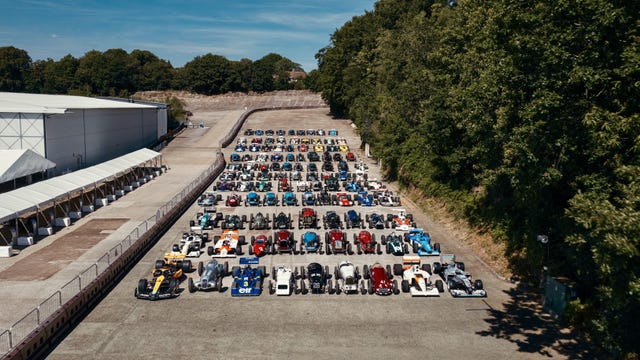
A hundred years ago, and two decades before Silverstone came into the picture, Brooklands staged the very first British Grand Prix. Last weekend, the historic venue marked that landmark chapter in motor sport history with a centenary celebration of the inaugural British GP, bringing together more than 120 grand prix cars from across every era. Some of them ran over the uneven surviving sections of the old circuit, while newer machinery took to the test track at the adjoining Mercedes-Benz World facility.
Many people assume the British GP began when Silverstone opened in 1948, even though the first non-championship race held at the former airfield actually used the “European Grand Prix” title. In reality, the first British GP took place at Brooklands on August 7, 1926, 24 years before Formula 1 even existed. The banked circuit had been operating since 1907, just a year after the first French GP and two years before the Indianapolis Motor Speedway was born. Situated south of London, not far from Weybridge, Brooklands quickly became a focal point not only for British motorsport but also for aviation. Its imposing concrete banking hosted some unforgettable events and attracted enormous crowds.
It was nearly two decades before the “Grand Prix” name was first applied there. Only nine cars lined up for that inaugural 1926 race, with the entry list featuring several major names from racing and record-breaking circles, including Malcolm Campbell, Henry Segrave, George Eyston and Robert Benoist. The 287-mile race was won by the Delage shared by Robert Senechal and Louis Wagner, both of whom suffered burns to their feet because the exhaust was positioned rather too close to the cockpit.
The race returned in 1927 before disappearing from the calendar. A Donington GP was later run from 1935–1938, but the British GP title itself was not revived until the post-World War II period at Silverstone. In 1950, that race became the first-ever grand prix to be held as part of the modern Formula 1 World Championship.
By that stage, however, Brooklands had already passed into history. It shut in 1939 at the outbreak of war, when the site was turned into a centre for bomber and fighter aircraft production, and it never reopened once the conflict ended. Aircraft manufacturing continued there into the 1980s; even today, more planes have been built at Brooklands than at any other single location in the world. Unfortunately, a substantial section of the legendary banking was bulldozed for development, and over time the venue’s status as host of the first British GP gradually slipped from public memory.
That was put right by last weekend’s centenary event, organised through the Brooklands Museum—the charitable body that preserves what remains of the banking, along with the original paddock buildings and garages, and has kept the spirit of the place alive. The permanent museum already houses some remarkable machinery, but for the centenary the goal was to gather more than 100 Grand Prix cars in one place. In the end, that target was comfortably surpassed.
The line-up on display stretched from a 1908 Austin to modern machines from the likes of McLaren and Haas, covering every period in between. While most of the cars were static exhibits, demonstration runs brought the sounds of the BRM V-16 and Honda V-12 to life.
In a particularly moving moment, the day before the main public event—and at the exact minute marking the true 100th anniversary of that first Grand Prix—the starting scene was recreated on the original grid. Among the star attractions was the sister car to the winning Delage. Also in attendance was Thomas Special 2, which had been entered by its creator Parry Thomas for the 1926 race but was not quite finished in time. It has since undergone restoration, allowing the sleek machine to finally take its rightful place a full 100 years later.
The centenary celebration was a one-off, but Brooklands remains an essential visit for any motoring enthusiast travelling to the U.K. Alongside the racing cars, there is a wealth of aviation history on site, including an example of Concorde and one of only two surviving Wellington bombers. There is even a London bus museum within the grounds. The real highlight, though, is the surviving section of the circuit itself: visitors can climb the concrete banking and spend a few moments paying tribute to the legends who once raced around its steep curves, 24 years before the Formula 1 we know today came into being.
-
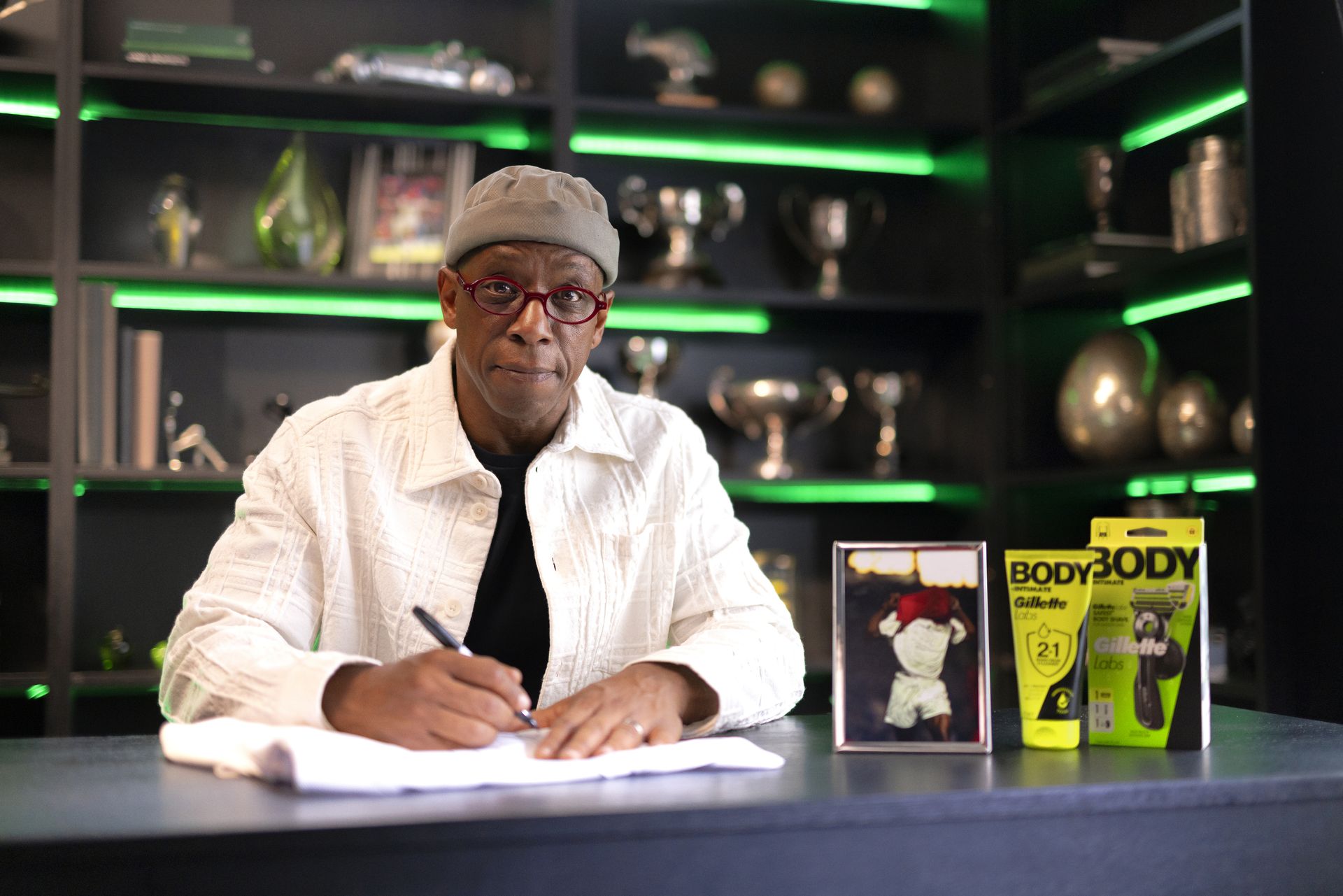
Ian Wright backs campaign to scrap football’s most ridiculous shirt-off yellow card rule
-
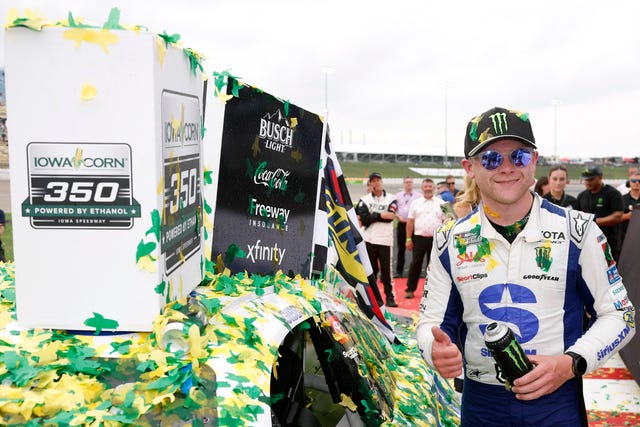
Ty Gibbs wins NASCAR Cup race at Iowa as teammate Bell takes another runner-up finish
-
Teen in Audi S5 Hits 140 mph Before Police Bring Him to a Halt, Dashcam Footage Shows
-
2027 Volkswagen Atlas Cross Sport brings back the sleeker look to VW’s big crossover
-
Cadillac expands ‘Curated by Cadillac’ bespoke programme to the 2027 Escalade IQ