The pilot-in-command of an Air India flight from Phuket to Delhi, which experienced a sudden 300-foot altitude loss last week, had been taking prescribed medication for sleep difficulty, according to an internal flight safety report accessed by NDTV.
The revelation comes as the Aircraft Accident Investigation Bureau (AAIB) continues its probe into the August 4 incident. The agency has cautioned against drawing conclusions from isolated or unverified information while the investigation is underway.
Pilot Cited Sleep Difficulties, Prescribed Medication
According to the report, the pilot said in his flight safety statement that he had been experiencing difficulty sleeping over a preceding period due to personal circumstances and had been prescribed medication by his family doctor.
During the layover in Phuket, he said he tried to rest but “sleep did not come easily”.
He consequently chose to engage in light activity, such as walking, believing it would help improve his sleep quality.
The pilot also raised concerns about the impact of his rostered duties on the amount of daytime rest available to him.
Pilot Raises Concerns Over Daytime Rest
In his statement, the pilot said that while his rostered duties were legally within prescribed rest limits, they were scheduled in a way that “compressed available daytime rest, which is often below the minimum required for adequate recovery”, according to the report.
For the first flight, he was required to report for duty at 12.10 am, meaning preparations had to begin before 10 pm, he reportedly said.
The pilot said obtaining adequate sleep before that duty period was difficult.
After the flight to Phuket, completing post-flight duties and travelling to the hotel generally took between 1.5 and two hours, according to his statement. He said this further reduced the time available for daytime rest and often left him with less time than he believed was required for proper recovery.
For the return flight, the pilot said he had to wake up at 3 am IST.
The pilot had also tested positive for marijuana in two drug tests, with the second being a confirmatory test.
Co-Pilot Was In Command During Altitude Drop
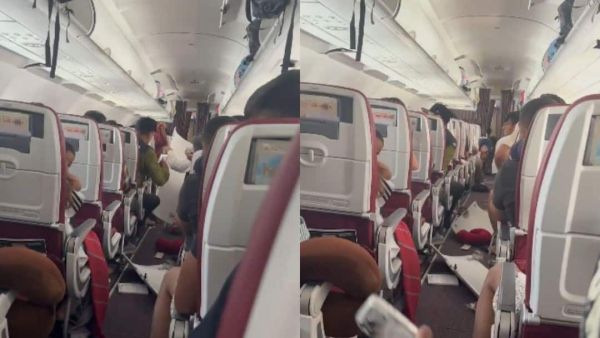
The incident took place on August 4 when Air India flight AI 2379, an Airbus A320 registered as VT-EXO, was flying from Phuket to Delhi.
According to the AAIB, the aircraft experienced a sudden altitude variation of around 300 feet while cruising before stabilising and landing safely in Delhi.
The incident report accessed by NDTV indicates that the pilot-in-command was not in his seat when the sudden altitude change occurred, with the co-pilot in command of the aircraft.
The report, citing sources, said the pilot later went to the cabin to check on injuries and allegedly told passengers not to film him or the aircraft.
After the aircraft landed in Delhi, he was reportedly unsteady on his feet and had to be helped to sit down.
The report also said an investigating officer physically assisted him while he submitted his urine sample.
Report Details Phuket Layover Incident
The report also referred to an incident involving the crew during the Phuket layover.
According to sources cited in the report, while travelling from Delhi to Phuket, the pilot had gone to the washroom and, as per protocol, asked a cabin attendant to temporarily occupy his seat.
The attendant was allegedly not proficient in handling the operation and was reprimanded by the pilot.
The report said the pilot later wanted to make amends and took crew members to a party in Phuket before the return flight.
Both pilots were taken off the roster pending an inquiry.
AAIB Cautions Against Premature Conclusions
The AAIB said on Tuesday that it was systematically collecting, preserving and examining all relevant technical, operational, medical and human-factor evidence related to the incident.
🔴 Le 4 août 2026, le vol Air India AI2379 reliant Phuket à Delhi, a subi une brutale perte d’altitude d’environ 300 pieds en croisière, blessant une vingtaine de passagers et membres d’équipage.
— air plus news (@airplusnews) August 12, 2026
Le commandant de bord a été testé positif à la marijuana lors d’un test de… pic.twitter.com/EVAtUtvF5q
The investigation includes examination of the aircraft and its systems, recorded flight data, operational and maintenance records, medical information and interviews with people concerned.
The agency said all material evidence would be examined in its entirety before conclusions are drawn.
Officials from France’s Bureau d’Enquêtes et d’Analyses (BEA) and technical representatives from Airbus are assisting with the investigation.
The AAIB said it would issue preliminary findings within the stipulated timeframe under applicable provisions and International Civil Aviation Organisation (ICAO) protocols.
The agency also stressed that the sole objective of the investigation is to establish the circumstances and contributing factors related to the occurrence and identify appropriate safety measures to prevent a recurrence.
It said the probe was independent, evidence-based and comprehensive, adding that “no inference regarding the cause of the occurrence should be drawn from any isolated piece of information” while the investigation remains underway.
The AAIB has also appealed to the media and the public to respect the investigation process and refrain from drawing conclusions based on incomplete, unverified or selectively available information.