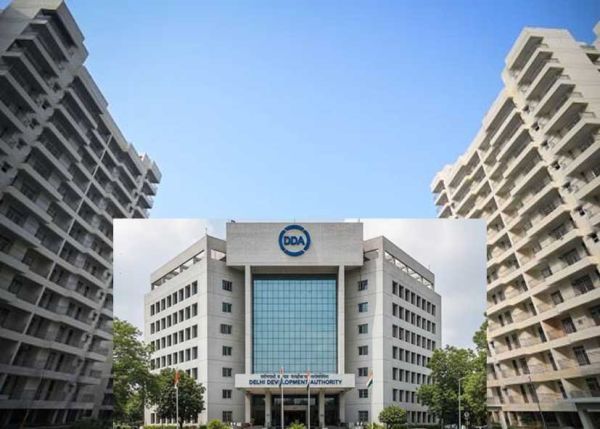
Master Plan 2047, which decides the direction of future development of Delhi, has been approved in the board meeting of Delhi Development Authority (DDA) held on Wednesday. For a long time, traders, farmers, developers and other stakeholders had been demanding implementation and notification of this new master plan. Many important provisions have been made in the new master plan for the planned development of the capital, residential expansion, transportation network and strengthening the urban structure. Under this, preparations have been made to give a new direction to urbanization and expansion of infrastructure.
After the approval of DDA, now Master Plan 2047 will be sent to the Union Ministry of Housing and Urban Affairs. The ministry is likely to issue a notification soon after reviewing it. According to sources, the Central Government may gift a new master plan to the people of Delhi before the country's 80th Independence Day. In such a situation, it is expected to be notified before August 15.
Large scale development will take place in 105 villages
According to sources, work is underway on a plan to develop 105 villages of Delhi under the land pooling policy. Now this policy will be converted into town planning model. Under this, planned development will be done in P-2, K-1, K-2, L, N and J zones. All these zones have been divided into different sectors, where residential and other urban facilities will be expanded.
Mandatory requirement of consortium will end
Till now, under the land pooling policy, it was mandatory to form a consortium under the supervision of DDA for land development. Under this, land owners had to work in groups for flat construction and development work in a specified area. In this arrangement, 40% share of DDA and 60% share of land owners was fixed. However, preparations are being made to eliminate this requirement in the new master plan, thereby making the development process more simple and faster.
20 lakh new flats will be built in the next 10 years
After the implementation of the town planning model, DDA is aiming to construct approximately 20 lakh additional new flats in these zones in the next 10 years. It is believed that this will help in meeting the increasing demand for housing in Delhi and modern housing will be available to millions of people.
High rise buildings will be built on the banks of UER-2
A major proposal of the Master Plan 2047 is to promote construction of high-rise buildings around Urban Extension Road-2 (UER-2). Under the plan, high-rise residential and commercial buildings will be developed within a radius of 280 meters on both sides of UER-2. Till now, large-scale high-rise development has been seen only in limited areas in Delhi. Many high-rise commercial buildings exist in the Connaught Place area, while some private builders have also developed large townships in the capital. Apart from this, DDA has developed multi-storey residential projects under Karkardooma Towering Heights Housing Scheme. After the implementation of the new master plan, there is a possibility of large-scale high-rise development around the UER-2 corridor, due to which the urban landscape of Delhi can develop on the lines of modern metropolis.
TOD policy will be expanded
Special emphasis has also been laid on expanding the Transit Oriented Development (TOD) policy in the new master plan. Under this policy, planned development of land located around Metro, RRTS and railway corridors will be done, so that people can get housing and commercial facilities close to public transport. DDA had invited online applications from developers for development of their land and land parcels located around these corridors in July 2026. This initiative is also getting positive response. At present DDA has covered about 207 square kilometer area under TOD policy, out of which about 80 square kilometer area has been brought under this purview for the first time. This policy will be further expanded after the implementation of the new master plan, which will promote public transport based urban development.
There will be rapid development around 14 land parcels
Real estate experts believe that after the approval of Master Plan 2047, work on TOD projects will start rapidly. Under this policy, mixed use development will be promoted within 500 meters of Metro and RRTS stations. Integrated development of residential, commercial and office complexes will be done in these areas, so that people can get better facilities to live, work and travel in one area. For this, 14 land parcels have been identified around the major metro corridors of Delhi including Karkardooma, Peeragarhi, Dwarka and Rohini. These areas may see large-scale urban development in the coming years.
Notification may come soon
After getting approval from the DDA Board, the Master Plan 2047 will now be sent to the Union Ministry of Housing and Urban Affairs. The ministry is likely to issue its notification soon. It is believed that before Independence Day, Delhiites may get the gift of this much awaited master plan.
Yamuna O-zone and submerged area will be rejuvenated
The development of Yamuna O-Zone and floodplain area of Yamuna has also been given priority in Master Plan 2047. Under the scheme, the areas around the Yamuna banks will be comprehensively rejuvenated in accordance with environmental standards. Green belts, biodiversity conservation, public open spaces and environment-friendly development work will be promoted in these areas. Its objective is to preserve the natural form of Yamuna River and develop it as a major environmental and public area of the capital. To implement this project, a process of extensive discussion and consultation will be followed with government institutions, policy-makers, environmental experts, scientists, urban planners, landscape architects, technical institutions and other stakeholders.
Flexibility in urban development norms
An important feature of the new master plan is to make urban growth control norms more flexible. Rules to use complexes, activities, parking arrangements, land use and mixed development have been made simple and practical, so that the city can develop in line with future needs. The plan aims to promote mixed use as well as ensure easy access to civic amenities and urban services.
Environmental protection and sustainable development have been made the main basis in Master Plan 2047. Under this, priority will be given to conservation and expansion of high quality green-blue assets for recreation and public use. The plan includes development of biodiversity parks, integrated flood plain planning, revival of stepwells and water bodies, creation of buffer zones along drains and development of walking and cycle paths. Also, new buildings will have to comply with Green-Blue Factor (GBF) standards, thereby promoting water conservation, green cover and eco-friendly construction.
-
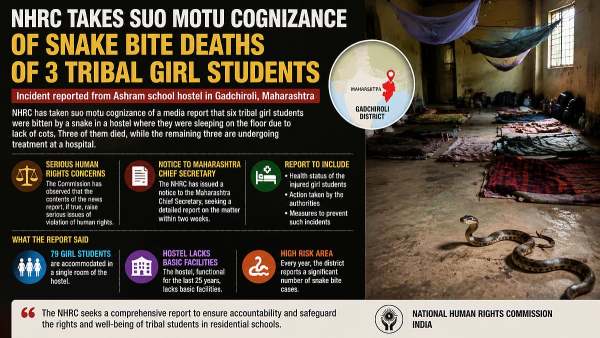
NHRC Seeks Report From Maharashtra Over Snake Bite Deaths Of Tribal Girls In Gadchiroli Ashram Hostel
-
President address: Students architects of future, reforms underway

-
Hyderabad’s Skyroot ties up with Redcliffe for space diagnostics

-
Matt Grimes says he feels ‘a bit of an imposter’ as he shares Coventry City fans’ pain before Premier League return

-
Barcelona avoid €10 million payment to Manchester City after Ferran Torres agreement