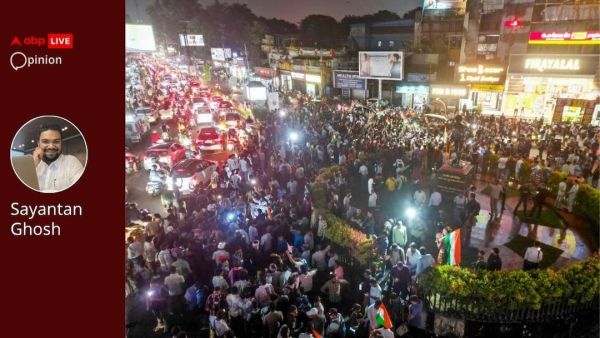
The Gen Z protest that unfolded at Jantar Mantar marked a rare moment when young Indians forced a sitting Union Education Minister to step down. Dharmendra Pradhan resigned on July 25, 2026, after weeks of sustained agitation over the NEET-UG paper leak that disrupted the futures of millions of aspirants. Sonam Wangchuk’s 26-day fast and the reported police action during the July 20 march only intensified the resolve of the protesters who organised under the Cockroach Janta Party banner. This was not the first youth mobilisation India has seen, yet it stood apart because the core issue of repeated examination irregularities cut across regions and touched an entire generation. The government eventually accepted moral responsibility, and the agitation was called off, but the deeper demand for accountability did not vanish with the resignation.
That demand has now travelled to states ruled by parties that once stood with the Jantar Mantar protesters. In Jharkhand and Punjab, the same language of fairness and systemic failure is being directed at non-BJP governments. Every protest carries a political edge, yet the students leading these movements insist their anger is aimed at the machinery that repeatedly betrays merit, not at any single party’s ideology. Opposition leaders who visited the capital protest site and launched youth-focused campaigns have so far remained silent about applying the same standards inside their own administrations. The result is a natural and growing restlessness among young citizens in opposition-ruled states who see no reason why accountability should stop at the borders of BJP-governed territories.
Jharkhand’s Stadium Stir
In Ranchi, the protest that began on July 25 at Jaipal Singh Munda Stadium has entered its third week. Job aspirants under the JPSC-JSSC Reforms Manch banner accuse the Hemant Soren-led Jharkhand Mukti Morcha-Congress government of irregularities in the 14th Jharkhand Public Service Commission (JPSC) preliminary examination and multiple Jharkhand Staff Selection Commission (JSSC) recruitments. They demand cancellation of the contested tests, an independent CBI probe and lasting reforms in the recruitment bodies. Police used water cannons, tear gas, and batons when thousands tried to march toward the Assembly.
The monsoon session itself was adjourned sine die a day early amid continuous disruption. Chief Minister Soren has offered to cancel the 14th JPSC and backlog papers of 2023 and 2025, ordered a CID investigation that has already led to nearly twenty arrests, and invited talks. The students, however, refuse to disperse until a central agency inquiry is granted.
Major opposition parties that earlier extended support at Jantar Mantar have been quick to back the Ranchi agitation. Yet none of them has publicly committed to identical standards of transparency and independent scrutiny in the states they govern. The silence reveals a selective understanding of accountability. Young people who watched the central government yield under pressure now see the same pattern of denial and political blame-shifting in Jharkhand. Their protest remains largely free of formal party affiliation, which makes it harder for any ruling dispensation to dismiss it as orchestrated opposition theatre.
Punjab’s Exam Discontent
In Punjab, the Aam Aadmi Party government under Bhagwant Mann faces parallel heat. Allegations surrounding the pharmacy officer recruitment examination held on July 19, in which candidates were found using electronic devices for cheating, have been seized upon by Congress, Shiromani Akali Dal and BJP workers. Youth Congress and ABVP activists marched toward the Vidhan Sabha and were met with water cannons.
Opposition leaders claim a series of irregularities over the past four years, while Mann insists no paper has leaked under his watch and that the recent incident was a busted cheating racket, not a systemic leak. Farmers, women and students have staged separate protests on other grievances, adding to the sense of accumulating public dissatisfaction. AAP built its political identity on the promise of clean governance and anti-corruption. The same yardstick is now being applied to its only state government.
Whether or not the opposition parties of Punjab are amplifying the discontent, the underlying question remains one of institutional integrity. Accountability cannot be treated as a weapon reserved exclusively for the central government.
Beyond Binary Politics
Opposition parties framed the Jantar Mantar surge largely as an anti-BJP mobilisation. Congress, Samajwadi Party, Trinamool Congress, AAP and Left groups all appeared at the site. The larger youth sentiment, however, was directed at a governance culture that allows examination mafias and opaque processes to flourish.
Reducing the movement to a simple contest between the ruling party and its rivals created a dangerous binary. That binary is now being turned against the opposition itself. Right-wing voices are already attempting to weaponise the Jharkhand protests for electoral gain, precisely because the original demand was never limited to one political colour.
Looking For New Political Space
A visible wave of disillusionment with mainstream parties is taking shape. Young Indians who feel failed by successive governments are searching for alternative platforms that speak their language of merit and fairness. If opposition leaders assume they will automatically harvest the dividends of the Gen Z anger, they misread the moment. The students who forced a Union minister’s resignation and who continue to sit in Ranchi’s stadium are not looking for new patrons. They are looking for systems that work.
Any party, whether in power at the Centre or in the states, that treats accountability as optional will find the protests prolonged and the political cost steep. The stadium in Ranchi and the streets of Punjab are only the beginning of a longer reckoning.
Sayantan Ghosh teaches journalism at St. Xavier’s College (Autonomous), Kolkata.
-
HYC founder attempts suicide in Hyderabad over police harassment
-
NALSAR students won’t withdraw demand on CJI, but won’t boycott
-
LIVE: PM Modi addresses nation on 80th Independence Day
-
Two interstate thieves from Irani gang arrested in Karnataka
-
Hyderabad assets of ex-AP minister attached in liquor case