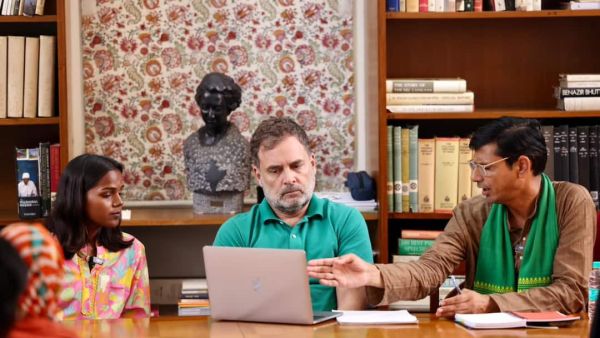
Leader of Opposition Rahul Gandhi on Thursday met a delegation representing communities protesting the Ken-Betwa River Linking Project, bringing renewed political attention to one of central India's longest-running environmental and displacement movements. The meeting comes as opposition to the ambitious river-linking scheme continues to grow across Madhya Pradesh's Bundelkhand region, where tribal residents, farmers and local activists have been resisting the project through sustained demonstrations for months. Protesters argue that the development initiative threatens their homes, livelihoods and forests, while supporters maintain it is crucial for improving water security in drought-prone areas.
Rahul Gandhi Backs Dialogue With Affected Communities
Gandhi's interaction with the delegation marks the latest political intervention in the dispute surrounding the Ken-Betwa River Linking Project (KBLP). Representatives from the affected villages used the meeting to highlight concerns over displacement, rehabilitation and the environmental impact of the proposed infrastructure.
The discussion has once again pushed the Bundelkhand agitation into the national conversation, particularly as construction activity around the project continues to accelerate.
Police Crackdown Intensified The Standoff
The renewed focus follows a major police operation carried out in the early hours of July 19 in Kupi village of Chhatarpur district. Authorities dismantled a protest camp that had been set up along the Barana river stream, where hundreds of villagers had been staging a sit-in for nearly two weeks.
Most of the demonstrators belonged to tribal communities opposing both the Union government's Ken-Betwa Link Project and two irrigation schemes introduced by the Madhya Pradesh government.
During the operation, police detained activist Amit Bhatnagar, founder of the Jai Kisan Sangathan, who had been on an indefinite hunger strike for 14 days before being admitted to a government hospital. Around 150 other protesters, largely from neighbouring Panna district, were transported back to their villages after the clearance drive.
The eviction took place less than a day after Delhi Police removed activist Sonam Wangchuk from his hunger-strike protest at Jantar Mantar, drawing comparisons between two high-profile protest dispersals occurring hundreds of kilometres apart.
Why The Ken-Betwa Project Remains Controversial
The Ken-Betwa River Linking Project is India's first river interlinking initiative and carries an estimated cost of ₹44,000 crore. At its centre is the proposed Dodhan dam, which is expected to transfer water from the Ken basin to the Betwa basin in an effort to address water scarcity across parts of Madhya Pradesh and Uttar Pradesh.
However, critics argue that the project's location within the Panna Tiger Reserve poses serious ecological risks while also threatening the displacement of long-settled tribal communities across Chhatarpur and Panna districts.
Construction near Dhondhan village has gathered pace in recent months, coinciding with intensified efforts to relocate residents from the affected areas. In response, local communities have organised sit-ins, demonstrations, road blockades and gheraos outside government offices under the leadership of Bhatnagar and other grassroots campaigners.
Villages Face Submergence As Resistance Continues
The scale of the proposed displacement remains one of the movement's biggest concerns. According to protest groups, 24 villages lie in the dam's impact zone. Eight villages face complete submergence, while the remaining 16 are set to become part of the expanded Panna Tiger Reserve.
Earlier this year, protesters also marched to Delhi to press their demands, while women in the affected villages organised the symbolic "Chita Andolan" to convey their determination to resist displacement despite mounting pressure.
Environmental objections have also persisted. The project is expected to affect nearly 30 per cent of the tiger reserve's core habitat, and the Supreme Court-appointed Central Empowered Committee has previously raised concerns over the project's concept and design.
-
Libra Horoscope Today, August 15, 2026: Avoid taking risks in career and business, will focus on financial transactions

-
Virgo Horoscope Today, August 15, 2026: Will Not Make Decisions in Haste, Affection and Trust Will Strengthen

-
Aquarius Horoscope Today, August 15, 2026: Exercise Patience in Transactions, Be Cautious with Gifts

-
Taurus Tarot Horoscope Today, August 15, 2026: Will follow policies, appropriate proposals will come

-
Hariyali Teej 2026: 5 religious beliefs and worship significance