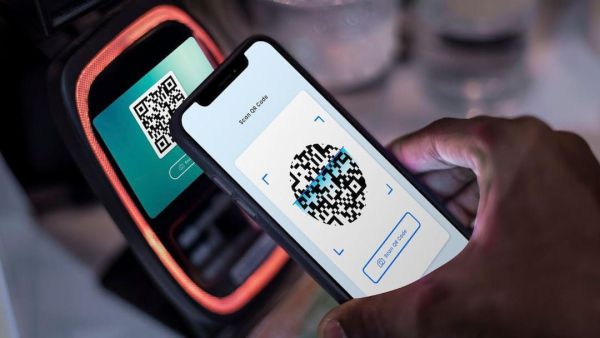
The Centre is examining ways to make the Unified Payments Interface (UPI) ecosystem financially sustainable as the cost of running the digital payments network continues to outpace government support.
The Department of Financial Services (DFS), in a response to the Parliamentary Standing Committee on Finance dated July 17, said it was considering two approaches: bringing back the merchant discount rate (MDR) for select high-value transactions or merchants, and introducing a tiered incentive system that would gradually reduce government support over the next few years.
The department said the options were being examined in view of the sustainability of UPI and the financial burden on the government.
Rs 2,000 Crore Allocation Vs Rs 20,700 Crore Industry Cost
The issue of UPI's financial sustainability was highlighted by the parliamentary panel in a report tabled on Wednesday.
The committee said the government had allocated Rs 2,000 crore to incentivise UPI transactions and compensate for losses arising from zero MDR. The industry's estimated operational cost, however, stands at Rs 20,700 crore, reported Business Standard.
The panel said the existing incentive covers only around 11 per cent of the industry's actual costs and about 14 per cent of the potential MDR collections.
It also warned that continued dependence on government support could affect payment service providers' ability to invest in cybersecurity, fraud prevention and network infrastructure.
The committee, chaired by Lok Sabha member Bhartruhari Mahtab, said a sustainable revenue mechanism was necessary to ensure that UPI could continue to expand without placing a persistent strain on the government exchequer.
What Could Change For UPI Merchants?
One of the options being examined is the restoration of MDR for transactions or merchants crossing a specified high-value threshold.
MDR of up to 0.30 per cent of the transaction value was applicable to UPI merchant transactions until 2019. The Centre introduced zero MDR on all UPI transactions in January 2020 to promote digital payments and encourage a shift from cash.
The government has so far indicated that any future MDR would be limited to a small category of merchant transactions above a specified threshold. It would also be charged at a nominal rate, well below the rates applicable to debit and credit card transactions.
The UPI and Services Steering Committee, headed by the National Payments Corporation of India (NPCI), will determine the structure of MDR and the threshold at which it could apply.
Government Support Could Be Phased Out
The second option under consideration is a tiered incentive structure under which government support could be reduced gradually over the next few years.
The move comes as UPI's projected scale continues to expand. The parliamentary committee said the platform could process up to 150 billion transactions a month and add 600 million new users.
The panel said that although statutory provisions now allow calibrated MDR on high-value transactions, delays in notifying and implementing the framework could leave payment service providers dependent on subsidies that do not adequately cover their costs.
Parliament earlier this week passed the Taxation and Other Laws (Amendment) Bill, 2026, amending the Payment and Settlement Systems Act, 2007. The amendment enables the government to specify through notification which electronic payment modes can continue to receive statutory protection from charges.
However, the government has not yet allowed MDR to be levied on UPI.
Consumers To Remain Outside Any UPI Charge
Finance and Corporate Affairs Minister Nirmala Sitharaman told the Rajya Sabha on Monday that any future fee on digital payments would apply only to a limited category of merchant transactions above a high threshold.
She said consumers would continue to use UPI for instant digital payments without paying a transaction charge.
The parliamentary committee said establishing a viable revenue mechanism would be important for ensuring the long-term financial sustainability of the UPI ecosystem without continuously increasing the pressure on the government exchequer.
-
‘I Will Defend RSS’: Rahul Gandhi Says Everyone Has Right To Freedom Of Expression
-
Monsoon Travel 2026: Skip The Crowds! Discover These Hidden Treks Near Mumbai For Your Next Rainy-Day Adventure

-
ACB Eyes September 14 For India-Afghanistan T20I Match, Set To Coincide With Ganesh Chaturthi

-
Centre To Launch Digital Rupee-Based PMGKAY Food Subsidy Transfers In Chandigarh, Dadra & Nagar Haveli On August 14
-
Stricter US Visa Rules May Cut Foreign Student Enrolment By 1.1 Lakh In Fall 2026: Report