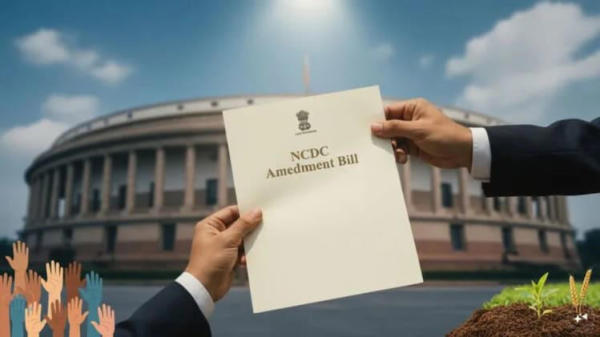
The Central Government has taken a very revolutionary and historic step to empower the rural and agricultural sector, which is the backbone of the Indian economy. Primary Agricultural Credit Societies (PACS) and various cooperative societies spread across the country will no longer have to make innumerable visits to government offices to avail financial assistance. There was a long standing complaint that these small level committees had to face lengthy and complex administrative procedures to get loans or government grants approved, which hampered development work. But now after the new guidelines of the Ministry of Cooperation, this entire system has been made completely simple and transparent, which is going to directly benefit crores of farmers and rural entrepreneurs of the country. Big change in cooperative sector: What is the new loan and grant system? Traditionally, the process of getting financial assistance to cooperative societies in the country was quite slow and complex. Approvals had to be taken at many levels, from allocation of funds to its distribution, which took months and sometimes years. Under this new system, the government has simplified the process by using modern technologies like digital platforms and Direct Benefit Transfer (DBT). Now loans and grants to cooperative societies for their projects, increasing storage capacity, warehouse construction, or other business operations to agriculture will be transferred directly to their authorized bank accounts. This step will not only save huge time, but will also maintain complete transparency in the utilization of funds. Digitization of PACS (PACS) and the basis of this historic reform To bring this entire process on the ground, Primary Agricultural Credit Societies (PACS) across the country are being computerized on a large scale for the last few years. The government, in collaboration with NABARD and other apex financial institutions, has created an integrated digital platform through which the financial activities and creditworthiness of each society can be directly monitored. When all the societies went digital and their data became available online, it became very easy for the government and financial institutions to sanction loans and grants directly to them. Now there is no need for any committee to run from one table to another with their files, as the entire evaluation is completed online and within the stipulated time frame. Rural economy and farmers will get direct support. Cooperative societies are directly connected to the common farmers, cattle herders, weavers and small businessmen of the village. When these societies start getting adequate financial help (loans and grants) on time, they will be able to provide loans to their members at more affordable interest rates. Apart from this, avenues will be opened for setting up cold storage, food processing units, mini warehouses and rental centers of modern agricultural equipment in the villages. This system will prove to be a boon in the direction of storage of produce after harvesting and getting a fair price. Farmers will be freed from the compulsion of selling their crops at throwaway prices as they will be able to keep their produce safe and, if needed, will be able to get easy loans through societies. The game of middlemen is over and the process is completely transparent. Due to the complexities in the old system, middlemen or corrupt elements often got the opportunity to take advantage, due to which the entire fund did not reach the needy committees. The new direct loan and grant process has almost eliminated the scope for all such unwanted elements. The entire process from applying through the online portal to checking its status and disbursing funds is under the ambit of digital tracking. If a committee's application is pending, the reason for the same is also clearly visible online, thereby ensuring accountability. This transparency has instilled a new confidence among the grassroots level workers and people associated with cooperatives. The vision of 'Prosperity through cooperation' is getting new momentum. Many unique schemes are being continuously run by the Union Ministry of Cooperation to take forward the vision of 'Prosperity through cooperation'. This new decision is an important part of that larger strategy. The main objective of the government is to make the cooperative societies of the country financially self-reliant and competitive, so that they do not remain mere loan taking institutions but can become powerhouses for the development of rural India. When the cooperative movement becomes stronger, new employment opportunities will be created and migration from villages to cities will also be effectively controlled. Experts believe that this policy change will bring a positive and big jump in the country's GDP and rural development figures in the coming times. The path to the future and the golden era of cooperatives: This facility of getting direct loans and grants without long haul will definitely prove to be a milestone in the history of cooperative societies. Now the responsibility is on the officials of the committees and the local management to use this financial support in the right direction and raise the standard of living of their members. Constant monitoring is also being done by the government and administration so that funds are not misused at any level. Overall, it can be said that this decision is working to end forever the biggest administrative hurdle coming in the way of development of rural India.
-
Unable to accept girlfriend’s death, Dharwad man dies by suicide

-
Fraudsters pose as senior official, dupe accountant of Rs 1.5 cr

-
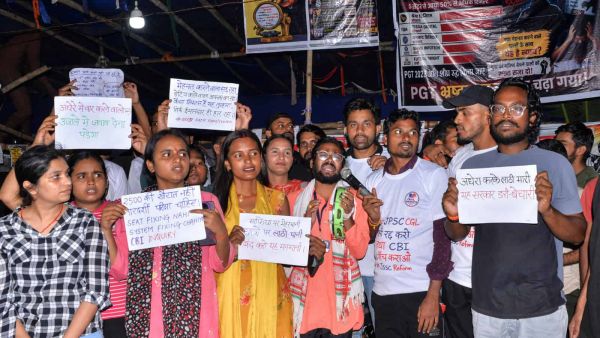
Jharkhand students stick to CBI probe, refuse to call off stir
-
Gold rates fall to Rs 1.57 lakh per 10g after seven-day gain

-
Anupama Parameswaran compares ex to ‘Anniyan’, reveals abuse