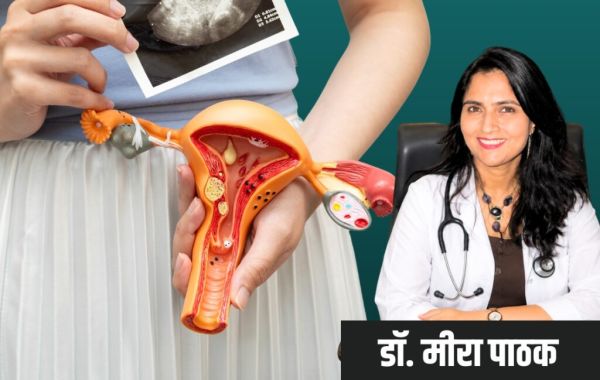
MRKH Syndrome: When a girl does not start her periods till the age of 15-16 years, family members often ignore it considering it to be a hormonal problem. But, in some cases, there may be a congenital condition behind it, about which very few people know. MRKH Syndrome is also a rare condition in which the uterus and the upper part of the vagina do not develop completely. Surprisingly, in many women the ovaries continue to function normally, hence normal female development of the body occurs, but periods do not occur. Now the question is, what is MRKH Syndrome? Why periods do not come in this situation? Will such women be able to become mothers after marriage or not? Noida is telling about this Senior Medical Officer and Gynecologist Dr. Meera Pathak-
What is MRKH Syndrome?
Dr. Pathak says, MRKH (Mayer Rokitansky Kuster Hauser Syndrome) is a condition present at birth, caused by a part of the reproductive system not developing properly during fetal development. In this, the uterus, cervix and upper part of the vagina are missing or may be underdeveloped i.e. very small. This condition is often detected in adolescence, when the girl does not get her periods for the first time despite the rest of the physical development being normal. This is called Primary Amenorrhea i.e. absence of first menstruation.
Why do MRKH sufferers not get periods?
Bleeding occurs from the inner layer of the uterus during menstruation. In MRKH the uterus is not present or is poorly developed, so normal menstrual bleeding does not occur. However, in many women the ovaries are normal and produce hormones. Therefore, development of breasts, growth of body hair and other normal female physical changes can occur. That means missing periods is not always a sign of hormone deficiency.
Can pregnancy happen after marriage?
This question is most important for the women suffering from MRKH and their families. If the ovaries are functioning normally and eggs are present in them, the woman’s chances of having biological children are not completely eliminated. But, due to the absence of a uterus, the woman herself cannot conceive. In such cases, through IVF, an embryo can be created from a woman’s egg and a man’s sperm and pregnancy can be achieved through Gestational Carrier.
Can a woman ever give birth to a child herself?
Uterus transplant has created a new possibility in this direction in medical science. In some cases, there have been reports of pregnancy and birth of a child through IVF after uterus transplant. However, it is a complex and specialized medical procedure, not every patient is suitable for it and its availability is also limited.
What problems can occur with MRKH?
The doctor says that MRKH is not just a reproductive problem. In some of its types, problems to kidney, spine, bones, heart or hearing may also occur. Therefore, after diagnosis, the doctor can also examine other organs. The most important thing is that MRKH does not define the identity of a woman.
-
Upgraded Jadeja? This India Star Makes Huge Case To Replace Him After His Retirement

-
Audi Q3 New-Gen SUV: What To Expect Ahead Of India Launch

-
EVs Could Stay On Roads Longer: Government Proposes New Age Limits For Commercial Vehicles

-
BJP Appoints New State In-Charges Ahead Of 2027 Polls: Check Picks For UP, Gujarat, Punjab

-
Manchester United make it clear Bruno Fernandes is not available for transfer amid Galatasaray interest