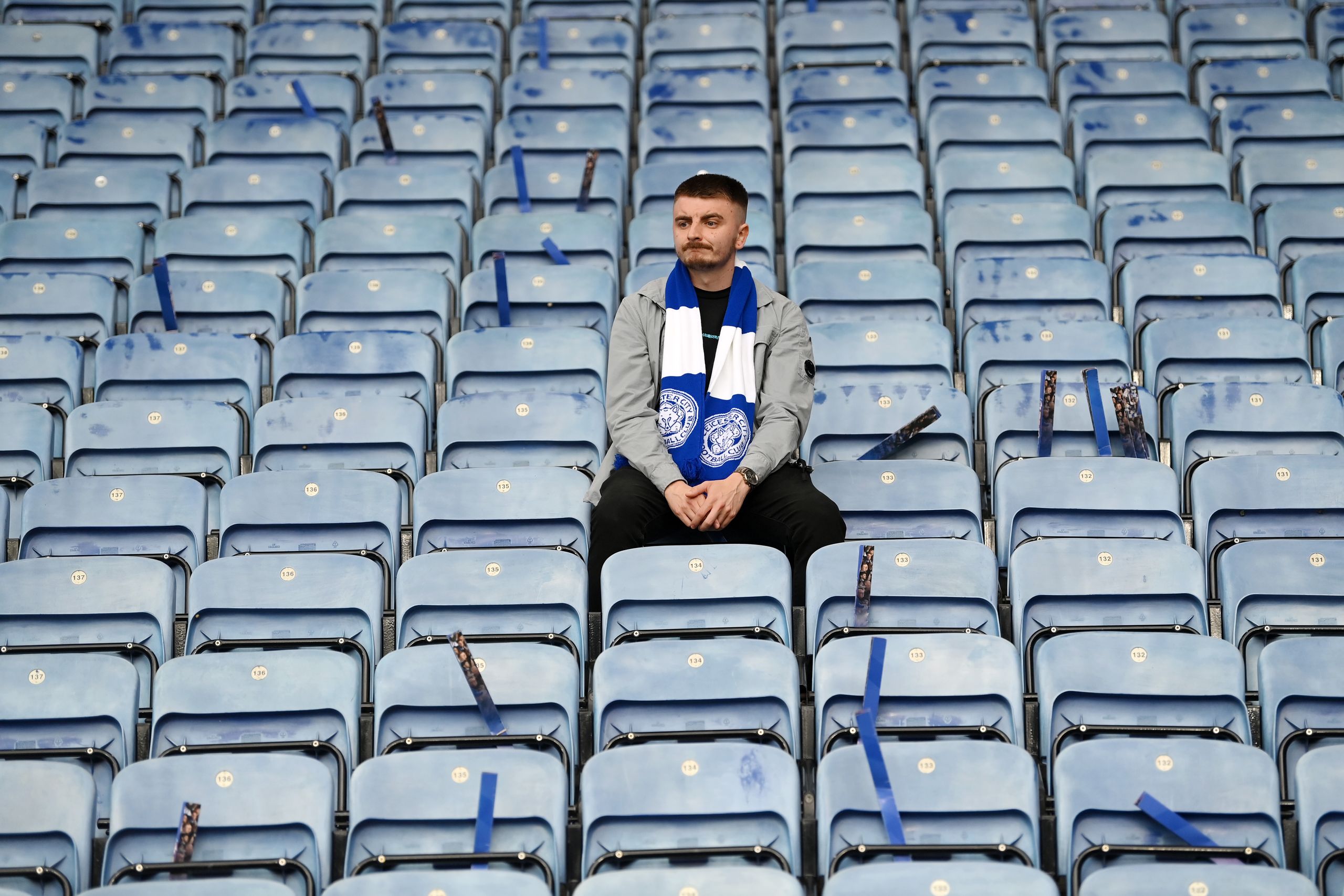
Some Premier League clubs might believe relegation scraps are behind them, but security in the top flight can disappear far quicker than expected.
American investor Warren Buffett once remarked that it takes 20 years to build a reputation and five minutes to destroy it.
He was referring to the business world, but with a slight adjustment to the timescale and a bit of creative licence, the same idea applies to football too.
Premier League history is full of clubs that seemed firmly established after spending several seasons in the division, only for things to fall apart within a few months. Some halt the decline, while others suddenly find themselves back in the Championship.
For much of the last 20 years, the financial muscle of the ‘Big Six’ - Arsenal, Chelsea, Liverpool, Manchester City, Manchester United and Tottenham Hotspur - has made it almost unthinkable that any of them could go down.
Tottenham came close to testing that theory, though. A side that appeared immune from relegation ended last season just 90 minutes away from the drop, after a damaging combination of poor recruitment both on the pitch and in the dugout, big-name players failing to deliver and a run of injuries.
It is easy to overlook the fact that Tottenham actually collected three more points last season than they did in 2024/25, when they also finished 17th but were never really in danger of slipping into the bottom three.
You could say Spurs escaped trouble in consecutive seasons, but other clubs have seen their Premier League security vanish in the space of one campaign. Leicester City are the clearest example.
Leicester started the 2022/23 season as the team that had most consistently challenged the Big Six across the previous seven years. Their remarkable Premier League title in 2015/16 and FA Cup success five years later made the headlines, but they had also recorded five straight top-nine finishes and came close to returning to the Champions League in both 2020 and 2021.
Almost nobody viewed them as relegation contenders, yet it soon became obvious that Leicester were showing all the warning signs of a difficult season. They brought in only two players in the summer of 2022, with Wout Faes the only arrival for a transfer fee, and they did not adequately replace goalkeeper Kasper Schmeichel or centre-back Wesley Fofana.
Manager Brendan Rodgers did not conceal his frustration over the lack of transfer business during a dreadful opening to the campaign, in which Leicester picked up only one point from their first seven matches. They spent £32m on defenders Victor Kristiansen and Harry Souttar in January, but with injuries continuing to hurt them, performances only declined further. Rodgers was dismissed in April, and interim boss Dean Smith could not keep them up.
Leicester are the most prominent case, but they are far from the only one. Bournemouth in 2019/20, along with Stoke City and West Bromwich Albion in 2017/18, all began those relegation seasons with little obvious concern about going down after several years of mid-table finishes.
Comparable issues played a part in each downfall: new signings did not perform, important players left, lost form or got injured, and managerial changes either failed to help (Stoke and West Brom) or came too late (as with Eddie Howe at Bournemouth and Alan Pardew at The Hawthorns).
There are many long-established Premier League clubs who were relegated after spending a year or two flirting with danger - you could argue that West Ham United and Wolves had warning signs before last season - but these examples underline how only a handful of poor months can destroy everything a club has built.
That is why most top-flight sides should be cautious about being dragged into a relegation fight - even those who begin the season with loftier ambitions.
Bournemouth, Brentford and Brighton & Hove Albion are widely regarded as model clubs in English football, and all three ended last season in the top half. Yet Leicester’s experience shows how quickly a side that regularly punches above its weight can be floored. Bournemouth and Brighton will also be balancing Premier League commitments with European football, which could cause a domestic dip.
Lower down last season’s standings, Fulham and Newcastle United have each lost a long-serving manager as well as several key players. If the replacements rise to the challenge, both clubs should be fine, but if not, they will suffer in a league as competitive as the Premier League.
Everton and Crystal Palace could also feel that a relegation battle is beneath them, with the Toffees now in a gleaming new stadium and the Eagles having won trophies in each of the last two seasons. But that can lead to complacency, and it will be especially intriguing to see how new Palace manager Pierre Sage performs with a squad that is arguably weaker than it was last season.
Complacency is unlikely to affect Leeds United or Nottingham Forest, both of whom were involved in the relegation fight last term, or Sunderland, despite their surprise seventh-place finish in their first season back in the top flight.
Of course, the prospects of these established mid-table clubs also depend partly on the three promoted sides: Coventry, Ipswich and Hull. Leicester, Bournemouth, Stoke and West Brom all suffered in part because other teams enjoyed excellent first seasons back in the Premier League, such as Fulham in 2022/23, Sheffield United in 2019/20, and Newcastle and Brighton in 2017/18.
On the other hand, the reason Spurs stayed up comfortably two seasons ago was that the three promoted clubs all fell well short of their 38-point total. Otherwise, Tottenham might have replaced Leicester as the ultimate example of an established Premier League side losing its top-flight place because of one disastrous campaign.
Can Coventry City, Ipswich Town or Hull City outperform expectations and power their way to safety in their first season back at this level?
If that happens, the relegation trapdoor will be wide open and ready to take an unexpected victim.
-
BCI Modifies NALSAR Enrolment Order, Allows 2026 Graduates To Seek Enrolment
-
NALSAR Convocation Row: BCI Orders State Bar Councils To Halt Enrolment Of 2026 Law Graduates, Seeks Report On Campaign Organisers
-
Tara Sutaria’s Sultry Lace Look & Kiara Advani’s Power Red Ensemble Steal Spotlight At Toxic Mumbai Music Launch

-
Awarapan 2 First Half Review: Emraan Hashmi Starrer Is Good In Bits & Parts, But Very Predictable

-
Batwara 1947 First Half Review: Sunny Deol & Shabana Azmi's Partition Saga Is Decent, Gets Intriguing Before Interval