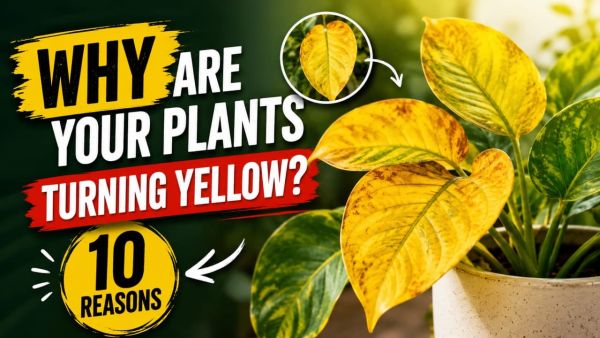
Yellowing leaves can be a warning sign that your plant needs attention. From overwatering and poor sunlight to pests and nutrient deficiencies, here are 10 common causes and simple ways to help.
Yellow leaves are one of the most common signs that something is wrong with a plant. While an occasional yellow leaf can simply be part of the plant's natural ageing process, widespread yellowing often points to problems with watering, sunlight, soil, pests or nutrition.
Here are 10 common reasons your plant leaves may be turning yellow.
1. Too Much Water
Overwatering is one of the biggest causes of yellow leaves. Constantly wet soil can prevent roots from getting enough oxygen and may eventually lead to root rot. Allow the soil to dry slightly before watering again.
2. Not Enough Water
Plants that do not receive sufficient water can also develop yellow leaves. Check the soil before watering. If it feels very dry several centimetres below the surface, your plant may need a drink.
3. Poor Drainage
Even if you water correctly, poor drainage can leave excess moisture around the roots. Make sure pots have drainage holes and avoid letting plants sit in water.
4. Lack of Sunlight
Insufficient light can cause leaves to become pale or yellow, particularly in plants that need bright light. Move the plant gradually to a brighter location if appropriate for its species.
5. Too Much Direct Sun
Excessive sunlight can also damage foliage. Yellowing accompanied by brown or crispy patches may indicate sun stress or leaf scorch.
6. Nutrient Deficiency
A shortage of nutrients such as nitrogen, magnesium or iron can cause yellow foliage. However, avoid adding fertiliser blindly. Identify the plant's needs and follow the recommended dosage.
7. Natural Ageing
Older leaves naturally turn yellow before dropping. If only a few of the plant's oldest leaves are affected while new growth looks healthy, there may be no serious problem.
8. Pest Infestation
Spider mites, aphids, scale insects and other pests can damage leaves and cause discolouration. Check both sides of leaves and along stems for insects or webbing.
9. Temperature Stress
Sudden temperature changes, cold drafts or excessive heat can stress plants. Keep indoor plants away from heaters, air conditioners and cold windows when possible.
10. Root Problems
Root damage, compacted soil or root-bound conditions can prevent plants from absorbing water and nutrients properly. Gently inspect the roots if other possible causes have been ruled out.
How to Save Yellowing Leaves
First, examine the soil, drainage, lighting and leaves for pests. Avoid making several major changes at once. Correct the most likely problem gradually and monitor new growth.
Remember, yellow leaves are a symptom, not a diagnosis. The right solution depends on the plant species and the pattern of yellowing.
-
SC quashes complaint against Rahul Gandhi over Savarkar remarks

-
India vs Sri Lanka 1st Test Live Streaming: When & Where To Watch

-
IND vs SL 1st Test: Morne Morkel Drops Big Hint On India’s Playing XI

-
‘India Can Hit Hard’: Ajit Doval Reveals Operation Sindoor’s Objective In First Interview

-
You will get relief from oily and dull skin, just try using this sandalwood face pack.