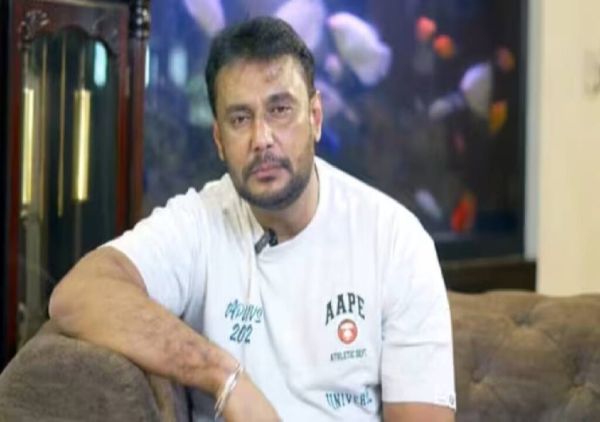
Bengaluru: The Karnataka High Court has dismissed actor Darshan Thoogudeepa’s petition challenging a trial court order that prevented him from filing objections to a co-accused’s application to turn approver in the Renukaswamy murder case. The High Court ruled that a co-accused does not have a right to participate in proceedings at the stage when another accused seeks pardon and permission to become an approver.
The order is another setback for Darshan, who is Accused No. 2 in the high-profile 2024 murder case. The application at the centre of the dispute was filed by Pradosh S Rao, Accused No. 14, who has sought permission to become a prosecution witness.
High Court dismisses Darshan’s petition
Justice M Nagaprasanna heard Darshan’s petition challenging an August 10 order of the 58th Additional City Civil and Sessions Court in Bengaluru.
The sessions court had refused Darshan’s request to file objections to Pradosh’s application seeking pardon and permission to turn approver.
Darshan approached the High Court arguing that he should be allowed to be heard before the trial court decides whether Pradosh can become an approver. The prosecution opposed the request.
The High Court ultimately dismissed the petition, holding that a co-accused cannot claim a right to participate in the approver proceedings at that stage.
Who is Pradosh Rao?
Pradosh S Rao, who is listed as Accused No. 14, is one of the accused in the Renukaswamy murder case.
He has approached the court seeking pardon and permission to become an approver, which would allow him to give evidence for the prosecution.
His application reportedly contains an account of the events surrounding Renukaswamy’s alleged abduction, assault and murder and the subsequent disposal of his body.
If the court grants the request and Pradosh is permitted to become an approver, his testimony could become an important part of the prosecution’s case.
What is an approver?
An approver is an accused person who is granted pardon in exchange for making a full and truthful disclosure of what they know about an offence and the people involved.
The procedure is intended to help prosecutors obtain evidence from someone who was allegedly involved in a crime but is willing to provide information against other accused persons.
The court, rather than the other accused, decides whether the statutory requirements for granting pardon are satisfied.
This distinction formed the basis of the Karnataka High Court’s decision in Darshan’s case.
Court clarifies co-accused’s rights
The High Court’s ruling does not mean that Darshan and the other accused lose their right to defend themselves in the murder trial.
Instead, the court distinguished between the approver proceedings and the substantive criminal trial.
The court held that co-accused do not have an automatic right to participate when the court is initially considering another accused’s application for pardon.
The New Indian Express reported that the court relied on an earlier decision involving former Karnataka minister Vinay Kulkarni. In that case, the High Court had held that co-accused could question procedural illegalities connected with granting pardon, but could not challenge the grant of pardon on its merits.
Why Darshan opposed the move
Darshan’s legal team had argued that a co-accused should have an opportunity to raise objections, particularly if there were procedural irregularities in the approver application.
His lawyers sought a direction from the High Court requiring the trial court to hear their objections before deciding Pradosh’s application.
The prosecution, however, maintained that the law does not give every co-accused an automatic right to participate in such proceedings.
The High Court accepted the prosecution’s position and dismissed Darshan’s petition.
Renukaswamy murder case
The case relates to the death of 33-year-old Renukaswamy, whose body was found in Bengaluru in June 2024.
Investigators alleged that Renukaswamy was abducted and assaulted before he died. Kannada actor Darshan and actress Pavithra Gowda are among the accused in the case.
Darshan has denied the allegations against him and remains entitled to the presumption of innocence until the case is decided by the court.
The case has attracted widespread attention because of Darshan’s status as one of Kannada cinema’s most prominent actors.
Approver could become important prosecution witness
The possibility of Pradosh becoming an approver has added a significant new dimension to the proceedings.
If his application is accepted, he could potentially provide evidence about events that investigators allege took place before, during and after Renukaswamy’s death.
However, his application still has to be dealt with according to law by the trial court.
The High Court’s latest ruling does not itself grant Pradosh pardon. It only determines whether Darshan and other co-accused can participate at the current stage of the proceedings.
Court says defence rights remain intact
The ruling also makes an important legal distinction.
Even if an accused person is permitted to become an approver, the other accused do not automatically lose their ability to contest the prosecution’s case.
The New Indian Express reported that the High Court noted that granting pardon to a co-accused does not deprive other accused persons of their substantive right to defend themselves during the trial.
This means Darshan and the other accused will continue to have opportunities to challenge the prosecution’s evidence as the main criminal proceedings progress.
A significant setback for Darshan
The dismissal represents another legal setback for Darshan in the long-running case.
His latest petition was specifically aimed at obtaining a hearing on Pradosh’s application. With the High Court rejecting that request, the trial court can proceed with the approver application within the legal framework outlined by the High Court.
The development could be closely watched because an approver’s testimony may have implications for the prosecution’s broader case.
What happens next?
The next important step will be the trial court’s consideration of Pradosh Rao’s application to become an approver.
The court will have to determine whether the legal requirements for granting pardon are satisfied and whether his proposed testimony meets the relevant conditions.
If he is eventually granted pardon and becomes a prosecution witness, his evidence will then be subject to the legal safeguards applicable during the trial.
Meanwhile, Darshan and the other accused will continue to contest the allegations against them.
Conclusion
The Karnataka High Court has dismissed Darshan Thoogudeepa’s petition seeking the right to object to a co-accused’s application to become an approver in the Renukaswamy murder case. The court held that a co-accused does not have an automatic right to participate when the court is considering another accused’s request for pardon.
The ruling clears the procedural path for the trial court to consider Pradosh Rao’s application according to law. While the development could become significant if Pradosh is eventually allowed to testify for the prosecution, the High Court’s order does not itself decide whether he will receive pardon.
The case remains ongoing, and all accused persons are entitled to a fair trial and the presumption of innocence until proven guilty.
-
Dimaagi bano, Andhbhakt nahi: Prakash Raj on PM’s Naxal comment
-
Rahul lauds youth for standing against Modi’s ‘violent regime’
-
Sujani Embroidery: The GI-Tagged Bihar Craft That Preserves Stories Through Stitches

-
Weekly Tarot Forecast for all Sun Signs from August 17 to August 23: See what this week holds for you

-
Meghan and Harry urged to pause business ventures