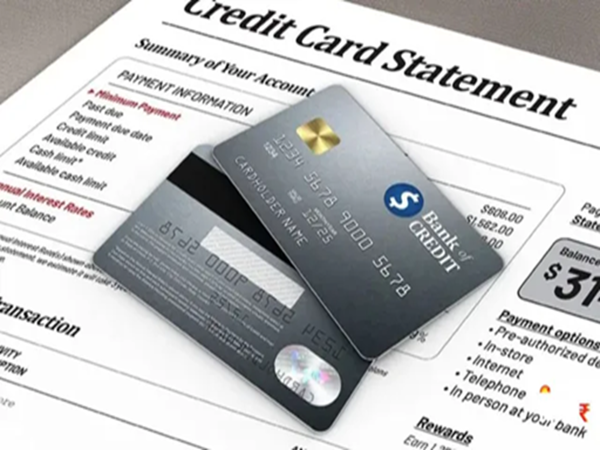
If you use a credit card and have developed the habit of paying only the 'Minimum Amount Due' instead of settling the full bill on time, this information is crucial for you. It is essential to understand what a credit card's APR (Annual Percentage Rate) is and how it can cause your outstanding bill to balloon significantly.
What is Credit Card APR?
APR stands for Annual Percentage Rate. Simply put, it is the annual interest rate charged by the bank or the financial institution issuing the credit card on any outstanding balance you carry forward.
In India, the APR on credit cards is typically very high, ranging from 36% to 48% per annum (approximately 3% to 4% per month). This makes it far more expensive than personal loans or home loans.
Why does your outstanding bill increase?
People often assume that if they have paid a small portion (the 'Minimum Due') of a ₹50,000 or ₹1,00,000 bill, the remaining amount is safe. However, the reality is quite different.
1. When you pay your full credit card bill on time (by the payment due date), the bank grants you a 'grace period,' and no interest is charged. But as soon as you pay only the minimum due, this grace period ends.
2. Once the grace period expires, the bank begins charging hefty interest on your new purchases as well, calculated from the date of the transaction itself.
3. Credit cards charge compound interest rather than simple interest. This means interest is charged not only on the outstanding principal amount but also on the interest accumulated from the previous month.
4. In addition to this steep interest, banks also levy GST at a rate of 18%, late payment fees, and other hidden charges. Let’s understand this with an example:
Suppose your credit card bill is ₹50,000, and you settle for paying only the 'minimum due.' Caught in a web of steep APR, compound interest, late fees, and taxes, this small outstanding amount can balloon to ₹1 lakh or more within just a few months.
How can you avoid this 'debt trap'?
Always aim to pay the bill in full before the due date; never settle for paying just the minimum due. If you are already caught in this trap, you can pay off the high-interest debt by opting for a low-interest personal loan or by using a credit card balance transfer facility.
Disclaimer: This content has been sourced and edited from News18 Hindi. While we have made modifications for clarity and presentation, the original content belongs to its respective authors and website. We do not claim ownership of the content.
-
INEOS make Rashford stance clear as Manchester United exit talks gather pace

-
Barcelona identify Sporting CP striker Luis Suarez as backup option, with Hansi Flick approving move

-
The compromise Bayern Munich may have to make to renew Harry Kane's contract

-
Leicester City put up for sale ahead of new EFL season: report

-
Hariyali Teej 2026: Decorate Teej puja thali with household items, it will look very beautiful.