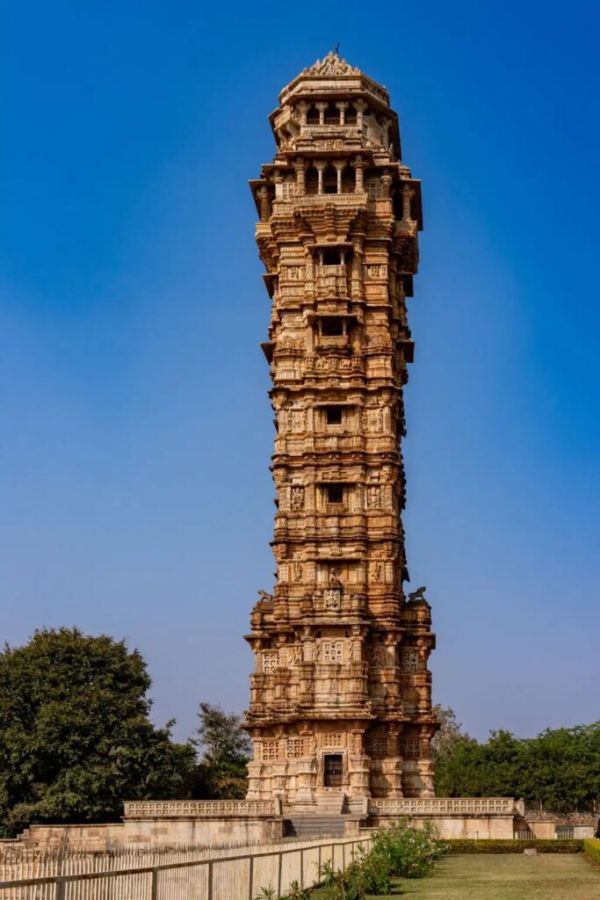
Vijay Stambh located in Chittorgarh Fort of Rajasthan is a wonderful example of the glorious history of Mewar, Rajput valor and medieval Indian architecture. This nine-storey monument, approximately 37 meters high, is today one of the most recognizable historical structures of Chittorgarh.
Why was Vijay Stambh built?
Vijay Stambh was built by Maharana Kumbha of Mewar in the 15th century. It was built to commemorate the victory against Sultan Mahmud Khilji of Malwa. The conflict between Maharana Kumbha and Mahmud Khilji continued for a long time. After the conquest of Mewar in the 1440s, Maharana Kumbha decided to turn his military success into a permanent monument. The construction of the Vijay Stambh is believed to have been completed around 1448 AD.
nine storey grand structure
The height of Vijay Stambh is approximately 37 meters and it has nine floors. Fine carvings and sculptures are visible on each of its floors. There are curved stairs inside the pillar, through which one can reach the top. It is mentioned that there are more than 150 stairs. On reaching the top, a wide view of Chittorgarh Fort and the surrounding area is visible.
Specialty sculptures and carvings
The Vijay Stambh is not only a symbol of victory in battle, but it also reflects religious and cultural ideas. The outer walls of the pillar have magnificent carvings of gods, goddesses, warriors, religious symbols and various mythological scenes. Many figures of Hindu deities and figures associated with Lord Vishnu are visible here. Sanskrit and other inscriptions are also found on the pillar, which give information to the history and construction of that time.
Who was the architect?
According to historical accounts, the Vijay Stambh was built under the supervision of craftsmen like Jaita and his sons Napa and Pooja. He decorated the pillar through extremely delicate carvings on the stone. This structure reflects the high caliber of Mewari architecture and craftsmanship of that time.
Pride of Maharana Kumbha
Vijay Stambh is a symbol of Maharana Kumbha's military achievements as well as his interest in art, architecture and culture. During his reign, Maharana Kumbha strengthened Mewar and built many forts, temples and architectural structures. Kumbhalgarh Fort and Vijay Stambh of Chittorgarh are prime examples of his legacy.
Chittorgarh Fort and Vijay Stambh
Chittorgarh Fort is counted among the most important historical forts of Rajasthan. This fort has been witness to many rulers of Mewar, wars and incidents of bravery. Apart from the Vijay Stambh, there are many historical places like Kirti Stambh, Rana Kumbha Mahal, Padmini Mahal and Meera Temple in the fort complex.
UNESCO World Heritage
Chittaurgarh Fort is included in the “Hill Forts of Rajasthan” group of Rajasthan. This group got a place in the UNESCO World Heritage List in 2013.
Why is Vijay Stambh special?
The specialty of Vijay Stambh is not only its height. It simultaneously tells the story of the victory of war, religious faith, craftsmanship and political power of Mewar. Even today, the Vijay Stambh standing in the sky of Chittorgarh reminds of the victory of Maharana Kumbha, which added an important chapter in the history of Mewar.
-
NTA to release UGC-NET, CSIR-NET, ICAR answer keys on August 16

-
‘Suryapath Tiranga’ initiative marks India’s 80th Independence Day

-
Selena Gomez, mother sued for USD 1M over mental health company

-
Varanasi: 6 arrested for occultist’s murder after rituals go wrong

-
PSKY, WBD Merger Deal Satisfies Regulatory Conditions In 68 Countries — Paramount Says 12 State AGs Are Now The Final Hurdle