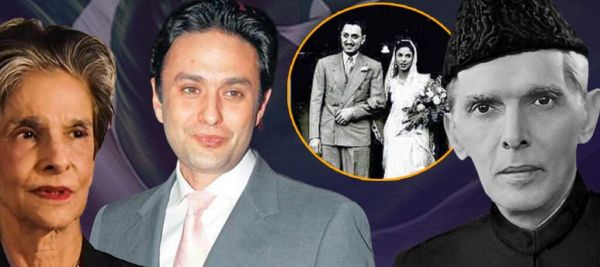
Mohammad Ali Jinnah’s own family story, the foundation of Pakistan, blends Indian soil, Parsi heritage, Muslim identity and the politics of partition. The man whom Jinnah’s only daughter Dina married was not a Muslim but Neville Wadia from a Parsi business family. It is also interesting that Jinnah himself married Ratanbai Petit, a Parsi woman who had adopted Islam. This relationship further extended to the Wadia family and Jinnah’s daughter’s son Nusli Wadia and grandson Ness Wadia became part of India’s biggest business family. At the same time, Mumbai’s ‘Jinnah House’ is still a controversy to the claims of the family, the Government of India and Pakistan.
After all, who was Mohammad Ali Jinnah and how big was his family?
Mohammad Ali Jinnah was born on 25 December 1876 in a wealthy Gujarati Khoja Muslim family of Karachi. His father Jinnabhai Poonja was a businessman. Jinnah was the eldest of seven siblings and his sister Fatima Jinnah remained very close to him later on. In politics, Jinnah first joined the Indian National Congress, then became a prominent leader of the Muslim League and became one of the biggest faces of the demand for Pakistan. After the formation of Pakistan in 1947, he became its first Governor-General. History remembers him as a political leader, but the story of religion and relationships in his personal life was equally interesting.
How many marriages did Jinnah do and how many children did he have?
Jinnah married twice and had only one child, daughter Dina. His first marriage was to Amibai at a young age. This happened as per the wish of the family and after some time of marriage, Jinnah went to England. Emibai died soon after and this relationship produced no children. About 25 years later, Jinnah married Ratanbai ‘Ratti’ Petit, daughter of Parsi industrialist Sir Dinshaw Petit. Ratti converted to Islam before marriage and the marriage took place on 19 April 1918. On August 15, 1919, daughter Dina was born in London, who later became the daughter-in-law of the Wadia family.
Why is the story of marriage with Ratti Petit so popular?
The love story of Jinnah and Ratti was unusual at that time. Jinnah was about 24 years older than Ratti and both came from different religious communities. Ratti’s father was against this relationship. After turning 18, Ratti married Jinnah and accepted Islam. After this, there was distance in his relations with his Parsi family.
In the beginning, Jinnah and Ratti’s life was very glamorous, but later tension increased in the relationship. Ratti felt lonely amidst Jinnah’s political career and busyness. Both of them started living separately and on 20 February 1929, Ratti died in Mumbai at the age of 29. His daughter Dina was only nine years old at that time.
Whom did Dina marry against Jinnah’s wishes?
When Dina grew up, she decided to marry Neville Wadia. Neville belonged to the Wadia family, an old and influential Parsi businessman of Mumbai. He was the son of Sir Ness Wadia and the family was associated with shipbuilding, textile industry and business. Neville’s religious background was also complex. His father had left Zoroastrianism and converted to Christianity, so Neville was brought up in a Christian environment; Later he adopted Parsi i.e. Zoroastrian tradition. Therefore it would be wrong to directly call them Hindu or Muslim.
Was Jinnah against his daughter’s marriage?
Jinnah was not happy with Dina’s marriage. It was an interesting paradox that Jinnah himself married a Parsi woman, but opposed his daughter’s decision to marry a Parsi man, Neville Wadia. M.C. There is mention of their conversation in Chagla’s memoirs. Jinnah had asked Dina that there are so many Muslim youth in India, then why was she choosing Neville only. In response, Dina mentioned her parents’ marriage.
In the subsequent stories, there are many claims about the relationship between father Jinnah and daughter Dina, but it is fair to say that the distance increased after marriage, not that their relationship ended completely.
How many children did Neville and Dinah have from their marriage?
Dina and Neville Wadia married on 16 November 1938. Both of them had two children – son Nusli Wadia and daughter Diana Wadia. The marriage did not last long and the couple separated in the early 1940s. Both of them got divorced in 1943. The relationship of the children remained linked to the business heritage of the Wadia family. In this way, through Jinnah’s only daughter, the direct family relationship of the founder of Pakistan was connected with the old Parsi business family of India.
Where did Dina stay after Pakistan was formed?
Jinnah moved to Pakistan after the partition of 1947, but Dina decided not to settle there permanently. His life was mainly associated with India and later America. She remained associated with the business world of Mumbai and the Wadia family and in her later years lived in New York.
His emotional connection with Pakistan did not end completely. After Jinnah’s death, she went to Pakistan in 1948 and reached Karachi in 2004 with her son Nusli and his family, where she paid homage at her father’s tomb. He died in New York in 2017 at the age of 98.
Who is Nusli Wadia and what is his relation with Jinnah?
Nusli Neville Wadia is the son of Dina and Neville Wadia and the grandson of Mohammad Ali Jinnah. He took forward the business of Wadia Group and was associated with Bombay Dyeing for a long time. Later he became the managing director of Bombay Burmah Trading Corporation. The business legacy of the Wadia family extended beyond the textile industry to many sectors. Nusli’s son Ness Wadia is the next generation of this family. That means, through Jinnah’s daughter, his connection directly reaches the big industrial family of India.
Who is Ness Wadia and how to become the next link in the family?
Ness Nusli Wadia is the son of Nusli Wadia and Maureen Wadia and is among the third generation of prominent business leaders of the Wadia family. He studied International Relations from Tufts University, America and MSc in Engineering Management from the University of Warwick. He was the managing director of Bombay Burmah Trading Corporation and was associated with many companies of Wadia Group. He is also recognized in cricket and is one of the co-owners of Punjab Kings.
What about the ‘Jinnah House’ controversy?
The luxurious bungalow located in Mumbai’s Malabar Hill, originally named ‘South Court’, was Jinnah’s personal property and an important part of Mumbai life. This bungalow built in 1936 later came to be known as ‘Jinnah House’. An important conversation between Jinnah and Mahatma Gandhi in 1944 also took place in this house. After Partition, the property came under the control of the Government of India and at different times it was used for diplomatic purposes. Pakistan has from time to time demanded to give it for its Consulate in Mumbai, but the Indian Government has maintained that it has rights over the property and Pakistan has no legal ownership.
Why did Dina Wadia claim the property?
In 2007, Dina Wadia filed a petition in the Bombay High Court and asserted her right over the South Court. His argument was that he was Jinnah’s only child and legal heir. He also objected to his childhood home being called ‘Jinnah House’ and insisted on its original name South Court.
After his death in 2017, his son Nusli Wadia carried forward the legal battle. On the other hand, the Indian Government’s stance was that the government has the right over the property. According to reports in 2025, work also progressed on plans to restore South Court and develop it for diplomatic use, while a legal dispute over the property remained.
What is the relationship of Wadia family with Pakistan?
This family’s relationship with Pakistan is primarily one of lineage and history, not political or citizenship. Jinnah’s only daughter Dina did not choose a permanent life in Pakistan and his son Nusli Wadia stayed in India and took up the business legacy. Ness Wadia is also a part of the Indian business world. On the other hand, emotional respect for the Jinnah family is still visible in Pakistan.
Dina’s visit to Pakistan in 2004 and her tribute at her father’s tomb is an example of this. Therefore, the Wadia family has deep ties to Pakistan through Jinnah’s family heritage, while its modern business identity has been linked to India.
How interesting is the story of Jinnah family?
In the story of the Jinnah family, many layers are visible simultaneously – Jinnah, who came from the Khoja Muslim family of Gujarat, his marriage to Ratanbai of the Parsi family, the marriage of his daughter Dina into the Parsi Wadia family and then the business legacy reaching Nusli and Ness Wadia.
The biggest contradiction in this relationship is that the only daughter of the leader who created Pakistan spent her life in India and later America instead of settling in Pakistan.
On the other hand, the dispute over his Mumbai house is still to the history and property rights of India-Pakistan. Therefore, the answer to the story of Jinnah’s son-in-law is not just ‘Hindu or Muslim’. Neville Wadia belonged to the Parsi Wadia family and his marriage linked a prominent political family of South Asia with a major business house of India.
-
NTA to release UGC-NET, CSIR-NET, ICAR answer keys on August 16
-
‘Suryapath Tiranga’ initiative marks India’s 80th Independence Day
-
Selena Gomez, mother sued for USD 1M over mental health company

-
Varanasi: 6 arrested for occultist’s murder after rituals go wrong
-
PSKY, WBD Merger Deal Satisfies Regulatory Conditions In 68 Countries — Paramount Says 12 State AGs Are Now The Final Hurdle