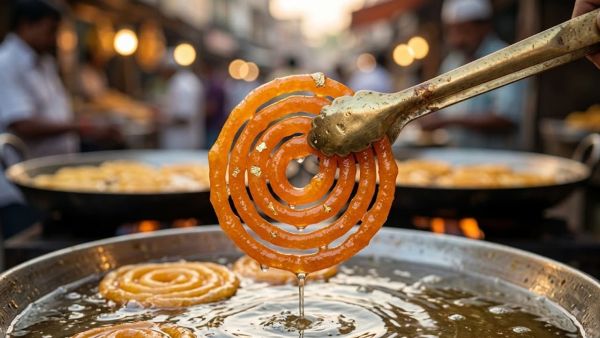
Part of the fun is that there is no single jalebi experience across India.
The familiar version is generally made by piping batter into hot oil or ghee in tight spirals, frying it until crisp and then soaking it in sugar syrup. But recipes, thickness, texture and serving styles vary considerably from one region to another.
In Bengal, for example, jilipi can refer to several preparations. There are versions made with different batters, while chhenar jilipi uses chhena and can be fried in ghee. In parts of Bengal, moong dal is also used for a preparation known as moong jilipi or papri.
Then comes imarti, jalebi’s more intricate cousin, known as amriti or jangiri in different parts of the subcontinent. It looks related to jalebi but is made differently, traditionally using urad dal (black gram) batter, and has a thicker, flower-like shape. The two sweets are therefore similar but should not simply be treated as the same dessert.
-
'Best possible specialists' - Xabi Alonso explains Chelsea's move to appoint Aston Villa set-piece expert Austin MacPhee

-
Manchester United considering late move for versatile target as Bruno Fernandes talks continue

-
Soha Ali Khan's High-Protein Oats Recipe For Vegetarians Is Perfect for A Healthy Breakfast
-
How can cancer or treatment in children affect the eyes and vision? Know in detail

-
Meta cornered on children's safety, demands compensation up to 1.4 trillion dollars; Serious questions raised on Facebook-Instagram