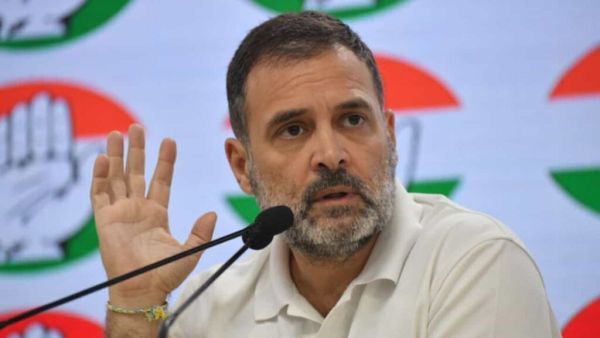
Congress leader and Leader of Opposition in Lok Sabha Rahul Gandhi has received a very important legal relief from the Supreme Court of the country. The Supreme Court on Friday completely quashed the summons and criminal complaint issued by a court in Lucknow, the capital of Uttar Pradesh, over alleged derogatory remarks against freedom fighter and Hindutva ideologue Vinayak Damodar Savarkar. The Supreme Court made it clear that in this case, the statutory prosecution sanction required under the law was not present, due to which this legal action cannot be taken forward. With this historic decision of the apex court, this high-profile legal dispute that has been going on for the last several years has come to an end. Why did the two judge bench of the Supreme Court cancel the summons and complaint? This case was heard in the Supreme Court by the division bench of Justice Dipankar Dutta and Justice Sheel Nagu. During the hearing, the court found that prior approval of the competent government is mandatory to prosecute Rahul Gandhi under sensitive sections of the Indian Penal Code (IPC) like Section 153A (promoting enmity between different groups) and Section 505 (public nuisance). When the court reviewed the affidavit of the Uttar Pradesh government and the statements of the Additional Solicitor General, it found that no legal sanction had been issued by the state government to prosecute Rahul Gandhi. Commenting on this, the bench said in a strong tone that when there is a clear requirement of approval in the law and the government has not given any approval, then the matter simply closes. Along with this, the court canceled the summoning order issued by the complainant and the magistrate. What is the whole matter? The statement was given during 'Bharat Jodo Yatra' in 2022. The roots of this entire legal dispute are linked to Congress's 'Bharat Jodo Yatra' in the year 2022. During a public meeting and press conference held in Akola district of Maharashtra on 17 November 2022, Rahul Gandhi had made some controversial comments about Veer Savarkar. Rahul Gandhi had alleged that Savarkar was a helper of the British and he used to take pension from the British government. Citing a historical document, he also mentioned the letters written by Savarkar to the British. After this statement of Rahul Gandhi, there was an uproar in the politics of the entire country. Many organizations including BJP and Shiv Sena (Shinde faction) had expressed strong opposition to this. After this, Lucknow resident and lawyer Nripendra Pandey had filed a private criminal complaint in the Lucknow court. The complainant alleged that Rahul Gandhi had deliberately insulted Savarkar and his statement posed a serious threat of spreading animosity and hatred in the society. From Lucknow Court to Supreme Court: Complete chronology of the legal battle This case went through a long legal process from the lower court to the top court of the country: The complainant had first filed a petition to register an FIR before the Additional Chief Judicial Magistrate (ACJM). However, in June 2023, the magistrate rejected this complaint. After this the complainant approached the Sessions Court, which sent the case to the Magistrate Court for reconsideration. In December 2024, the Lucknow Magistrate had issued summons to Rahul Gandhi after finding a prima facie case against him. Rahul Gandhi challenged this summons of the magistrate in the Lucknow bench of Allahabad High Court. However, on April 4, 2025, the Allahabad High Court refused to intervene, saying that Rahul Gandhi could file a revision petition in the sessions court. Rahul Gandhi filed a Special Leave Petition (SLP) in the Supreme Court against this decision of the High Court. 'No admission, no case': What happened in the courtroom? During the last hearing in the Supreme Court today, the bench emphasized on the basic principles of legal procedure. Justice Dipankar Dutta asked the Additional Solicitor General, representing the Uttar Pradesh government, whether the state government has given the necessary sanction under Section 196 CrPC to prosecute Rahul Gandhi. When the government counsel confirmed that no such approval had been given, the court clarified the position. The complainant's counsel requested that the case be sent back to the Magistrate Court for reconsideration, but the bench did not accept this. Justice Dutta said clearly, "The approval requirement is mandatory by law. There is no approval here. If there is no legal sanction, no case can be made. You have to follow the law and that's where the matter ends."
Earlier strict comments of the Supreme Court on freedom fighters Although the Supreme Court rejected the case on technical and legal grounds, in the earlier hearing the apex court had also made very harsh and strict comments on the statements of Rahul Gandhi. The Supreme Court had given a strong warning to Rahul Gandhi to avoid making such irresponsible statements against the freedom fighters of the country. The court had reminded during the hearing that Rahul Gandhi's grandmother and former Prime Minister late Indira Gandhi had also once written a letter praising the contribution of Veer Savarkar. The court had orally said that the freedom fighters had given independence to the country and such attacks should not be made on them without understanding their historical context. The court had also warned that if such statements were repeated in future, the Supreme Court would not hesitate to take suo motu action. Political and legal significance of this decision for Rahul Gandhi and Congress: This decision of the Supreme Court is being considered a huge political and legal victory for Rahul Gandhi. After assuming the constitutional responsibility of the Leader of Opposition in the Lok Sabha, this decision will reduce his legal burden in the criminal defamation and hate speech cases pending against him. Congress party has welcomed this decision and called it a victory of truth and justice. Party spokespersons say that efforts to implicate opposition leaders in cases due to political malice are not standing before the court. At the same time, legal experts believe that this decision once again proves that the judiciary always keeps a strict eye on the misuse of serious sections like Section 153A regarding political speeches and no public representative can be unnecessarily harassed by violating legal procedures.
-
Jeff Bezos-backed group could gain control of Liverpool within the next 12 months
-
Liverpool Women midfielder Sofie Lundgaard completes permanent move to Eintracht Frankfurt

-
German elder's Hindi won everyone's heart, called India 'heaven'
-
Nicole Kidman details her prep behind ‘Lioness’ season 3

-
Daily Tarot Horoscopes For Monday, August 17, 2026