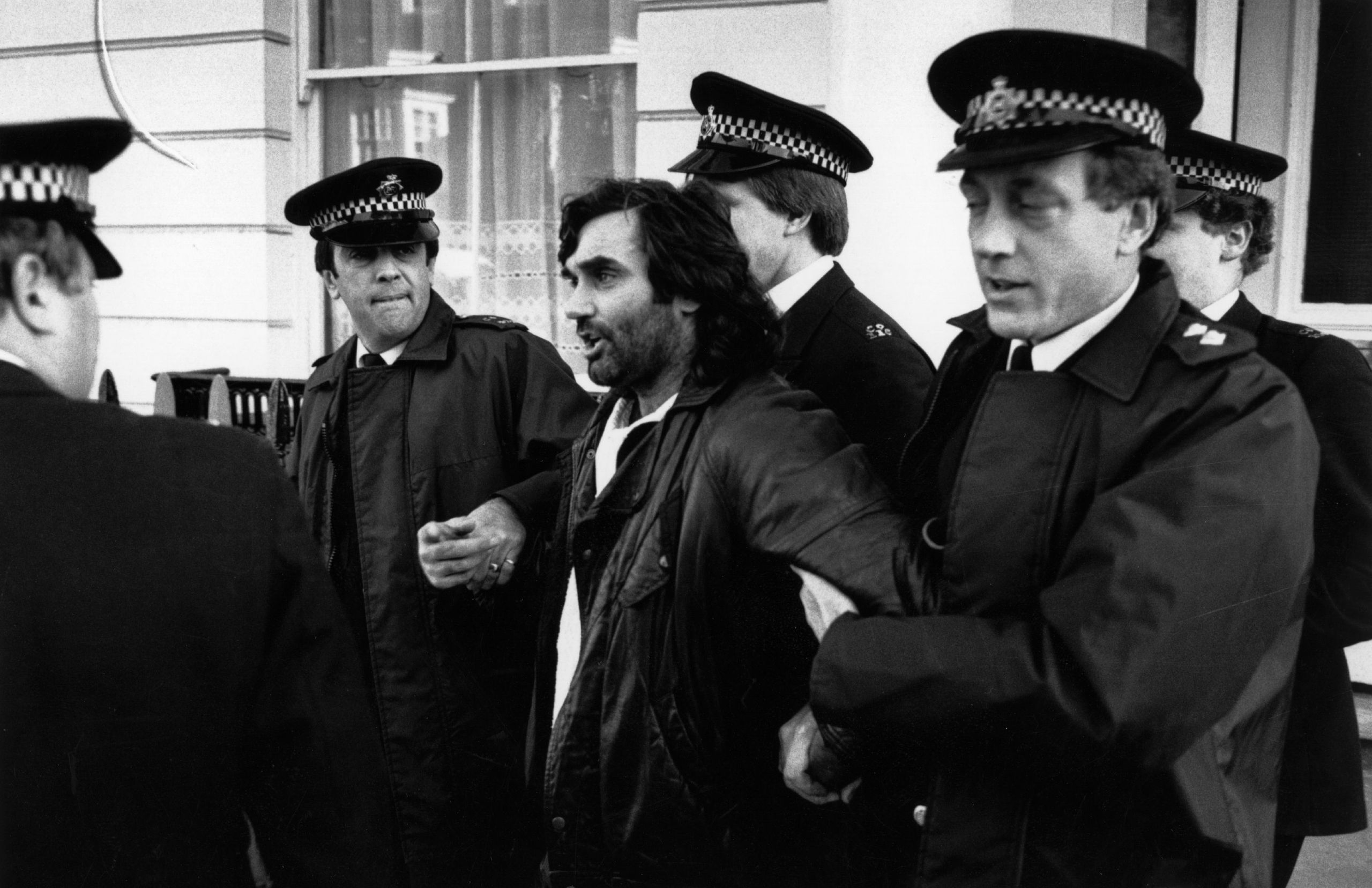
The icon’s departure from Old Trafford at the age of just 27 opened the door to a decade of globe-trotting, turbulence and drama.
“I know what to expect from George Best.”
Some remarks seem fated to make the person saying them look foolish the instant they are uttered. On September 4, 1976, that was the lesson for Lindsay Parsons. The experienced Bristol Rovers full-back was speaking before his side’s Second Division match against Fulham at a packed Craven Cottage, where more than 21,000 supporters – roughly double the usual attendance – squeezed in to watch the debut of the former Ballon d’Or winner.
“I’ve played against him before against Manchester United,” Parsons continued. “I’ve never had a complex about him and I’m not going to start now. I’ll mark him out of the game. There will be no dream debut for George Best.”
It took only 71 seconds for Fulham’s new headline act to make that bold marker look ridiculous, bending a superb free-kick around the Rovers wall and into the net with effortless quality, while spectators were still coming through the turnstiles.
That proved to be the only goal of the match, but over the remaining 89 minutes Best had Parsons and his team-mates under his spell, underlining just how misplaced the defender’s confidence had been. A drop of the shoulder sent them one way, a stepover took them another, and a disguised pass feint dragged them back again, all to a soundtrack of gasps and admiration from Fulham fans who could scarcely believe what they were seeing.
Best’s display prompted the obvious question that dominated the back pages the following day. How was this footballing legend, one of the finest players in the world, playing in the Second Division?
The straightforward answer sat in complete contrast to Parsons’ claim: once he had left Manchester United, you never really knew what to expect from George Best.
When people think back to the magic of the Manchester United great, they picture him in the famous No. 7 shirt, just as he is immortalised in statue form outside Old Trafford. Most remember his meteoric rise to worldwide fame, and his goal against Benfica in the 1968 European Cup final, the same year he was recognised as the best player in Europe. They may also recall him scoring six times in one match during an 8-2 FA Cup demolition of Northampton Town.
By and large, people remember the Best of the 1960s, but that was only the first chapter. Through the 1970s and early 1980s, the second phase of his career was every bit as strange and chaotic as the first had been glorious.
Across that decade, Best played for a remarkable number of clubs around the world, was sacked by some, walked out on others, was taken to court by one, and was hit with a worldwide playing ban by FIFA. It became a repeating story of brilliance, optimism and self-destruction that few could stop watching.
“He was never late for training. Never missed it. And he was a great trainer, too,” said former Manchester United team-mate Willie Morgan. “His downfall started when he had that bloody house built.”
In July 1970, Best left behind his modest room-and-board arrangement at Mary Fullaway’s home in Chorlton-cum-Hardy, a suburb of Manchester. He had lived with that maternal figure ever since joining the club at 15, right through his rise to the summit of the game, but he was now moving into the first home of his own – one far more suited to his celebrity status.
The purpose-built luxury bachelor pad, which he called Que Sera, was filled with smart-home features well ahead of its era and was said to be among the country’s best-known modernist homes. It was also widely blamed as the spark for his decline.
With hardly any security and floor-to-ceiling windows surrounding the property, Best found himself living in what was described as a £35,000 goldfish bowl, with crowds regularly gathering outside. Matters were made worse by planes passing on the Manchester Airport flight path, which triggered the automated curtains and gave sightseers a clear view of Manchester United’s leading scorer in his bedroom. Seeking escape from his own house, he turned increasingly to the city’s bars and nightclubs, and from there came a downward spiral of missed training, disciplinary trouble and public criticism.
“I just don’t know what’s wrong with the lad,” manager Matt Busby told reporters after the first such episode. Many more incidents followed under Busby’s successors Frank O’Farrell and Tommy Docherty and, by New Year’s Day 1974, Best had played his final match for the club, an unsuitable ending in a 3-0 defeat at QPR.
He was still only 27, but as time passed after that game at Loftus Road, even devoted supporters began to doubt whether they would ever see him on a football pitch again. For almost two years, one of the world’s most gifted sportsmen spent the peak of his career in Spain, living like a retired footballer and insisting he was finished for good. The only football he played came in a small number of matches for Jewish Guild in South Africa for an £11,000 fee, plus two friendlies for non-league Dunstable Town.
Throughout that period, Best remained registered to Manchester United and required the club’s permission to play. That continuing tie offered a faint hope of a return to Old Trafford, though not much real expectation. What nobody could possibly have foreseen, however, was what came next.
The friendlies at Dunstable – done as a favour to manager Barry Fry, his former team-mate in the Manchester United youth set-up – reignited something in Best, and he announced that he was making a comeback. It would not be with the Red Devils. Instead, the superstar chose to formally end his association with United and sign for Fourth Division side Stockport County.
“I want to harden up,” he said. “I want a bit of kicking from eager youngsters in the Fourth Division to keep me on my toes, to keep me moving. But I’m after the big time and I’m determined to make it.”
Playing only in Stockport’s home fixtures, he began rebuilding his fitness and tried to avoid his usual temptations by checking himself into a health farm. He was determined that this would be the start of a climb back to the top. Where better to begin than at the bottom?
“He’s the greatest player I have seen,” Stoke City forward Jimmy Greenhoff said after a friendly between his First Division team and Stockport on November 10, 1975. “No-one else could have come back after two years and played as he did.”
The crowds came in large numbers – Stockport’s gates tripled as people flocked to see Best. They were not disappointed. The Northern Irishman scored his side’s only goal in a 1-1 draw and was unfortunate not to mark his debut with a hat-trick, striking the crossbar twice.
Over the following 47 days, Best played three league games for the club, starring in every one, scoring two goals and inspiring two wins and a draw. Stockport had lost seven of their previous 11 matches before his surprise arrival, but now looked incapable of defeat. Suddenly, clubs everywhere wanted a share of George Best, and his extraordinary idea of using the Fourth Division as a shop window appeared to be paying off.
“I’ll give some team at least three good years if they give me a good contract,” the 29-year-old said in one of several public invitations to suitors. “If I can get to Spain to sign for Real Madrid, who’ve come in for me, I could make a fortune. No woman, no taste of high life, is going to take that chance away from me.”
Real Madrid and Barcelona were both reported to be interested, but no official move ever arrived. There were serious discussions with leading English clubs, but they wanted protection before taking on a football genius known for vanishing acts, so offers from clubs such as Chelsea were structured on a pay-as-you-play basis. The FA made clear that such an arrangement would not be permitted, fearing it would enable another home-games-only setup.
Best then had a short spell in Ireland with Cork Celtic. But across the Atlantic, the expanding North American Soccer League, or NASL, was pushing hard for his signature. Los Angeles Aztecs were so keen to beat rival interest that they agreed to Best’s demand that they also sign his friend and gambling partner Bobby McAlinden. Best sold the idea to Aztecs general manager John Chaffetz by describing McAlinden as a “good little midfield player” who had “played for Manchester City”.
“That satisfied him,” Best later recalled. “I simply neglected to say that Bobby only played once for the City first team, before being transferred to Port Vale and then Stockport.” At Stockport, McAlinden had appeared only for the reserves before giving up the game to work as a roofer. Before moving to Los Angeles, he was more accustomed to five-a-side matches at the local YMCA.
Best was pleased with himself, believing he had fooled his new club, and perhaps he had. Yet their readiness to indulge their star signing was also a sign of what lay ahead. Chaffetz recognised that the best way to handle both Best’s reputation and the media frenzy around him was to embrace it. He met Best at the airport and immediately handcuffed him to a young model brought in for the occasion, telling those gathered to welcome the star that the stunt was designed to “make sure he doesn’t go anywhere”.
Aztecs head coach Terry Fisher understood the brief as well. “There was going to be one set of rules for George and another set for the other internationals on my team,” he said. “Once you understood it wasn’t about trying to get George to conform to anything, it was more going to be about trying to understand what George wanted from coming to America, you could form a partnership.”
That approach suited Best, who responded with sparkling form and a point to prove. Earlier, he had backed out of an agreement to join New York Cosmos from Manchester United. The NASL club signed Pele instead and their general manager Clive Toye, still annoyed after being left waiting at Manchester Airport, quipped: “Why sign George Best when you can sign the best?”
As one Second Division full-back would later discover, remarks like that had a habit of staying in the ears of the former Ballon d’Or winner. “I’m better than Pele,” Best told reporters after arriving in the NASL. “In fact, I think I’m better right now than Pele was in his prime.”
During his spell there, Best illuminated the league and was named in the division’s all-star team alongside Pele, Franz Beckenbauer and Gordon Banks. “For me, America offered a fresh start,” Best wrote in his autobiography, Blessed. “It took me out of the goldfish bowl at home and the drinking, gambling routine which I knew I had to stop. It also allowed me to play football without the massive pressure that had been on me when I played for United. I was training like a lunatic at the beginning... I drastically cut down on my drinking too and for a time, at least, I kept the demons at bay.”
Two other players selected in the NASL’s all-star side were Rodney Marsh of Tampa Bay Rowdies and Bobby Moore, who had joined San Antonio Thunder on loan from Fulham. When the NASL season ended in late August 1976, all three men made their way to Craven Cottage.
Best’s dream debut against Bristol Rovers was followed by one of his finest performances since his peak years, in a 2-1 League Cup victory over Peterborough. With Best on one flank and Marsh on the other, the pair played as though the rest of the side were merely spectators in the front row, constantly looking for each other whenever either received the ball. Late in the first half, Best opened the scoring with what one newspaper reporter called “one of the finest goals I have ever seen”. Taking the ball from Marsh, the long-haired, bearded No. 7 casually flicked it into the air and volleyed a looping effort from 30 yards that dipped into the top corner.
Manchester United gave Best his greatest memories on a football field, but Fulham gave him the most enjoyment he ever had on one. That win over Peterborough marked the start of a partnership that brought entertainment back to English football at a time when the domestic game was often criticised for being dull and overly defensive. At times, Best would even sprint over to the opposite wing and tackle his own team-mate, purely as a mischievous showman’s trick.
“We had celebrities coming to watch us every week,” recalled Tony Gale, then a young player at the club. “Anyone and everyone wanted to come and watch Fulham play in the Second Division. Rodney and Mooro brought a certain glamour, but George is the man I still regard as the best I played with. Goodness knows what he was like in his pomp. Every day in training, we watched him do things with the ball that I never saw anyone do again throughout my career.”
It may not have been the return to the summit that Best believed he was meant for, but those years in the white shirts of the Aztecs and Fulham, rather than Real Madrid, are still fondly remembered. Sadly, his relationship with both clubs soon soured, as he later admitted that he had started to “wake up in the mornings needing a drink”.
A drink-driving crash outside Harrods in London sent Best through the windscreen, fracturing his shoulder and leaving him requiring 57 stitches to his face. After returning to Los Angeles for the 1977 NASL season, he came back to Fulham that autumn, but made only 10 more appearances before fleeing once more to America to open a beach bar and effectively become his own best customer. “I decided I’d had enough and went back to LA,” Best wrote in his book. “It was the off-season of course, but there was no off-season as far as drinking and women were concerned.”
Fulham were furious. After Best featured in the 1978 NASL season, he did not return to Craven Cottage at all, instead going on a European friendly tour with Detroit Express. Fulham took legal action against him, prompting FIFA to impose a worldwide playing ban that lasted six months.
By that point, Best had already left Los Angeles as well. A new owner had taken charge of the Aztecs and wanted to reach a different supporter base by filling the squad with players from Mexico, which quickly led to a decline in quality. “I followed the familiar pattern of drinking to forget the football and managing it so well that I even forgot to turn up for training,” Best said. “In the end, I told them I didn’t want to play for them any more – they packed me off to Fort Lauderdale Strikers.”
With the “demons well and truly returned”, as Best put it, he carried on playing for another six years, although that period was interrupted by his battle against the ban, two spells in a rehabilitation centre, and a three-month prison sentence for drink-driving and assaulting a police officer. He had spells with Hibernian, San Jose Earthquakes, Bournemouth, Brisbane Lions and Northern Ireland’s Tobermore United. He also made guest appearances for Hong Kong pair Sea Bee and Rangers, Newry Town, Australian side Dee Why, and Reading in a friendly against New Zealand at Elm Park in October 1984, by which time he was 38.
For all Best’s troubles, flashes of astonishing brilliance still remained. On his Fort Lauderdale debut, he scored with his very first touch and then found the net again from “an almost impossible angle” in a 5-3 thriller. Some of his displays for San Jose Earthquakes were so outstanding that Manchester United manager Ron Atkinson arranged to meet the 35-year-old in London to discuss a sensational return. Just like the Cosmos official at Manchester Airport years earlier, Atkinson was left waiting when Best failed to appear.
Asked years later about the biggest regret of his life, Best answered instantly: “Leaving United.” Yet when the chance to go back finally came, he signed instead for Bournemouth. At the Third Division club, a notice saying “George Best will not be playing today” became a more familiar sight than Best himself. With George Best, you never really knew what to expect.
-
‘Incredibles 3’ shifts spotlight to Violet, Dash, teases new villain
-
Daily Tarot Horoscopes For Sunday, August 16, 2026

-
The USS Theodore Roosevelt Just Received A Unique Upgrade

-
How to Get the Fourth Echelon Outfit in Ghost Recon Breakpoint

-
Woman claims her stepfather used Grok to transform childhood photo into explicit imagery