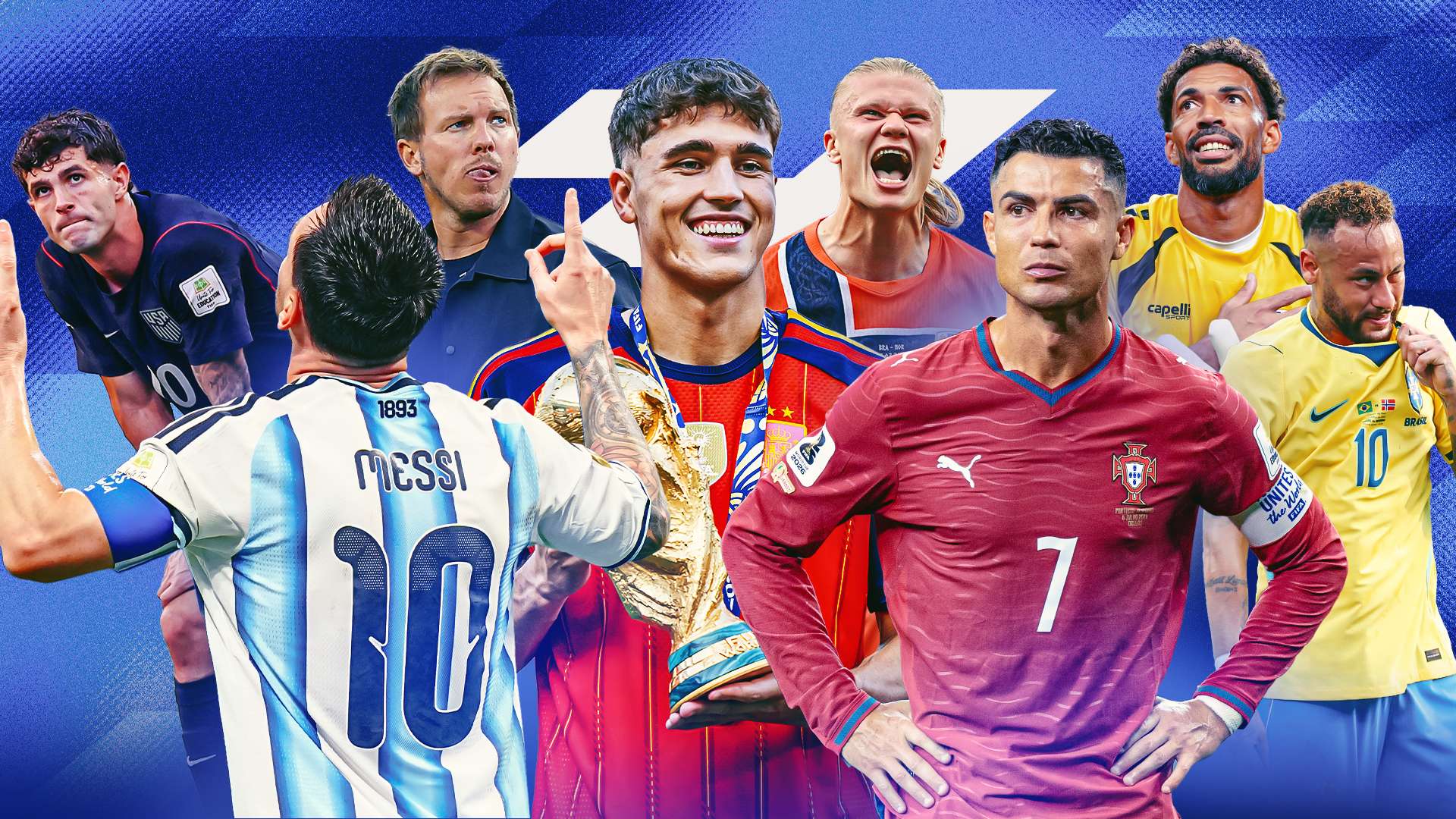
The 2026 World Cup ended in New Jersey on Sunday, with Spain deserved champions after a grim 1-0 victory over 10-man Argentina in one of the poorest finals in the history of the tournament. Spain substitute Ferran Torres scored the only goal in a match that was largely attack versus defence even before Enzo Fernandez foolishly saw red for a second yellow card in the final minute of normal time.
There were also ugly scenes after the final whistle, as Argentina midfielder Leandro Paredes - fortunate not to have been sent off during the game himself - lashed out at more than one Spain player as they came onto the pitch to celebrate a triumph built on organised defending and total control in midfield.
In that respect, Spain were the most deserving winners, effectively the saviours of ‘The Beautiful Game’. But who else leaves this World Cup with real credit? And who departs with serious questions to answer?
Below, GOAL looks at the biggest winners and losers from a tournament that was unquestionably dramatic, but also deeply dispiriting...
WINNER: Erling Haaland
Erling Haaland had emptied the tank well before the end of Norway’s heartbreaking and desperately unlucky quarter-final defeat to England. But although the No.9 was physically spent after the 2-1 loss in Miami, he was also bursting with pride over what he and his country had achieved at the World Cup.
Norway effectively took the United States by storm, with both their star striker and their travelling fans becoming online sensations, leaving Haaland struggling to fully absorb what had happened.
“I think my profile has grown a bit, let’s put it that way, but it's hard to even process it all right now when I look back at the games,” he admitted after scoring seven goals in just five matches, including two in the stunning 2-1 win over five-time champions Brazil.
“It’s incredibly special to be part of an event like this – something I used to watch from the sidelines, and now I’m living it first-hand. I’m genuinely moved when I think about how well we performed, the sense of unity back in Norway, and the positivity and joy we’ve felt both there and here.
“These things are surreal. And I think this has all changed me as a person.”
LOSER: Neymar
“I tried, I tried, but now, it's over,” an emotional Neymar said after Brazil’s last-16 World Cup defeat to Norway in New Jersey brought his international career to an end where it had first begun. “I started here, I finished here.”
The stadium was not the only fitting part of Neymar’s final appearance for Brazil. There was also the manner of his exit, with the forward getting drawn into a verbal spat with Norway goalkeeper Orjan Nyland that achieved nothing except wasting time - which neatly summed up a player whose priorities were so often misplaced.
Neymar was a generational talent, arguably blessed with as much natural ability as Lionel Messi, and there were periods during their time together at Barcelona when he looked destined to inherit the Argentine’s crown as the best footballer in the world.
But it never happened, because although Neymar may have been as gifted as Messi, he was never as professional. As a result, his body started letting him down while he was still in his 20s. So while Messi was able to light up another World Cup at 39, four years after winning one in Qatar, Neymar is already done at 34 without ever truly fulfilling his immense potential.
The truth is that football’s Mr. Glass was “finished” long before he returned to the venue of his Brazil debut in August 2010. He achieved plenty at the top, but he could have achieved far more had he really given everything.
WINNER: Kylian Mbappe
As Wayne Rooney and many others pointed out, Kylian Mbappe did not deserve to win the Golden Boot because some of his goals came after France had already been eliminated. But the rules are the rules, and the Frenchman’s success made him the first player to finish as top scorer at two separate tournaments.
Even more importantly, Mbappe’s brace in the farcical third-place play-off saw him move past Messi to become the World Cup’s all-time leading goal-scorer - a staggering feat for a 27-year-old.
Given his age, there is every chance Mbappe could set a record that is never broken.
LOSER: Julian Nagelsmann
Germany clearly have problems bigger than their coach. After this summer’s humiliating round-of-32 defeat to Paraguay, Die Mannschaft still have not won a knockout match - or even kept a clean sheet - since beating Argentina 1-0 in the final of the 2014 World Cup. It is safe to say, then, that Jurgen Klopp has a huge rebuilding job ahead of him.
Even so, he should have little trouble making a better attempt of it than his predecessor Julian Nagelsmann, whose reputation has understandably taken a major hit after Germany’s early exit.
Although he is still only 38, Nagelsmann has long been hailed as a prodigiously gifted tactician - yet his work with both the Germany national team and Bayern Munich does not really justify such lofty billing.
Germany may have thrashed Curacao in their opening game, while a dreadful VAR decision went against them in extra time against Paraguay, but for the most part they were painfully predictable and pedestrian in possession.
Kai Havertz refused to blame his coach. Almost everybody else did, though, which made Nagelsmann’s post-World Cup “resignation” entirely unsurprising.
WINNER: Lamine Yamal
Spain coach Luis de la Fuente admitted after his side’s round-of-32 victory over Austria that the World Cup had not yet seen the very best of Lamine Yamal. In truth, it never really did, with injury clearly hampering the winger, who ended the tournament with one goal and zero assists in eight appearances.
And yet it was Yamal who ended up consoling Lionel Messi, the man who had famously helped bathe him as a baby, after Spain’s 1-0 win over Argentina in the final.
The symbolism was superb, a real-life image of one era giving way to another. Yamal still has a huge amount to do if he is to match Messi’s achievements over the past two decades, but at just 19 he has already won both the World Cup and the European Championship. Who knows how many more major honours he may collect, especially as this tournament showed that this outrageously gifted player is also a genuine team man.
“That will help him to mature and be even a greater footballer than he already is,” Luis de la Fuente said after the full-time whistle in New Jersey. “He really sacrificed for the collective good. This is very important in my squad. In my opinion, he played a great World Cup.”
LOSER: Christian Pulisic
Amid all the negativity surrounding the United States’ last-16 hammering by Belgium, Christian Pulisic said the one personal positive was that he would at least get some “time to rest” after his campaign was ended slightly early by injury. It was easy enough to understand his point: Pulisic has battled fitness issues throughout his career and could certainly use a break.
However, after one of the most disheartening defeats in American football history, talk of rest and recovery was the last thing a shell-shocked public wanted to hear from their supposed star player, and the backlash became even harsher because it was led by Landon Donovan.
“The reality is, he came out of a World Cup knockout game at home, with his leg still intact. Because you would have had to f*cking drag me off the field,” the USMNT legend said alongside Tim Howard. “And I would have punched the doctor in the face and said, ‘You’re not taking me off the field. Put whatever you need to put in me, and I’m staying on the field.’
“I’m starting to look back, Tim, and it’s more than just a trend now. It is. Like, when the games are easy, and it’s a home qualifier, and it’s Jamaica, yes. But in the big moments and the big games, he just hasn’t. And I’m not criticising, I’m just saying it factually. He is who he is at this point.”
And if that was not Donovan criticising Pulisic as both a player and a personality, it is hard to imagine what he would say if he really wanted to lay into him.
WINNER: Iran
Iran went out in the group stage of the World Cup, and that suited both the United States and FIFA because plenty of people have already forgotten how disgracefully Amir Ghalenoei and his players were treated at the tournament. U.S. Homeland Security Secretary Markwayne Mullin even did a “happy dance” after Iran’s elimination - which tells you all you need to know about the petty and vindictive nature of the Donald Trump administration.
For no reason other than political persecution, Iran were, as Ghalenoei put it, “the most oppressed team” in World Cup history, forced to arrive immediately before and then leave immediately after their first two group games, with a devastating impact on their preparation for both matches.
“Everything is like a disaster for us,” captain Mehdi Taremi admitted after the 2-2 draw with New Zealand on matchday one. Even so, Iran came “millimetres away” from reaching the round of 32, as Shoja Khalilzadeh’s injury-time “winner” against Egypt was ruled out for the narrowest of offsides.
Had they not been subjected to “the worst possible conditions”, there is every chance Iran - the first World Cup team ever to be bombed by a host nation - would have reached the knockout stage. Speaking after his unbeaten team’s elimination, Ghalenoei urged FIFA to “not let this happen again”, while also calling on “Mr. Infantino to stand up to” the United States.
There was obviously no chance of that. Infantino is a two-faced coward who praised the Iranian players in the dressing room after their draw with New Zealand but did absolutely nothing publicly to support them, because he did not want anything to undermine his frankly insulting claim that this World Cup was “the most incredible event” of all time.
However, while FIFA went out of their way to make it seem as if Iran had never even been there, Ghalenoei’s players - who left behind a note calling for “peace, respect and friendship to prevail among all nations” after their 0-0 draw with Belgium in Los Angeles - still made their mark on the 2026 World Cup. “What these young people did,” the coach said, “will be written in history.”
LOSER: The victims of VAR
Football fans around the world were delighted that Luka Modric chose to keep playing after Croatia’s heartbreaking group-stage exit at Euro 2024. One of the game’s greats did not deserve to bow out in such bitter circumstances. As it turned out, though, retiring immediately after Italy’s 98th-minute equaliser in Leipzig would actually have spared Modric an even more painful farewell in Toronto.
Croatia looked to have deservedly forced extra time in their round-of-32 clash with Portugal when Josko Gvardiol made it 2-2 in the 13th minute of stoppage time - and the defender’s goal understandably sparked wild celebrations on the touchline.
However, the goal was controversially ruled out by the Video Assistant Referee (VAR), whose Snickometer-style technology allegedly detected the slightest touch from Igor Matanovic that left Mario Pasalic offside before the ball reached Gvardiol.
“I will not comment much about it but I will say the refereeing was very bad,” Croatia coach Zlatko Dalic said. “You were able to see to what extent emotions had been killed and, altogether all these decisions take you back and actually take the joy out of football.
“We have gone too far with VAR. VAR kills emotions, it kills everything within you.” Germany, Egypt, Norway and the many other victims of VAR at this World Cup would surely agree.
LOSER: Senegal
Habib Diarra admitted he did not know what to say after Senegal’s World Cup exit. The Lions of Teranga had been 2-0 up against Belgium with just four minutes left in Seattle and yet somehow allowed opponents who were playing terribly to force extra time. Then, with penalties looming, Lamine Camara conceded a spot-kick that Youri Tielemans converted to send Senegal home.
There was a temptation to feel sympathy for Pape Thiaw’s side, who had been unfortunate to land in the same group as France and Norway, but Diarra felt they deserved no such sympathy after their round-of-32 elimination.
“We’re devastated, it’s very tough to take, but a game lasts 90 minutes,” he said. “When you’re on the pitch, you have to give your all - but that’s not what we did. We’ve only got ourselves to blame.”
And he was right. Despite the controversy around the penalty decision, there was no escaping the fact that Senegal had repeatedly shot themselves in the foot.
Their campaign was also plagued by off-field issues, including a dispute over unpaid bonuses and a contractual stand-off between the coach and the national federation, while Papa Gueye revealed after the Belgium collapse that he would not play for the national team again under the current technical staff, making Thiaw’s eventual dismissal entirely unsurprising.
All things considered, then, this was a fittingly chaotic World Cup from a Senegal side that had already caused turmoil with their walk-off at the Africa Cup of Nations earlier this year.
WINNER: Morocco
The 2026 World Cup highlighted the strength of African football, with nine of the continent’s 10 qualifiers reaching the round of 32. It was hardly surprising, though, that Morocco went furthest of all, with the Atlas Lions making the quarter-finals in North America. And who knows, had they not been unfortunate enough to run into France again, Africa’s pride might even have matched their historic fourth-place finish at Qatar 2022?
There is a strong case that this Morocco side was even better, given they unquestionably carried more attacking threat, and if top scorer Ismael Saibari had been fit to face the French in Foxborough, their quarter-final might have unfolded differently.
“We are, of course, disappointed to lose,” Mohamed Ouahbi said after his team’s 2-0 defeat, “and we need more options on the bench when we have injuries, absences and fatigue. But the future will be bright if we continue like this.
“We know we represent more than just one country. We represent the Moroccan people, and many countries across Asia and Africa. Many people see themselves in this team, and we'll keep working to win titles in the future.”
A major trophy is certainly within reach. Ouahbi, remember, only took charge of the senior side in March after doing excellent work at youth level, so Morocco are fully entitled to dream of becoming the first African winners of the World Cup when they co-host the tournament in four years’ time.
LOSER: Asian Football
Uzbekistan coach Fabio Cannavaro says that “other than Japan, Australia and maybe Iran, every [Asian] team needs to improve” - and he is not wrong. The World Cup was a disaster for the Asian Football Confederation (AFC), with only two of its nine representatives making it out of the group stage - and both Japan and Australia were then knocked out immediately in the round of 32.
As a result, of the 29 matches played by Asian teams in North America, they won only three in total, with South Korea beating Czechia, Australia upsetting Turkiye, and Japan defeating Tunisia.
What is more, Iraq, Jordan, Qatar, Saudi Arabia and Cannavaro’s Uzbekistan all finished bottom of their respective groups, which only reinforced the argument of those who felt the AFC did not deserve an extra three slots for the expanded 2026 World Cup.
AFC president Salman bin Ibrahim Al Khalifa acknowledged that Asian sides have “a lot of work to do” in the years ahead to “catch up” with the elite - but the “tight gap to the top tier” he spoke of looked more like a gulf at the 2026 World Cup.
WINNER: Thomas Tuchel
The third-place play-off is a meaningless game, stripped of any real significance, and the entertaining but absurd 10-goal thriller between France and England on Saturday only reignited the debate over whether goals and assists in such a fixture should count towards a player’s overall total, given these matches bear little resemblance to proper tournament football because there is no real jeopardy or pressure.
However, victory in Miami meant a great deal to Thomas Tuchel, as it allowed him to put a positive spin on a campaign that had unravelled because of his negative tactics.
Given the entirely justified backlash to Tuchel’s terrible game management against Argentina, the German was careful not to overstate his team’s achievement, but he was quick to note that the Three Lions had won their first World Cup medals since lifting the trophy in 1966.
A third-place finish will also help the Football Association (FA) justify its decision to keep Tuchel for another two years, even though the cowardly retreat he ordered during England’s shocking and shameful semi-final collapse should have seen him sacked immediately.
Tuchel was supposed to be a superior tactician to Sir Gareth Southgate, but he proved anything but at the 2026 World Cup. England did not produce one complete performance in eight matches - they would even have blown a 4-0 lead against France had Michael Olise not missed the easiest of chances - and would not have come close to the final four without a soft route and some extremely favourable refereeing decisions.
In that context, Tuchel will be thanking his lucky stars for the third-place play-off, because the fallout from this failure would have been far harder to endure without it. As Danny Murphy said, “Tuchel will keep his job, but I don't think he should. [England] missed out on a World Cup final because of his tactics.”
LOSER: Didier Deschamps
In his farewell message to Didier Deschamps, Mbappe wrote, “People have not always known how to appreciate your greatness, but time and history will take care of that.” And perhaps Mbappe is right. Maybe years from now people will look back on Deschamps’ 14-year spell as France coach and judge it a success because he won a World Cup - which is, of course, an incredibly difficult thing to do.
However, even during that 2018 triumph, there was a feeling that France could have been even greater than the sum of their parts, and that feeling only grew stronger in the years that followed, as a squad of increasing quality repeatedly fell short at major tournaments, especially European Championships.
What is more, France’s football in Germany two years ago was an absolute disgrace considering the talent available to them, and the blame rightly fell on the painfully pragmatic Deschamps, who was fortunate to keep his job.
Perhaps for that very reason, Deschamps appeared to remove the handbrake somewhat in the lead-up to this summer’s World Cup, but when it really mattered, when France once again came up against Spain, it became clear that nothing had actually changed. For all their outstanding individuals, France remained a fundamentally flawed side.
Les Bleus had one of the most formidable forward lines ever seen at a World Cup and yet barely laid a glove on La Roja, who completely outplayed them in Dallas. Mbappe said in his message that the players had “failed” Deschamps but, to the rest of us, it felt like Deschamps had failed France, the overwhelming favourites to win the 2026 World Cup who ended up finishing fourth.
WINNER: Lionel Messi
The 2026 World Cup ended in tears for Lionel Messi. What may prove to be his final match on the international stage ended in a crushing defeat, with the No.10 limited to only 55 touches during an Argentina display in Sunday’s final that was even worse than the half-time show.
If anything, though, what Messi produced in North America was even more astonishing than what he did in Qatar four years ago. At 39 years of age, he won both the Silver Ball and the Silver Boot after scoring eight goals and providing four assists.
Put simply, he carried a fairly ordinary Argentina side to what was, for him, a record-equalling third World Cup final, with his late heroics against England underlining the enduring brilliance of his genius.
As Wayne Rooney said, “This World Cup has absolutely cemented Messi's status as the greatest of all time.”
LOSER: Marcelo Bielsa
“I'm toxic,” Marcelo Bielsa admitted after Uruguay’s embarrassing 5-1 friendly defeat to a second-string United States side last November. “To associate yourself with me makes you worse off. Do you understand me?” Anyone who did not certainly does now.
Uruguay’s World Cup campaign was a complete disaster, with La Celeste exiting after failing to win a single game in Group H. A 1-0 loss to Spain sealed their fate, but Uruguay should never have been in a situation where the outcome of that match in Guadalajara had any bearing on whether they reached the round of 32.
A team ranked 16th in the world at the time should have comfortably beaten Saudi Arabia and Cape Verde. Instead, Uruguay drew with both, making their early elimination sadly predictable, especially as it had been obvious even before the tournament began that things were not right behind the scenes.
As we wrote before Uruguay’s opener, Bielsa is a deeply flawed genius, a Rust Cohle-like figure cursed with a tendency to wear down those around him, so it was no great surprise to see his reign end in bitterness.
“If you ask me how my time [with the national team] will be remembered, it is a tenure that left nothing behind,” the Argentine admitted. “I leave nothing to Uruguayan football.” Which is desperately sad, but undeniably true.
WINNER: Jude Bellingham
Jude Bellingham’s frustration got the better of him in England’s semi-final defeat to Argentina, but it was easy to understand why. It cannot have been easy for a notoriously petulant 23-year-old to realise that a man almost twice his age is still operating on a level he has never come close to reaching.
However, this tournament was still a success for Bellingham, whose place in Tuchel’s team had been heavily debated before England’s opener against Croatia. Some pundits were even still arguing that such an expressive character should have been left at home for the sake of dressing-room harmony.
England, though, would have been lost in North America without Bellingham, who showed exactly why he rates himself so highly with decisive contributions against Croatia, Panama, Mexico and Norway, before sealing victory in the third-place play-off with a brilliant solo goal that showcased his elegance and technique.
That superb injury-time strike in Miami made Bellingham the highest-scoring English player at a single World Cup, with seven goals, and we are extremely confident that more will follow in four years’ time. Indeed, by then, Bellingham’s status as a starter should not even be a debate. The whole team will likely be built around a player who may not be Messi, but could very well succeed him as the best footballer in the world after the Argentine retires.
LOSER: Jesse Marsch
Canada made history at the 2026 World Cup. A nation that had never previously won a game at the finals reached the knockout stage thanks mainly to an emphatic 6-0 thrashing of Qatar, and then advanced to the last 16 with a dramatic stoppage-time winner against South Africa that created great pride and interest in what is traditionally a hockey country.
It is a pity, then, that the lasting memory of Canada’s World Cup run is Jesse Marsch’s unintentionally hilarious interview after his team’s 3-0 tournament-ending defeat to Morocco. According to Marsch, the Canucks had been the better side in Houston, and he also declared, “I'd rather be us than them.”
The American had every right to be proud of what his players achieved at the World Cup, but even they must have cringed at their coach’s statement, which needlessly disrespected a vastly superior Morocco side and did nothing to change the widely held view that Marsch is one of the most performative figures in football.
WINNER: Spain’s defence
First of all, it would be wrong not to mention the outstanding work Golden Ball winner Rodri did in shielding Spain’s back four - especially once he was joined in midfield by Fabian Ruiz after Luis de la Fuente made the bold and brilliant decision to bench Barcelona star Pedri.
It should also be said that Spain’s World Cup triumph was a victory for the team as a whole, a triumph of the collective, because every member of the squad was willing to run themselves into the ground for the common cause.
Even so, Pedro Porro, Aymeric Laporte, Marc Cucurella and, above all, 19-year-old Pau Cubarsi deserve special praise.
All four were magnificent from beginning to end and were the main reason Spain made history by conceding just one goal in a World Cup-winning campaign - while goalkeeper Unai Simon had to make only 10 saves in eight games, which is both historic and absurd.
LOSER: Scotland
Scotland brought some of the best supporters to the World Cup, but one of the weakest teams. After qualifying in such thrilling fashion, Steve Clarke’s shockingly conservative side went out with barely a whimper after winning only one game, against Haiti, courtesy of a deflected John McGinn strike, and managing just seven shots on target across three group matches.
As a result, not even former Scotland internationals Craig Burley and Steve Nicol wanted their country to benefit from a ludicrous format that allowed eight third-placed teams to progress to the round of 32.
“If they go through, fine,” Burley said while qualification was still possible despite a 3-0 defeat to Brazil in Miami. “But there should be no celebration if this is the first-ever Scotland team to qualify for the group stage, because it would really just be by default.
“I have no problem with Scotland going out or any other team that's down there [at the bottom of the third-placed table] because, I'm sorry... I know this is the way the bracket works with the 48 teams, but we’re just rewarding complete mediocrity here.”
Burley was certainly not wrong. Even allowing for the fact that Scotland were in a difficult group with two top-10 teams in Brazil and Morocco, the mere fact that they were still in contention for a place in the round of 32 damaged the competition’s credibility, as Nicol was also quick to point out.
“A World Cup is supposed to be the elite,” the Liverpool legend said. “It's the medal that every single player wants to win more than any other, regardless of what country you play in. And it's been devalued when there are certain teams who are going to be going through who just don't deserve to be there.”
WINNER: Cape Verde
Forget England, Argentina, France or Spain - Cape Verde were the story of the 2026 World Cup, the football fairytale that reminded us why we still bother with a sport that no longer feels so beautiful.
Very little was expected of the smallest country by land mass ever to reach the finals - and yet Cape Verde came incredibly close to producing the biggest shock in World Cup history by pushing Argentina to the edge in an epic round-of-32 tie in Miami.
It ended in tears, of course, but the image of Nuno Costa being comforted by his son in the stands after the game was just one of countless unforgettable moments produced by the team of the tournament - including the shot celebrated all over the world by Sidny Lopes Cabral.
Cape Verde also held Spain scoreless in their tournament opener, thanks in no small part to an unemployed 40-year-old goalkeeper, Vozinha, and a 34-year-old defender born in Dublin who had been recruited on LinkedIn, Pico Lopes, while the draw with Saudi Arabia that secured qualification for the knockout stage left man of the match Deroy Duarte feeling as though he was “living in a dream”.
It certainly did not seem real, but as coach Bubista said, Cape Verde proved this summer that “nothing is impossible”, and for that we should all be grateful.
LOSER: Cristiano Ronaldo
After scoring twice against Uzbekistan, Cristiano Ronaldo roared into the camera, “I'm back! I'm back!” He clearly was not, though, and to be honest one could not help wondering whether he had ever really been there in the first place. In fact, it may have been better for everyone involved - including ‘CR7’ himself - if his suspension for the opening two games had remained in place.
Because what we saw wandering around stadiums in North America was not the real Ronaldo - or at least not the one remembered for scoring goals, breaking records and winning trophies for nearly two decades. The 41-year-old leading Portugal’s attack looked more like a cardboard cut-out - only with even less movement.
Whatever your view of Ronaldo, as a footballer or as a person, his campaign was painful to watch, like a car crash visible from a mile away. That Roberto Martinez was the one driving was hardly surprising, and his coaching licence should be taken away after he wasted yet another “Golden Generation”.
A stronger manager would have guided Ronaldo into international retirement, especially after the embarrassment of Euro 2024, but instead Martinez spent four years indulging one individual when he could have been building a World Cup-winning side - with predictably disastrous consequences for both Portugal and their greatest-ever player.
Ronaldo insisted all along that his legacy would not be affected by what happened this summer - but he was wrong. Not because he failed to win the World Cup, but because he stood in the way of a talented team trying desperately to do exactly that.
WINNER: Hossam Hassan
While floating the idea of a 64-team World Cup, Infantino said he believed “every nation should be allowed to dream of participating in the World Cup.” Clearly, though, he means every nation except Palestine, where, on July 3, goalkeeper Saleem Khader al-Ashqar became the 567th member of the country’s football community to be killed by Israeli forces during a genocide that has also taken the lives and limbs of an entire generation of children.
FIFA unsurprisingly ignored al-Ashqar’s death. Just as it ignored the killing of Mohammed al-Wahidi, a former English teacher working for the Egyptian Relief Committee in Gaza who had been organising World Cup watch parties in the city. Indeed, al-Wahidi was killed in an Israeli air strike that also took the lives of two brothers, aged eight and 10, just hours before a screening of Egypt’s last-16 clash with Argentina.
That senseless slaughter only tragically reinforced why Egypt coach Hossam Hassan had accused the football world of failing an entire people on the eve of his team’s 3-2 defeat in Atlanta.
“I would like to say this is a shame on us,” he told reporters in his pre-match press conference. “It is, first of all, a shame on the decision-makers who leave human beings behind. But it is a shame on the entire world, not just the Arab world, a shame on everyone.
“If there is anyone in the world who does not feel for the Palestinian people, then they are not human - whether they are Arab, European, or American. Everywhere in the world, including in Europe or America, if someone hurts an animal, we see animal rights being defended and the whole world reacts. But it has become normal to hear that two or three thousand people die in a single day because of a missile.
“Regardless of religion... I am a human being before an Arab or anything else. My message, then, would be to use football as soft power. I urge all of you, the media, all athletes worldwide, regardless of their identities maybe we can convey a collective message.
“That is as follows: ‘Let the Palestinian people be, let them exist, let them live a life of their own.’”
LOSER: FIFA’s credibility
The World Cup has previously been hosted by fascist dictators, military juntas and sports-washers - and yet 2026 was the year the competition lost all credibility because Infantino made it feel like 1984.
Launching wars earned Donald Trump a peace prize before the draw had even taken place, while his travel bans stopped millions upon millions of people from attending, including Africa’s top referee, making a mockery of Infantino’s boast that this would be the most “inclusive” World Cup of all time.
When journalists dared to ask questions, they were told “to chill, relax”, and focus only on the football - but even that was impossible because the very structure of the game had been altered, from two halves to four quarters, in order to generate even more advertising revenue for American rights holders.
Of course, that was nothing compared to Trump revealing that he had asked Infantino to review Folarin Balogun’s red card against Bosnia & Herzegovina - after FIFA officials had spent hours denying that any call between the two had even happened.
The tournament was not merely tarnished; it effectively became one giant lie, so there was something fitting about the fact that after the ridiculous Spidercam controversy during the Norway-England game, FIFA literally told us to reject the evidence of our own eyes and ears. It was effectively Infantino’s final and most essential command, and it paves the way for his unopposed re-election next year.
Sadly, the game really is gone.
-
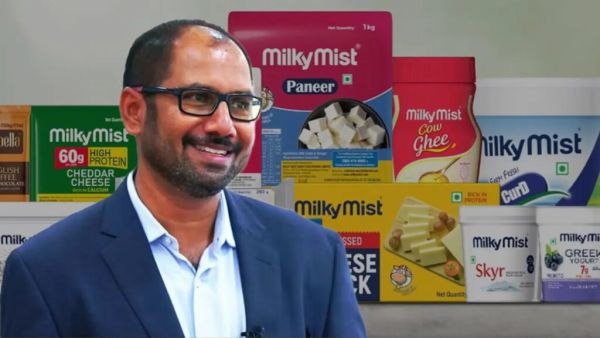
How A 16-Year-Old School Dropout Turned Paneer Into Rs 10,000 Crore Milky Mist Brand
-
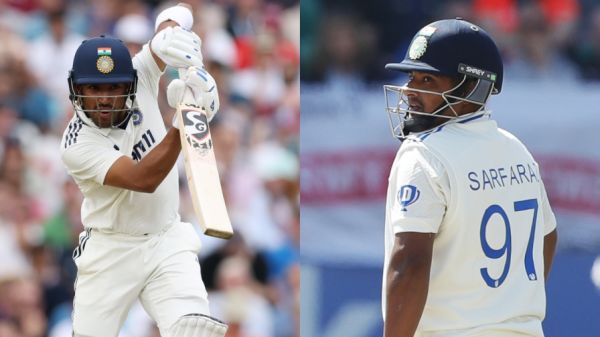
IND vs SL: A chance for flopping Dhruv Jurel… What harm has Sarfaraz Khan done?
-
World Cup is important for us, hope we will win: Harmanpreet Singh!
-
Jemimah Rodrigues out of Women's Asia Cup and Asian Games Read
-
Earthquake of 7.7 magnitude hits eastern Indonesia, 20 dead