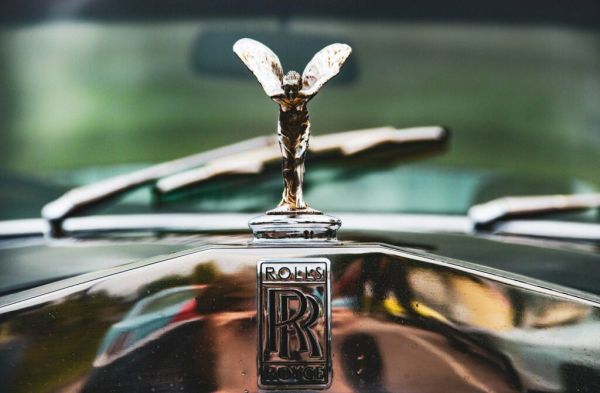
Reliance and the British engineering giant want to create a sovereign combat engine ecosystem in India for the AMCA stealth fighter, potentially bringing one of the country’s most difficult defence technologies under Indian control.
By Sudhir Anand
India’s long pursuit of a truly indigenous fighter aircraft has always faced one exceptionally difficult obstacle: the engine.
Now, one of the most famous names in aerospace engineering wants to help India overcome it.

British engineering giant Rolls Royce and Reliance Industries announced on August 14 that they intend to partner on the design, development, manufacturing and delivery of a sovereign indigenous combat engine for India’s Advanced Medium Combat Aircraft, or AMCA, programme.
It could become an important step in India’s drive toward self reliance in one of the most complicated and strategically sensitive areas of modern defence manufacturing.
Rolls Royce Is the Part of This Story That Matters
India can design aircraft structures, build missiles, develop sophisticated radars, manufacture warships and increasingly produce complex defence systems domestically.
A modern high performance fighter engine is different.
Military turbofan engines operate under extraordinary temperatures, pressures and mechanical stresses. Building one requires mastery of advanced metallurgy, turbine technology, combustion, cooling, digital engine controls, manufacturing tolerances and thousands of components that must work reliably together under extreme conditions.
That is why relatively few countries possess the ability to independently develop modern fighter aircraft engines.
Rolls Royce brings enormous credibility to that challenge.
The British company has more than a century of experience in advanced engineering and produces propulsion systems across military and civilian aerospace. Its defence portfolio includes involvement in the EJ200 engine powering the Eurofighter Typhoondeveloped through the EUROJET consortium. Rolls Royce describes the EJ200 as having a high thrust to weight ratio, integrated digital engine control and a modular architecture.
India and Rolls Royce also have a relationship stretching back generations. The company said as far back as 2019 that it had an 85 year relationship with India and was already working with the Indian aerospace sector on engineering, technology transfer, maintenance and training.
This is therefore not simply about importing another Rolls Royce engine.
The ambition being discussed is much larger.
The Goal Is To Build The Capability In India
Rolls Royce and Reliance say they will explore establishing a dedicated Aerospace Gas Turbine Complex in India.
According to Rolls Royce, the proposed complex would seek to create Indian capability spanning design, development, manufacturing, testing, production and through life support for advanced propulsion systems.
That distinction is enormously important.
India does not merely need an engine delivered to it. For genuine strategic autonomy, India ultimately needs the engineers, laboratories, manufacturing systems, testing facilities, intellectual capability, suppliers and industrial knowledge necessary to develop generations of engines.
Reliance Executive Director Anant Ambani said the intention is to combine Rolls Royce’s advanced propulsion expertise with Reliance’s technology, manufacturing scale and execution capabilities to create an indigenous aero engine ecosystem.
He argued that sovereign capability in critical technology is necessary for Indian strategic autonomy.
Rolls Royce CEO Tufan Erginbilgiç similarly described the proposal as a major milestone toward creating a stronger and more self reliant Indian aerospace ecosystem.
That is exactly where India should aim.
Self reliance does not have to mean refusing international cooperation. It can mean using international partnerships strategically so that knowledge, manufacturing capability and eventually technological independence are built inside India.
Why AMCA Matters
The Advanced Medium Combat Aircraft is intended to become the centrepiece of India’s future combat aviation capability.
India’s Ministry of Defence approved the AMCA Programme Execution Model in May 2025, with the Aeronautical Development Agency tasked with executing the programme through industry partnerships. The government deliberately opened participation to both public and private Indian companies, including joint ventures and consortium structures.
Defence Minister Rajnath Singh subsequently said India planned to develop five AMCA prototypes before moving toward series productiondescribing the programme as an important milestone for Make in India.
Reuters reported that an AMCA prototype is expected to roll out around 2028.
But developing an Indian stealth fighter while remaining dependent indefinitely on a foreign country for its most important mechanical system would leave a significant piece of the programme outside India’s control.
Recent difficulties elsewhere in India’s fighter programme have demonstrated why propulsion supply chains matter. Reuters noted that Hindustan Aeronautics has faced slow deliveries of General Electric engines for the Tejas programme because of supply chain problems affecting the American manufacturer.
An indigenous engine programme is therefore not simply a matter of national prestige.
It is about availability.
It is about maintenance.
It is about upgrades.
It is about wartime resilience.
And ultimately, it is about whether India can build future generations of combat aircraft without waiting for another government or foreign supplier to provide one of the most critical components.
Reliance Could Bring Something Different
Reliance’s involvement is also significant because India’s defence industrial strategy is increasingly moving beyond a model dominated almost entirely by government owned manufacturers.
Reliance brings something very different: enormous industrial scale, capital, advanced manufacturing ambitions and the ability to build large integrated industrial ecosystems.
Rolls Royce brings the specialised propulsion knowledge.
If those two capabilities can be successfully combined with India’s broader aerospace and defence research establishment, the long term result could extend far beyond one AMCA engine.
The companies explicitly said the proposed gas turbine complex could create opportunities in defence, civil aerospace and new power and propulsion systems as well.
That is where this announcement becomes especially interesting.
A successful fighter engine programme could help produce an entire Indian propulsion industry rather than a single product.
Technologies and manufacturing capabilities developed for advanced turbines can influence military aviation, unmanned aircraft, civilian aerospace and other high performance power systems.
Rolls Royce Still Has To Win The Race
There is, however, an important distinction that should not be lost amid the excitement.
Rolls Royce has not been publicly announced as the final government selected engine partner for AMCA simply because this Reliance agreement exists.
The August 14 announcement describes a “strategic intent to partner.” Reuters reported that the Reliance Rolls Royce proposal potentially places the British company in competition with France’s Safran, which has separately proposed cooperation with India’s Gas Turbine Research Establishment for a high thrust engine intended for future versions of AMCA.
Rolls Royce has nevertheless been pushing aggressively for the opportunity. In June, the company reportedly submitted a proposal for a new 120 kN plus fighter engine, outlining an engine core test around 2030, a first flight around 2034 and production around 2036 if an agreement were concluded by the end of 2026.
India therefore has considerable negotiating leverage.
The objective should not simply be choosing the largest foreign name. The winning arrangement should be the one that leaves India with the greatest amount of genuine engineering capability, manufacturing depth, technology access and freedom to develop future engines independently.
From Buying Engines To Building Them
For decades, India’s fighter aircraft ambitions have repeatedly encountered the same uncomfortable reality.
A country can design a fighter jet, manufacture its airframe and integrate sophisticated Indian weapons and electronics, but without mastery of propulsion it remains dependent on somebody else for the machine that makes the aircraft fly.
That is why the Rolls Royce proposal deserves serious attention.
The real prize is not having Rolls Royce engines made in India.
The real prize would be having Indian engineers and Indian industry emerge from the partnership capable of designing, manufacturing, testing, maintaining and eventually improving advanced fighter engines themselves.
If India can achieve that, the AMCA programme could represent much more than another indigenous fighter.
It could mark the moment India begins moving from being one of the world’s largest buyers and integrators of military aviation technology toward becoming one of the relatively small number of countries capable of creating the entire combat aircraft ecosystem at home.
For Prime Minister Narendra Modi’s vision of Atmanirbhar Bharatthere are few technological achievements that would symbolize self reliance more powerfully.
And if Rolls Royce is prepared to help India build that capability in India rather than simply sell it to India, this partnership could become one of the most consequential aerospace collaborations the country has pursued.
-
Burqa-clad women steal gold chain from Zaheerabad jewellery shop

-
A legendary journey will end next year: Ronaldo to retire

-
When India avenged 1982 Asian Games loss to Pakistan

-
SC to set up high-powered panel to probe Delhi Police brutality
-
What Relief Has Pak SC Granted Imran Khan Amid Concerns Over His Health? | Explained