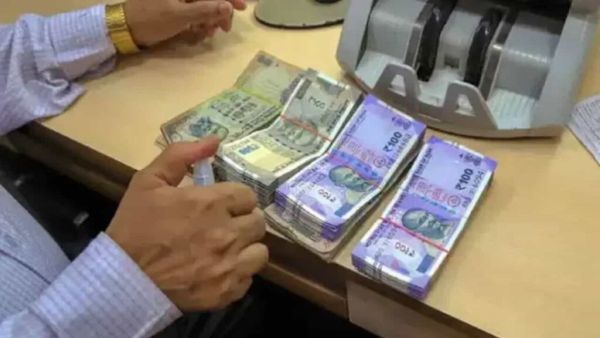
Even in this era of digital banking and UPI, many times people accumulate large amounts of cash due to sale of property, family savings, marriage vows or business needs. In such a situation, this question often arises in the minds of common citizens and taxpayers that how much maximum cash can they deposit in their bank account during a financial year, so that they do not face any notice or legal action from the Income Tax Department. From a legal point of view, there is no upper limit for depositing cash in any bank account under Indian Income Tax law or banking regulations. As a citizen, there is no absolute restriction on whether you can deposit ₹5 lakh or ₹50 lakh in your bank account, provided you have a legitimate source of income, strong documentary evidence and complete records of income tax paid on it. However, to curb black money and tax evasion, the Income Tax Department has set strict reporting thresholds for banks and financial institutions. As soon as you cross these fixed limits, banks automatically send the information about your cash deposit to the Income Tax Department. Rules for Cash Deposit in Savings and Current Account: SFT math of ₹10 lakh and ₹50 lakh Under Rule 114E (Rule 114E read with Section 285BA) of Income Tax Rules 1962, it is mandatory for all commercial banks, co-operative banks and post offices to file details of financial transactions i.e. 'Statement of Financial Transaction' (SFT). The annual reporting limits based on the type of account are as follows: Savings Bank Account: If a person deposits cash amounting to ₹10 lakh or more in a single savings account or in a combination of multiple savings accounts opened in the same bank during a financial year (April 1 to March 31), the bank reports the same to the Income Tax Department through 'Form 61A'. Current Account: This limit is set at ₹50 lakh or more for current accounts operated by traders and business establishments. If cash deposits or cash withdrawals of more than ₹50 lakh are made in a financial year, the bank reports it as a high-value transaction. Fixed Deposit / Time Deposit: If a person makes one or more FDs by making a total cash payment of ₹ 10 lakh or more in a financial year, then the bank also does separate SFT reporting for this. Cash payment of credit card bill: If you use cash of ₹1 lakh or more in a year to pay your credit card bill, then this also comes directly on the radar of the tax department. It is very important to note that this limit is not calculated on a per-account basis, but on a per-PAN basis. If you have two different savings accounts in the same bank and you deposited ₹5 lakh cash in both, the bank will send a report as soon as the total reaches ₹10 lakh. Similarly, even if deposits are made by dividing accounts in different banks, the central database of Income Tax adds all the deposits together on the basis of PAN card. PAN and Aadhaar card mandatory: Strict rules for ₹50,000 and ₹20 lakh Some basic identity documents have been made mandatory under Income Tax Rule 114B while depositing cash in a bank branch or Cash Deposit Machine (CDM): Depositing ₹50,000 or more in a day: If you deposit cash amount of ₹50,000 or more in a single day in the bank, then produce a valid PAN card (PAN) on the pay-in-slip. It is legally mandatory to mention this. Cash transactions aggregating ₹20 lakh or more annually: As per Central Board of Direct Taxes (CBDT) rules, if a person deposits or withdraws cash aggregating ₹20 lakh or more from one or more banks in a financial year, he is required to mandatorily link and furnish PAN and Aadhaar to the bank account. Third eye of Income Tax Department: How does AIS, 26AS and CASS system catch the game of cash? Many people have a misconception that depositing ₹ 10 lakh in the bank means that the tax department will directly raid or the money will be confiscated. In reality it is not so. When banks file their SFT returns by May 31, the entry for your cash deposit will automatically appear in your 'Annual Information Statement' (AIS) and 'Taxpayer Information Summary' (TIS). The Income Tax Department's 'Computer Assisted Scrutiny Selection' (CASS) system compares the Income Tax Return (ITR) filed by you with your AIS data. If there is a huge mismatch between the total income shown in your ITR and the cash deposited in the bank—for example, your declared annual income is ₹4 lakh but ₹15 lakh has been deposited in cash in the account—then the system immediately issues a red-flag. In such a situation, the department can issue a notice under section 143(1), a clarification notice under section 142(1) or a notice of detailed scrutiny assessment under section 143(2). Section 269ST: Cash transactions of more than Rs 2 lakh are completely illegal. Apart from depositing money in the bank, there is a very strict law in force regarding accepting cash under Section 269ST of the Income Tax Act. According to this section, no person can: accept cash aggregating to ₹ 2,00,000 or more in a single day, accept cash aggregating ₹ 2,00,000 or more in respect of a single transaction, or accept cash aggregating ₹ 2,00,000 or more for a single occasion, function or occasion. If a person accepts cash amounting to ₹2 lakh or more (be it a property sale, sale of jewelery or any business deal), then under Section 271DA, a heavy penalty equal to 100 per cent of the total amount received is imposed on the person accepting the cash. Therefore any transaction of ₹2 lakh or more should be done only through cheque, bank draft, NEFT, RTGS or UPI. Heavy penalty of up to 84% on unknown cash: Fear of Section 68 and 115BBE If the account holder is unable to prove the valid source of funds and evidence of the cash deposited in his bank account when the Income Tax Department sends a notice, then that amount is considered 'undisclosed income' under Section 68 (Unexplained Cash Credits) or Section 69A (Unexplained Money) of the Income Tax Act. The tax rates on undeclared cash are not charged from the normal tax slabs, but at a highly punitive rate under section 115BBE: Base Tax Rate: Flat 60 percent tax on undeclared amount. Surcharge: 25 percent surcharge on the amount of tax (ie 15% of total income). Health and Education Cess: 4 percent cess on taxes and surcharges (ie 3% of total income). Total Effective Tax Rate: 78 percent. Additional penalty (Section 271AAC): If this income is detected during investigation by the Assessing Officer, an additional penalty of 10 percent is imposed. Thus, the total liability increases to approximately 83.25% to 84% of the principal amount. Along with this, interest is payable separately under sections 234A, 234B and 234C. Apart from this, any kind of tax exemption, deduction (like 80C, 80D) or loss set-off is not allowed on this income. Take these 5 precautions while depositing cash: How to avoid notice and scrutiny If you have your legitimate earnings or cash collected from legitimate sources and you want to deposit it in a bank, follow these basic financial precautions: Keep a strong documentary record of the sources: If the cash is from agricultural income, keep mandi slips (J-Form) or sales receipts. If cash is received by selling ancestral property, jewelery or vehicle, keep a copy of the registered sale deed and agreement safe. Maintain Cash Flow Ledger and Cash Book: Small traders and self-employed should maintain a ledger of their daily cash sales and cash expenses, so that the amount deposited in the bank can be directly verified with the sales. Match details while filing ITR: Before filing your ITR, visit the e-filing portal and download your AIS and 26AS. If there is any high-value cash deposit recorded, ensure proper reconciliation of the same with the income shown in the return. Avoid Smurfing/Structuring: To avoid the attention of the department, many times people deposit amounts like ₹ 9.9 lakh or ₹ 49,000 repeatedly in different accounts. The AI algorithms of the Income Tax Department catch this type of pattern immediately and consider it as deliberate tax evasion. Give a clear reply in time when the notice comes: If any e-verification or clarification notice ever comes from the Income Tax Department, instead of panic, submit the reply online on the portal with a copy of all your bank statements, proof of income and accounts within the stipulated time limit. Depositing cash in a bank account is your absolute right, but this right demands complete transparency and financial honesty. If the source of your money is clean, your taxes are paid and you have the required documents, then you don't have the slightest need to be afraid of any limits or notices.
-
Another name of absconding robber bride found in Uttar Pradesh, Agra police will go to Prayagraj for search

-
Best designs for mehndi on Rakshabandhan

-
Silver Price Today: Big dive in silver prices! Know the new price of 1 kg silver

-
Do not apply any tube or cream immediately as soon as you have a slight itching, know from the doctor about its major disadvantages and correct treatment.

-
There is a right way to open Rakhi, know after how many days it is considered auspicious to open it, know the religious belief.