
Pankaj Chaturvedi, senior journalist
Solar energy has long been considered a reliable and completely clean energy source as an alternative to fossil fuels. Generating electricity from the sun's rays has emerged as a magical solution for a world facing serious challenges of global warming and climate change. But as this Green Revolution is moving towards maturity, an unseen, dark and dangerous aspect of it is beginning to emerge. Harvard Business Review's comprehensive report 'The Dark Side of Solar Power' indicates that the solar power we see as a savior of the environment could turn into a huge and toxic waste crisis in the future.
The root cause of the problem with solar panels lies in their life span and consumer behavior. Generally a solar panel works efficiently for about twenty-five to thirty years. On this basis, initial estimates believed that the crisis of solar waste would come around the year 2050, but the ground reality is different. According to an economic analysis by Harvard Business Review, technological innovation and continuously falling prices are causing people to replace old panels before they even turn thirty. Newer technology panels produce more power in less space, so larger solar parks and economically capable consumers remove older panels prematurely.
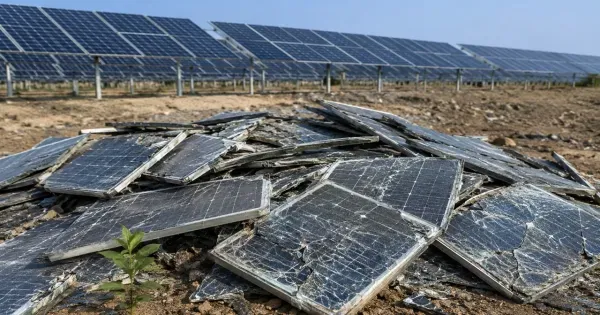
This untimely replacement has increased the pace of arrival of waste. It is estimated that the flood of solar waste which was expected to arrive in 2045 or 2050, has already knocked. If this pace is not controlled, by 2050, more than 60 million tons of photovoltaic panel waste could accumulate in the world's landfills.
According to research by Michael Shellenberger published in Forbes, toxic heavy metals like lead, cadmium, antimony and chromium are used in the manufacturing of solar panels.
When panels are thrown into open fields or general landfills without scientific treatment after the end of their life, these elements can leach into the soil due to rainwater impact. From there they can reach groundwater sources and pollute drinking water and agricultural systems. The research published in 'Science Direct' also indicates that uncontrolled disposal of photovoltaic waste is a long-term threat to the environment and human health and it is necessary to develop effective recycling mechanisms.
This challenge becomes more sensitive in the context of India. According to 'The Risky Side of Solar Energy' report by 'The Economic Times' (Energy World), India is among the countries rapidly expanding solar energy, but its unpreparedness in managing solar waste raises concerns. There is a need for a strict and comprehensive system for the safe disposal of this electronic and solar waste in the country.
An investigative report by Firstpost also warns that expansion of solar power in the absence of a solid waste disposal plan could prove harmful to biodiversity. In rural and semi-urban areas, where huge solar parks are being set up, there is a possibility of unusable panels being left in the open or ending up in the informal scrap market. If they are dismantled unsafely there, local soil, water and ecosystems can be affected.
The biggest obstacle to recycling solar panels is the lack of financial feasibility. Global studies such as GreenMatch have shown that recycling technologies are available and can yield valuable materials such as silicon, aluminum and high-quality glass, but the technical feasibility is hindered by economics.
According to Harvard Business Review, the cost of recycling a solar panel comes to around twenty to thirty dollars, while the market value of the material recovered from it is only around three to four dollars. This economic gap makes recycling an attractive business for private companies. Unless costs come down or governments provide incentives and subsidies, dumping panels may remain the cheaper option. This situation could undermine the environmental benefits of solar energy expansion in the future.
The way out of this environmental dilemma will come only through strong policy intervention and clear accountability. Governments should enact laws that mandate 'Extended Producer Responsibility' for solar manufacturers, as the European Union has done.
This means that the company that manufactures and sells solar panels has a legal responsibility to ensure safe recycling by taking back the panels when they fail or reach the end of their life. Along with this, investment in research and development will have to be increased so that new, cheap and effective recycling technologies can be developed. A robust system will also have to be developed to monitor the entire lifecycle of the panels, from manufacturing to their use and final disposal.
If we continue to ignore this problem today, future generations may remember us as a society that, in an attempt to reduce pollution, created a new and permanent waste crisis associated with it. It is time that we accept this dark side of solar energy and take timely corrective steps, so that the future green revolution does not get buried under the debris of its own failure.
-
Haryana Sikhs call off Aug 25 congregation after meeting with Saini

-
173 UP villages flood-hit; more than 4,000 people shifted to safer locations

-
Labourer sexually harasses two female MBBS interns in Haryana medical college; arrested

-
Woman held for killing truck driver who blackmailed her, setting vehicle on fire in UP's Pilibhit

-
Esports Nations Cup Postponed To November 2027 From 2026 Amid Wider Regional Situation