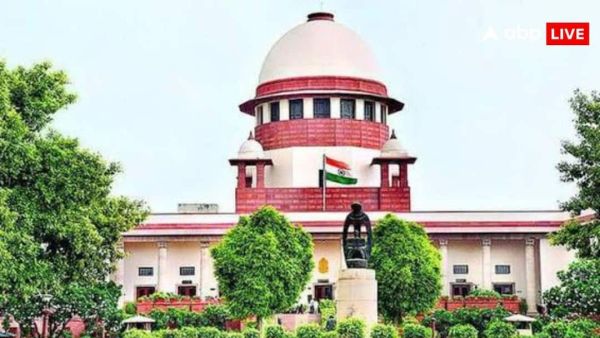
The Supreme Court has refused to replace hanging as India's existing method of carrying out death sentences, leaving the question of adopting alternative methods with the central government.
A bench of Justices Vikram Nath and Sandeep Mehta dismissed a plea seeking a less painful and more dignified method of execution, while holding that hanging continues to remain constitutionally permissible. The court also rejected a request to reconsider three earlier judgments through a larger bench.
The ruling means that hanging will remain the method of execution for death-row convicts in India unless the government decides to introduce a different system.
Plea Challenged Hanging As Cruel And Painful
The petition was filed by advocate Rishi Malhotra, who argued that hanging subjects condemned prisoners to unnecessary pain and does not meet the constitutional requirement of a dignified death. The plea sought alternatives including lethal injection, shooting, electrocution and the gas chamber. It argued that these methods could result in death within a shorter period than hanging.
Describing hanging as "extremely painful, inhuman, and cruel," the petitioner sought to challenge death by hanging under Section 354(5) of the Code of Criminal Procedure (CrPC).
The petition also relied on Article 21 of the Constitution, arguing that the right to life includes a requirement that an execution, where carried out, should respect human dignity.
It cited claims that establishing death following hanging can take nearly 40 minutes, compared with approximately five minutes in cases involving methods such as shooting or lethal injection. The plea also referred to a United Nations resolution stating that, where capital punishment is imposed, it should be carried out in a manner that causes the minimum possible suffering.
Supreme Court Leaves Door Open For Future Review
While declining to interfere with the existing method, the bench clarified that its decision would not prevent the issue from being examined again if significant new scientific or medical evidence emerges.
"Before parting, we clarify that the dismissal of the present writ petition must not be understood as foreclosing future constitutional scrutiny should compelling scientific, medical, or empirical evidence emerge demonstrating that the factual and scientific basis on which the decision in Dina proceeded has been materially displaced by subsequent developments," the court observed.
The judges also said the central government could establish an expert committee to conduct a detailed examination of alternative methods of execution if it considers such a review necessary.
This leaves open the possibility of future changes based on developments in medical science, empirical evidence or other credible research concerning the manner in which executions are carried out.
Centre Had Faced Court's Questions Over Alternatives
Attorney General R Venkataramani, appearing for the Centre, had previously told the court that the government had constituted a committee to examine the issue.
The matter had come under closer judicial scrutiny during a hearing on October 15, 2025. At the time, the Supreme Court had expressed dissatisfaction over what it viewed as the Centre's reluctance to reconsider the existing method.
One suggestion discussed during the proceedings was whether death-row convicts could be given a choice between hanging and lethal injection. The Centre's affidavit, however, described such an arrangement as "not practically feasible".
The government's position had drawn criticism from the bench, which observed that the Centre appeared unwilling to adapt the existing system.
Hanging Remains Constitutionally Valid For Now
The latest ruling preserves the legal position under which hanging remains a valid means of carrying out a death sentence in India.
The bench also declined to refer three earlier judgments concerning the issue to a larger bench, finding insufficient grounds to do so.
The verdict, which had been reserved on January 22 after hearings concluded, was pronounced with the court reiterating that any future challenge could be considered if new and compelling scientific, medical or empirical evidence materially changes the basis on which the existing position rests.
For now, however, the Supreme Court has left any move towards an alternative execution method to the Centre.
-
Four killed as car falls into well in Telangana’s Siddipet

-
7 Dogs directors Adil El Arbi, Bilall Fallah on working with Salman Khan
-
Delhi Schools Asked To Conduct Baseline Tests for Classes 2–8: Check What It Means

-
Scottish Parliament Member Marries Malayali Woman At Kerala Temple

-
‘Don’t leave, it’s not worth it’ - Real Madrid boss Jose Mourinho explains how he stopped Vinicius Junior from joining Arsenal