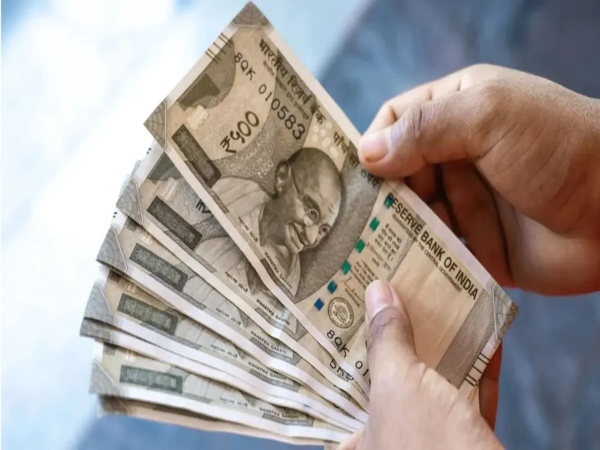
Depositing cash into a savings account is a common practice. However, if a large amount of cash is deposited, it may attract the attention of the bank and the Income Tax Department. Banks are required to report cash transactions exceeding a specified limit to the Income Tax Department. The objective is to monitor large transactions and curb activities such as the use of unaccounted money, tax evasion, or money laundering.
How much cash can be deposited in a savings account?
Under current regulations, if an individual deposits a total of ₹10 lakh or more in cash across one or more savings accounts during a financial year, the bank is required to report this information. This limit applies to the aggregate of all cash deposits made throughout the financial year, rather than just a single transaction.
Keep in mind that depositing more than ₹10 lakh in cash does not automatically mean you will receive a tax notice. However, if necessary, you may be asked to provide information or documentation regarding the source of these funds.
What happens if you deposit more than ₹10 lakh?
Depositing money into a savings account is not taxable in itself. However, if cash deposits reach the specified reporting limit during the financial year, it becomes essential to account for the source of the funds. If the money originated from your salary, business, rental income, shares, or other taxable sources, you may be liable to pay tax in accordance with applicable tax regulations.
Therefore, it is advisable to preserve documents related to large cash transactions—such as salary slips, records of business earnings, rental agreements, or other papers proving the source of funds. This ensures that you can easily explain the origin of the money if required.
PAN required for cash deposits exceeding ₹50,000
If you deposit more than ₹50,000 in cash into a bank account in a single day, providing your PAN is mandatory. If you do not possess a PAN, you are required to submit Form 60 in accordance with the rules. This measure aims to facilitate the tracking of cash transactions and the source of funds. Rules Regarding Cash Receipts of ₹2 Lakh or More
There is another important rule concerning cash transactions. Under Income Tax laws, accepting cash of ₹2 lakh or more from a single person in a single day is prohibited. Splitting the amount across multiple transactions to circumvent this limit is not permitted. Violating this rule can attract a penalty equal to the transaction amount.
Maintain Records of Large Cash Transactions
If your account involves large cash transactions, preserve your bank statements and all related documents. Periodically check your account statement and monitor the total cash deposits and withdrawals made throughout the financial year.
Most importantly, there is no outright ban on depositing cash amounts of ₹10 lakh; this figure primarily serves as a reporting threshold. Therefore, when depositing large sums, it is crucial to maintain accurate records regarding the source of the funds.
Disclaimer: This content has been sourced and edited from TV9. While we have made modifications for clarity and presentation, the original content belongs to its respective authors and website. We do not claim ownership of the content.
-
AI that simplifies tasks is proving heavy on the pocket; costs have reached up to ₹7 lakh per employee..

-
AI-generated content can no longer be hidden! Anthropic introduces a hidden watermark—here’s how it will be detected..

-
Prices won't rise even if recharge costs go up! Jio has relaunched its Prime Membership..

-
Dalal Street Ends Lower As Sensex Declines 490 Points, Nifty Tests 24,200

-
UGC NET 2026 Answer Key Challenge: Objection Window Closes Today For 84 Subjects, How To Raise Objection