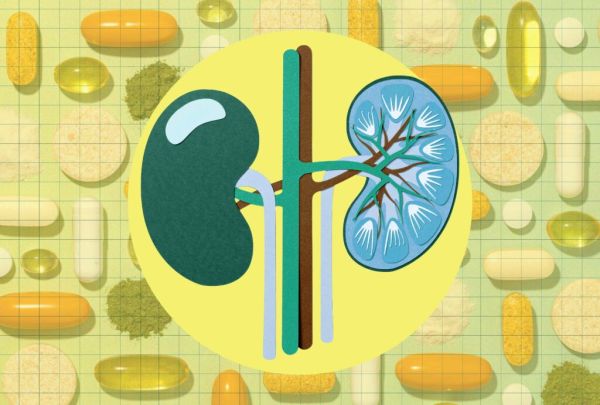
More isn’t always better. Here’s how overdoing supplements can affect your kidneys.
Reviewed by Dietitian Mandy Enright, M.S., RDN, RYT
Key Points
- Supplements help to fill nutrient gaps, but more is not always better, especially for your kidneys.
- Potential risks of too many supplements include kidney injury, kidney stones and mineral imbalance.
- Read labels to limit overlapping on nutrients and choose independently verified supplements.
Your kidneys do more than remove waste from the body. As Nneoma Oparaji, MD, DipABLM, DABOMexplains, they are “part filter, part chemist and part thermostat because they are constantly fine-tuning the blood to keep the body’s internal environment stable.” She adds, “They are the body’s filtration and balancing system that removes waste from the blood whilst carefully regulating fluid and electrolytes.”
Many people take supplements to fill nutrient gaps, support specific health goals or address a deficiency. But taking more supplements than you need isn’t entirely harmless. Instead, taking too many supplements can put your kidneys at risk because of their role in filtering and regulating substances you consume. Here’s what can happen to your kidneys when you take too many supplements, plus how to safely take supplements with your kidneys in mind.
Increased Risk of Kidney Injury
Many herbal or “natural” supplements can actually be the most egregious contributors to kidney injury. “Research consistently shows that supplement- kidney injury is a growing global concern—especially because many people assume ‘natural’ means safe,” shares Jessica Clancy-Strawn, M.A., RDN. Many herbal supplements, such as aloe vera, licorice root and cat’s claw, can directly damage kidney cells, reduce blood flow to the kidneys, contribute to crystal formation or interact with other medications that put extra stress on the kidneys. These effects can lead to acute kidney injuries, chronic kidney disease and long-term scarring, notes Clancy-Strawn.
May Develop Kidney Stones
Two popular supplements that may contribute to kidney stones are calcium and vitamin D. Supplementing with vitamin D increases intestinal calcium absorption, which can increase the amount of calcium excreted in the urine, particularly in people who are susceptible to high urinary calcium. “This raises urinary calcium and creates conditions where calcium crystals can form,” explains Clancy-Strawn. When urine becomes overly concentrated with calcium and other stone-forming substances, such as oxalate or phosphate, crystals can develop and eventually grow into kidney stones.
Calcium carbonate antacids are common supplements used to help with acid reflux or indigestion. Frequent use or high doses can deliver large amounts of elemental calcium that the kidneys must excrete into urine, notes Clancy-Strawn. “When high vitamin D intake and calcium carbonate are used together, the combined effect can further raise urinary calcium and heighten stone risk,” she adds.
May Cause Mineral Imbalance
“Excess supplement use can disrupt the mineral balance the kidneys work to maintain,” says Oparaji. Your kidneys constantly adjust how much calcium, phosphate, potassium and magnesium leave the body through urine to help keep blood nutrient levels within a healthy range. High-dose supplements of some nutrients can shift that balance. “For example, very high intakes of vitamin D can increase calcium levels in the blood and urine, which can lead to calcium deposition in the kidneys and subsequent damage,” explains Oparaji. This risk is especially concerning for people with impaired kidney function, since their kidneys already find it more challenging to eliminate excess minerals, resulting in certain nutrients accumulating.
Taking Supplements with Your Kidneys in Mind
- Avoid “double-dipping”: If you take multiple supplements, Clancy-Strawn recommends reading the labels closely to make sure you’re not getting the same ingredient across multiple products. This can lead to consuming too much of one nutrient.
- Work with a dietitian. Clancy-Strawn suggests working with a registered dietitian who can help you cross-check medications and supplements for interaction and determine what supplement you actually need and for how long.
- Avoid the “more is better” mentality. “More isn’t always better when it comes to supplements, because the extra could either provide no additional benefit or increase the risk of toxicity,” says Oparaji.
- Choose reputable products. “Unlike medications, supplement quality can vary,” says Oparaji, so it’s important to choose supplements that are independently tested and verified by reputable organizations like USP or NSF. These organizations provide assurance that the product contains what’s listed on the label and is tested for contaminants.
Our Expert Take
Supplements can help fill nutrient gaps or address specific health needs, but more isn’t always better. Taking high doses or combining multiple supplements can increase the risk of kidney harm, including kidney stones or kidney disease. Whenever opting to take supplements, make sure to check the label for overlapping ingredients and to ensure they are independently tested. Supplements have a time and place, and working with a qualified health care professional can help you take them safely to minimize damage to your kidneys.
-
Government employees are in trouble! 2% increase in DA

-
Ducky Bhai and Aroob Jatoi break down while recalling difficult legal ordeal

-
Migraine is not just headache, these symptoms can also knock, know when to be careful

-
Daily Tarot Horoscopes For Wednesday, August 19, 2026

-
Eighth Pay Commission's big step on the salary of central employees, application deadline ended