Canberra, August 18 (IANS). Researchers in Australia have used more than 30 years of data to create a new framework to accurately capture the impacts of climate change on the Great Barrier Reef.
This framework measures coral reef degradation over time and allows other researchers to perform a 'health check' of reefs.
“It can be used to measure the impact on reefs of extreme events such as coral bleaching, cyclones and floods,” the University of Sydney (USYD) said in a statement released on Tuesday.
The researchers analyzed data dating back to 1995, focusing on coral cover and algae growth. More coral cover means the reef can support healthy marine life, and more algae indicates poor reef health.
Instead of relying on 'complete coral cover', which varies widely across reef systems, the research team compared each reef to its own historical data collected since the late 1980s, according to information shared by Xinhua.
“A reef with 30 percent coral cover in one location may be considered healthy, but in another location it may be a sign of significant decline,” said Kate Whitten, a USYD PhD candidate and lead author of the study published in Marine Environmental Research.
The study created three ecological categories for the reef: healthy, struggling and threatened.
Whitten said this framework can help scientists identify reefs at risk and recommend timely actions to aid recovery.
It found that when coral cover falls below about 65 percent of historical maximum levels, reefs typically go into conflict. At the same time, a fall below 35 percent was associated with a dangerous state. In this stage, algae proliferate and reef-forming corals decline drastically.
The researchers also found that corals with complex shapes were more likely to be affected than simple round corals. This flattens reefs, reduces hiding places for fish, and reduces protection from storm surges. This makes it difficult for organisms to thrive and corals to grow back.
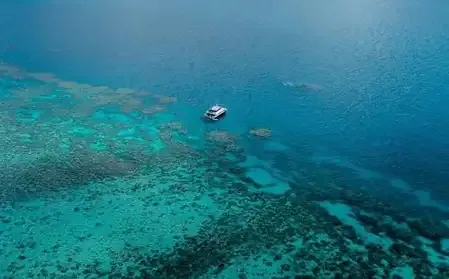
The Great Barrier Reef is the world's largest coral reef system, located in the Pacific Ocean off the north-eastern coast of Australia. It covers an area of more than 2,300 km and includes more than 2,900 isolated reefs as well as 900 islands. It can also be seen from space.
–IANS
KK/ABM
-
Scared of Snakes This Monsoon? Here’s How to Keep Them Away During Monsoon

-
Delhi News: Get Cinema Hall Licence in Just One Click, New SOP Implemented

-
Vande Mataram row: BJP slams Congress over alleged insult to song

-
IAMGAME 2026 to blend sports business and culture with Sports Fest

-
Mangaluru Vande Bharat Trial At Yedakumeri Ghat,Someshwar Railway Gate Closed; Check Alternate Route