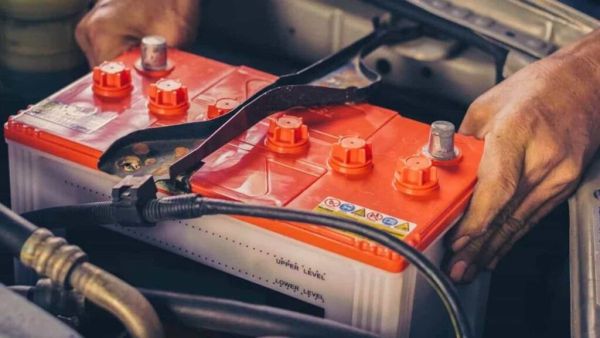
Automobile Desk: As soon as you start the car, if the lights on the dashboard dim or you only hear a 'click' sound instead of whirring engines, then understand that the battery has failed. Frequently discharging batteries can give headache to any vehicle owner. Usually, people consider it as old age of the battery and buy a new one, but every time the fault is not only in the battery. If you are also troubled by this problem again and again, then get some important parts checked immediately.
White or light blue powder deposited on the positive and negative points (Terminals) of the battery can cause your entire electrical circuit to fail. Over time, rust occurs due to moisture and chemical reactions. This layer blocks the path for electricity to reach the battery from the alternator. The result is that the battery is not fully charged even while running. Periodic cleaning and greasing of the terminals can eliminate this blockage.

The alternator does the actual work of providing energy to the battery while the vehicle is running. If the alternator's belt is loose or its internal components become weak, it will not be able to produce sufficient voltage. With this, the car will run only on the remaining power of the battery until it is completely empty. If the battery is discharging even though it is new, the most important step is to get the alternator tested with a multimeter by an expert mechanic.
Often, even after switching off the vehicle, some electrical components continue to secretly absorb electricity, which is called parasitic drain in automobile technology. Accidentally left on cabin light, glove box light, or aftermarket sound system, GPS tracker and dashcam are the main culprits. If the vehicle discharges on its own after being parked for two-three days, re-check for any leakage in the wiring or connections of aftermarket accessories.
If your car usage is limited to trips to the nearest shop or short trips of 1-2 kilometres, the battery lifespan reduces rapidly. Starting the car consumes the most power, and the alternator needs at least 15 to 20 minutes of continuous driving to recover it. Additionally, extreme heat dries out the electrolyte liquid inside the battery and extreme cold slows down chemical reactions, reducing power output.
The average lifespan of a typical lead-acid car battery is considered to be 3 to 5 years. If your battery has exceeded this time limit, its charge holding capacity (ability to hold electricity) starts to naturally lose. In such a situation, instead of jump-starting again and again, get the health and load capacity of the battery checked from an authorized center. Just resorting to jump starting without getting to the root of the problem can get you into big trouble on a deserted road.
-
Soon, two new international-standard golf courses in Telangana

-
Two peacekeepers killed as AU condemns South Sudan attack

-
25 from Telangana missing in Nepal floods as count rises

-
H1N1 Cases Surge In India: Delhi, Karnataka, Maharashtra Among States Seeing Rise In Swine Flu

-
Taylor Swift donates $50,000 to injured Rhode Island mother