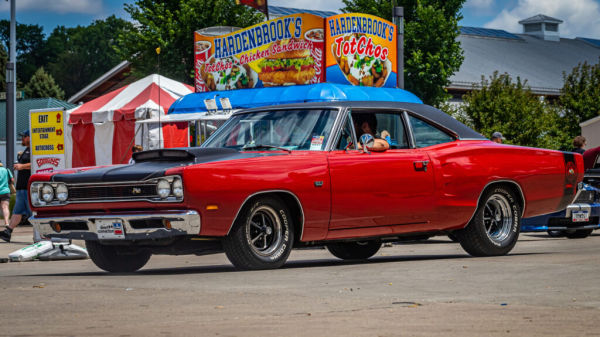
The title of Mopar’s “Blue Collar” muscle car goes to the Dodge Super Bee, which started out as a high-performance version of the 1968 Dodge Coronet. The car evolved into its own model that ran in the Dodge lineup from 1969 until it was cancelled after the 1971 model year. The Super Bee was Dodge’s answer to the problem of how to sell a muscle car to working class customers while keeping the vehicle’s cost down and the payments affordable. While the Plymouth Road Runner would compete directly with the Dodge Super Bee for Mopar customers, the shorter-lived Super Bee has become just as much of a collector’s item, with models today going for as much as $135,000.
Dodge was looking for a low-cost way to put together a muscle car that wouldn’t break the bank for their blue collar customers. The company initially based the Super Bee on the inexpensive but sturdy midsize Dodge Coronet’s pillared sedan body. By keeping the interior basic and minimizing the number of options, Dodge was able to keep the Super Bee’s price down. The Super Bee name took Dodge’s Scat Pack marketing to the next level. The vehicle had all of the hallmarks of a muscle car, even at its intentionally low price — a long hood, plenty of blacked-out areas on the body, “bumblebee” stripes around the rear, hood scoops, wide tires, and intensely bright colors like Plum Crazy and HEMI Orange that signaled the intent to be loud, proud, and competitive. For 1969, a pillarless two-door body style joined the lineup.
What powered the Dodge Super Bee and how did it perform?
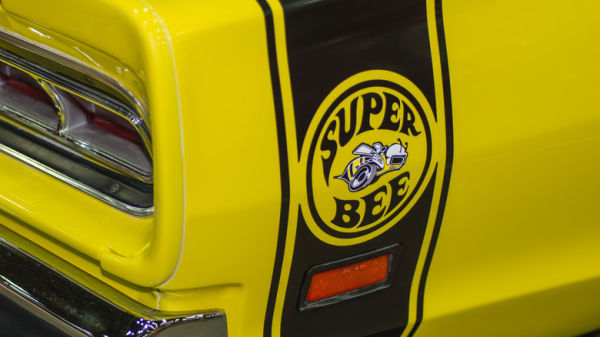
The 1968 Dodge Super Bee’s standard engine was a 335-horsepower version of the 383 V8, which used the camshaft, induction system, and cylinder heads from the larger 440 V8. You could get a street version of the 426 HEMI engine for $1,000, but most customers left that box unchecked. For 1969, the famed Dodge 440 Six Pack was added, using three Holley two-barrel carbs to produce 390 horses for a more reasonable $460 cost, making the Super Bee one of the six legendary muscle cars built with the 440 Six Pack.
In 1970, the Coronet was restyled, resulting in some cosmetic changes. The following year it was discontinued; the Super Bee became a low-cost performance version of the redesigned Charger. This would be the last year for the Super Bee, not counting the 2007-09 attempt to revive it on the recent Charger platform. A total of just around 56,000 Super Bees were made during its four years of production, making them fairly rare compared to most other mass-market muscle cars.
In a July 1969 road test in Car Life magazine, a 1969 Dodge Super Bee with the 440 Six Pack engine did 0-60 mph in a scorching 6.3 seconds, with the quarter-mile flashing by in 13.8 seconds at 104.2 mph. That’s pretty impressive performance, even for the peak of the muscle car era.
The 1968 to 1971 Dodge Super Bee was a key part of the democratization of muscle cars. Rides like these were affordable for working-class people who wanted high-performance vehicles, but still needed a monthly payment that they could handle.