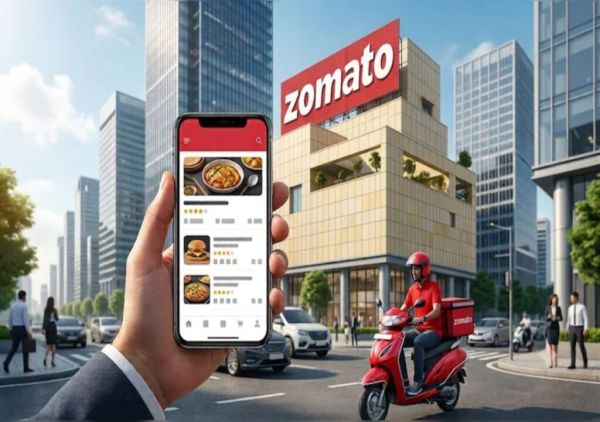
New Delhi: Food delivery orders on Zomato could become more expensive as the platform faces higher costs from restaurant partners, delivery operations and other components of its business. The potential increase comes as India’s food-delivery sector looks for ways to protect margins while managing rising operating expenses.
According to the report, customers could end up paying ₹10 to ₹30 more per order, depending on the order value and other applicable charges. The increase is not necessarily a uniform fee hike for every customer, but could result from changes in the way different charges are applied to food-delivery orders.
Why Zomato orders could become more expensive
Food-delivery platforms operate with several cost components beyond the price of the meal.
An order can include restaurant prices, platform or service fees, delivery charges, taxes and other applicable costs. Even relatively small increases in individual components can raise the final amount paid by customers.
The latest development comes as Zomato continues to focus on improving the economics of its food-delivery business.
For customers, an additional ₹10 to ₹30 may appear modest on an individual order. However, frequent users could notice a meaningful difference in their monthly spending.
Restaurant costs remain a key factor
Restaurants are an important part of the food-delivery ecosystem and have been pushing for better economics as operating costs rise.
Food-delivery platforms need to balance the demands of restaurants with customer expectations around pricing and discounts.
If restaurant partners increase menu prices or pass higher costs on to delivery orders, customers could see a higher final bill even without a direct increase in Zomato’s delivery fee.
This makes the pricing of a food-delivery order more complicated than simply looking at the listed price of a dish.
Customers may pay more for convenience
Zomato’s service is built around convenience, allowing customers to order food without travelling to a restaurant.
That convenience comes with delivery and platform- costs.
As companies attempt to improve profitability, some of these costs may increasingly be passed on to customers.
The potential ₹10-30 increase could therefore represent part of a wider shift in the food-delivery industry, where platforms are trying to make each order financially more sustainable.
Zomato’s focus on profitability
The Indian food-delivery market has matured considerably from the period when platforms prioritised rapid customer acquisition and heavy discounts.
Zomato now has greater incentive to ensure that each order generates a healthy contribution after accounting for delivery and other expenses.
Higher fees or changes to order-level charges can help improve revenue without requiring the company to significantly increase headline food prices.
However, there is a limit to how much customers are willing to pay.
If delivery becomes too expensive compared with eating at a restaurant or ordering directly, customers may reduce their use of the platform.
Impact could vary between orders
The reported ₹10-30 increase should not be interpreted as a fixed additional charge that every Zomato customer will necessarily pay.
The actual impact can depend on factors such as:
- Order value
- Delivery distance
- Restaurant pricing
- Applicable platform fees
- Offers and discounts
- Taxes and other charges
- Customer membership or subscription benefits
A customer placing a small order could therefore experience a different increase from someone ordering a larger meal for a family.
Small orders could be affected more
Low-value orders are particularly sensitive to additional fees.
For example, a ₹200 meal becoming ₹220 or ₹230 represents a much larger percentage increase than the same ₹20 addition to a ₹1,000 order.
This is why platforms frequently use minimum order values, delivery charges and other pricing mechanisms to encourage customers to place larger orders.
Zomato’s pricing strategy could similarly encourage users to increase their basket size.
The rise of quick commerce adds competition
Zomato is also operating in a broader environment where consumers increasingly have access to rapid delivery through quick-commerce platforms.
Apps such as Blinkit and Zepto have expanded beyond groceries into food and other categories, increasing competition for consumers’ convenience spending.
This makes pricing particularly important.
Customers can compare the total cost and convenience of different services before deciding where to spend their money.
Delivery partners remain central to the model
Delivery expenses are another major component of food-delivery economics.
Platforms need to maintain a large network of delivery partners while ensuring sufficient availability during peak periods.
Fuel, vehicle maintenance and changing working patterns can affect the economics of last-mile delivery.
Any sustained increase in these expenses can place pressure on platforms to adjust customer-facing charges.
What it means for Zomato users
For regular customers, the most noticeable impact could be a gradual increase in the final checkout amount.
A user who orders several times a week could potentially spend hundreds of rupees more over a month if the additional charges apply consistently.
Customers may respond by:
- Combining orders to increase basket value
- Ordering less frequently
- Choosing restaurants with lower delivery charges
- Using discounts and membership benefits
- Comparing prices across competing platforms
The actual consumer response will depend on how the additional cost is structured.
Will every order become ₹30 more expensive?
Not necessarily.
The reported increase of ₹10 to ₹30 represents a potential range rather than a universal surcharge.
Different customers can face different charges based on the structure of their individual orders.
Therefore, users should check the final checkout breakdown rather than assume that every order will automatically become ₹30 more expensive.
Industry economics are changing
The potential increase reflects a broader trend across India’s food-delivery industry.
Companies that once competed heavily through discounts are increasingly looking for sustainable revenue models.
This has resulted in greater attention to platform fees, delivery charges, membership programmes, restaurant commissions and order values.
The challenge for Zomato is to improve profitability without damaging customer demand.
A delicate balance for Zomato
Increasing charges can immediately improve revenue per order, but excessive pricing could reduce order frequency.
Zomato therefore has to find a balance between charging enough to cover rising costs and keeping the platform attractive to customers.
Restaurants face a similar challenge.
Higher prices can improve margins, but customers may switch to alternatives if the overall bill becomes too high.
Conclusion
Zomato food-delivery customers could see their orders become ₹10 to ₹30 more expensive, according to the report, as the company and its restaurant partners navigate rising costs and the industry’s growing focus on profitability.
The increase does not necessarily mean that Zomato will impose a flat ₹10 or ₹30 fee on every order. The actual impact can vary depending on order value, delivery distance, restaurant pricing, platform charges, discounts and other factors.
For frequent users, even relatively small increases can add up over time. Zomato’s challenge will be to improve order economics while ensuring that customers continue to view food delivery as a worthwhile convenience.
-
Ought to have resigned: Bombay Bar Association on BCI Chairman

-
6 budget defenders you must consider for your 2026-27 FPL team: Shaw, Van Hecke and more

-
Kozhikode Crime: Bus Ride Turns Uncomfortable As Harassment Suspect Is Nabbed

-
MDMA Smuggling: Family Setup Busted In Kerala With Drugs Hidden Inside Car Stereo!

-
Alappuzha Suicide: Woman’s Bridge Jump Leaves Tragic Scene In Backwaters!