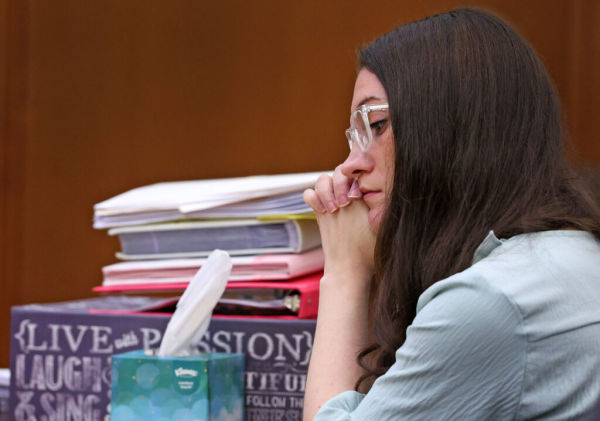
Lindsay Clancy Was ‘Begging for Help’ Before Children’s Deaths, Witness Says/ TezzBuzz/ WASHINGTON/ J. Mansour/ Lindsay Clancy was “begging for help” and experiencing worsening anxiety, paranoia and suicidal thoughts before killing her three children, her former mother-in-law testified. The defense argues Clancy lacked criminal responsibility because she had postpartum psychosis, while prosecutors say she planned the January 2023 killings and understood her actions. A murder conviction would bring life imprisonment without parole, while a finding of no criminal responsibility would result in commitment to a state mental health facility. Content note: This story discusses suicide. In the United States, call or text 988 for the Suicide & Crisis Lifeline.
Quick Look
- Susan Clancy testified for the defense Tuesday.
- She said Lindsay Clancy was “begging for help.”
- She described Clancy as a “wonderful mother.”
- Clancy killed her three children in January 2023.
- Her lawyers do not dispute that she committed the killings.
- Clancy attempted to end her life and was left paralyzed.
- The trial focuses on her mental state and criminal responsibility.
- The defense says she experienced postpartum psychosis.
- Her attorney says she also had bipolar disorder.
- Prosecutors argue she planned the killings.
- Family members described worsening anxiety and paranoia.
- Clancy reported daily suicidal thoughts for a month.
- She disclosed thoughts of harming her children in December 2022.
- Clancy had sought psychiatric treatment before the killings.
- Doctors said they did not observe mania or psychosis.
- A murder conviction would mean life without parole.
Deep Look
Former mother-in-law testifies for defense
BOSTON — Lindsay Clancy was “begging for help” during the months before she killed her three children and attempted to end her own life, her former mother-in-law testified Tuesday.
Susan Clancy appeared for the defense during the fourth week of the murder trial in Plymouth Superior Court.
Her testimony followed similarly emotional accounts from Lindsay Clancy’s mother and sister, who described a severe deterioration in her mental health beginning in fall 2022.
Susan Clancy describes a loving mother
Susan Clancy, like her former daughter-in-law, worked as a labor and delivery nurse.
Susan is the mother of Patrick Clancy, who discovered the couple’s children in the basement of their Massachusetts home in January 2023.
Lindsay Clancy also attempted to take her own life that night and was left paralyzed.
Lindsay and Patrick Clancy have since divorced.
Text messages show fear of medication
Susan Clancy testified that Lindsay spoke openly about her mental health struggles and asked for support.
Jurors saw text messages in which Lindsay expressed concern that she had become dependent on benzodiazepines.
She also said she was unable to sleep without taking the medication.
Trial focuses on criminal responsibility
Clancy’s attorneys do not dispute that she killed her children.
The central question is whether her mental condition prevented her from being criminally responsible at the time.
The defense argues that she was suffering from postpartum psychosis.
Prosecutors maintain that Clancy understood her actions, planned the killings and deliberately created an opportunity to be alone with the children.
Mother describes anxiety and paranoia
Lindsay Clancy’s mother, Paula Musgrove, testified Monday that she frequently stayed with her daughter from October through December 2022.
Musgrove lived in Connecticut and traveled to Massachusetts as Lindsay’s condition worsened.
She said her daughter became afraid to sleep alone and increasingly paranoid.
According to Musgrove, Lindsay believed the medications she was taking “were destroying her mind.”
Sister recounts daily suicidal thoughts
Lindsay’s sister, Allison Ozga, described a similar decline.
Ozga testified that Lindsay disclosed at the end of December that she had experienced suicidal thoughts every day for a month.
The account supported the defense’s argument that Clancy’s mental illness was serious and worsening before the deaths.
Doctors who treated her acknowledged that she repeatedly reported feeling suicidal, although they said they did not observe symptoms of mania or psychosis.
Clancy disclosed thoughts of harming children
Musgrove recalled a particularly alarming conversation in December.
She was standing in the kitchen with Lindsay and Patrick when her daughter appeared nervous and said she needed to disclose something.
The defense presented the statement as evidence that Clancy had warned relatives about dangerous thoughts and needed more intensive treatment.
Prosecutors allege advance planning
Prosecutors argue that Clancy planned the Jan. 24, 2023, killings.
They contend that she intentionally sent Patrick away from the home to pick up takeout food and visit a pharmacy.
The state has used that sequence to argue that she created time alone with the children and understood the nature of her actions.
Prosecutors have also questioned the seriousness of her subsequent suicide attempt.
Defense cites postpartum psychosis
Defense attorney Kevin Reddington says Clancy should not be held criminally responsible because she experienced postpartum psychosis.
The rare condition can be associated with hormonal changes, severe sleep disruption and the psychological stress following childbirth.
Reddington also said Clancy had bipolar disorder.
He argues that antidepressants prescribed after the birth of her third child worsened her condition.
Clancy sought psychiatric treatment
Jurors previously heard evidence that Clancy sought help for severe mental health problems.
She admitted herself to a psychiatric hospital but did not always take prescribed medications for insomnia, anxiety and depression.
The defense argues she was overmedicated while receiving fragmented treatment from providers who did not communicate effectively or share medical notes.
Clancy was discharged from one treatment facility after a single day.
Another facility denied her a higher level of care because she could not demonstrate that she had a specific suicide plan.
Doctors did not observe psychosis
Clancy’s doctors testified that they never witnessed clear signs of mania or psychosis.
However, she repeatedly discussed suicidal feelings with healthcare professionals and relatives.
The conflict between her reported thoughts and the symptoms observed by clinicians is central to the competing arguments.
The defense says her illness was missed or inadequately treated, while prosecutors argue the evidence does not establish that psychosis controlled her actions.
State highlights normal activities
Prosecutors introduced photographs and text messages showing that Clancy completed ordinary family activities on the day of the killings.
She took her children to a doctor and played with them in the snow.
The state argues that those activities demonstrate planning, awareness and organized behavior.
The defense maintains that outwardly normal conduct does not rule out a severe psychiatric illness.
Patrick Clancy recounts returning home
Prosecutors played a seven-minute emergency call for the jury, though the recording was not released publicly.
During the call, Patrick first checked on Lindsay in the backyard before going into the basement.
Verdict determines prison or treatment
If convicted of murder, Lindsay Clancy faces life in prison without the possibility of parole.
If jurors find her not guilty because she lacked criminal responsibility, she would be committed to a state mental health institution.
The trial therefore centers not on who committed the killingsbut whether Clancy’s psychiatric condition legally prevented her from understanding or controlling her actions.
More on US News
-
Kozhikode Crime: Bus Ride Turns Uncomfortable As Harassment Suspect Is Nabbed

-
MDMA Smuggling: Family Setup Busted In Kerala With Drugs Hidden Inside Car Stereo!

-
Alappuzha Suicide: Woman’s Bridge Jump Leaves Tragic Scene In Backwaters!

-
Police Attack: Fight Call Takes Shocking Turn As Drunk Man Attacks Cops!

-
Trivandrum Scam: Professor Duped Of Rs 1 Lakh In Fake Policy Renewal Fraud!