
India's realty sector is set to remain resilient despite geopolitical tensions, says CareEdge. While construction costs may rise 2-3%, strong office leasing and developer balance sheets are expected to cushion near-term pressures.
India's real estate sector is expected to remain broadly resilient despite geopolitical uncertainty arising from the West Asia crisis, with healthy demand, strong developer balance sheets and robust office leasing likely to cushion near-term pressures. However, prolonged elevated crude prices could raise construction costs by 2-3 per cent and weigh on affordable housing and highly leveraged developers, according to a report by CareEdge Ratings.
Uneven Impact Across Segments
The rating agency said in a research report that the impact of the crisis has been uneven across segments. While affordable housing and project execution are facing cost pressures, office leasing remains supported by strong Global Capability Centre (GCC) demand, while industrial and warehousing real estate continues to benefit from structural growth drivers.
Residential Sector Shows Premiumisation Trend
CareEdge expects residential unit sales in the top six cities to remain broadly range-bound at around 3.55 lakh units in CY2026. Premium and luxury housing is likely to remain relatively resilient, supported by high-net-worth individuals, affluent domestic buyers and non-resident Indians, while affordable housing could face greater pressure from inflation, higher construction costs and affordability constraints. The residential sector has already witnessed a structural shift towards premiumisation. Homes priced above Rs 1.5 crore accounted for 53 per cent of new launches in Q1 2026, compared with 43 per cent a year earlier. In contrast, the share of homes priced below Rs1.5 crore declined to 47 per cent from 57 per cent.
Developers, however, are entering the uncertain period with stronger balance sheets. The debt-to-collections ratio of the top 13 residential developers declined sharply from 1.80 times in FY20 to 0.68 times in FY26, while bookings exceeded Rs 1.5 lakh crore and collections crossed Rs 90,000 crore in FY26.
Office Segment Remains a Growth Pillar
The office segment is expected to remain a key pillar of growth. Grade A office absorption in the top six cities is estimated at more than 90 million sq ft in CY2026, supported by GCC expansion, long-term leases and healthy occupancy. Listed office REIT occupancy stood at about 92 per cent in FY26 and is expected to remain above 90 per cent in FY27. Meanwhile, institutional investment remained strong at $3.5-4 billion in H1 2026, the highest H1 inflow since the pandemic.
Long-Term Growth Drivers
CareEdge said urbanisation, infrastructure expansion, manufacturing investments and GCC growth should continue supporting the sector over the longer term. (ANI)
(Except for the headline, this story has not been edited by Asianetnews Editorial staff and is published from a syndicated feed.)-
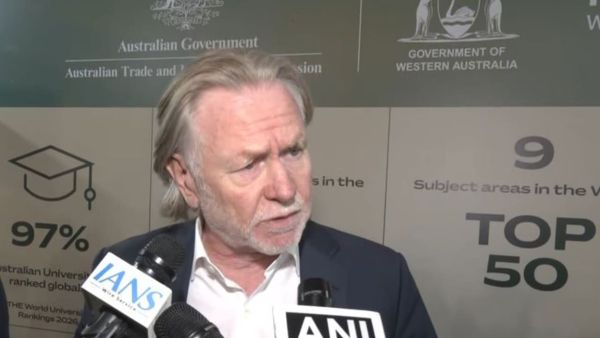
Australia a remarkable destination for Indian students: Philip Green
-
Revanth Reddy-Konda Family Rift: Notice to Surekha over Daughter

-
Graham Staines murder: SC directs Odisha board on Dara Singh’s plea

-
Trump Pauses 50% Canada Tariff, Signals Keystone XL Revival: SPY, QQQ Traders Eye Relief Rally

-
Manav Suthar’s 10-wicket haul guides India to 165-run win vs Sri Lanka