
8th Pay Commission Salary Hike: The biggest question on the minds of central government employees and pensioners these days is how much their salaries will rise once the 8th Pay Commission is implemented. While most people view this primarily through the lens of the 'fitment factor' and Dearness Allowance (DA) figures, the decision regarding a historic salary hike actually hinges on a 'special factor.' If this formula is approved, we could see a record increase of up to 283% in the minimum basic salary.
This 'master factor' involves a significant change in the calculation of the 'family unit.' Let us understand how this new formula will alter your in-hand salary.
What is a 'family unit,' and how was your salary determined until now?
To determine the minimum salary for employees, the Pay Commission adheres to the norms established by the 15th Indian Labour Conference (ILC) of 1957. Up until the 7th Pay Commission, the government calculated the minimum basic pay by factoring in the expenses for only three units within a family:
Employee: 1 unit
Spouse: 1 unit
2 children (0.5 + 0.5): 1 unit
Total: 3 units
Based on this 3-unit formula, the 7th Pay Commission introduced a fitment factor of 2.57, raising the minimum basic salary from ₹7,000 to ₹18,000.
New proposal for 5 units under the 8th Pay Commission
Employee unions are demanding that dependent parents also be included in the definition of the family. The calculation of units under the new proposal is as follows:
Employee: 1 unit
Spouse: 1 unit
2 children (0.8 + 0.8): 1.6 units
Dependent parents (0.8 + 0.8): 1.6 units
Total: 5.2 units (rounded off to 5 units)
3 vs. 5 units: How much will your salary change? Let’s assume that, given today's cost of living, the minimum monthly living cost for an individual—covering groceries, clothing, electricity, house rent, children's education, and medical expenses—comes to approximately ₹13,800:
Using the old 3-unit formula: 3 × ₹13,800 = ₹41,400 (Estimated minimum basic salary)
Using the proposed 5-unit formula: 5 × ₹13,800 = ₹69,000 (Proposed minimum basic salary)
It is evident that simply by including the expenses for parents (adding 2 extra units), the employees' basic pay would increase by an additional ₹27,600 per month!
With a fitment factor of 3.83, a basic salary of ₹18,000 would become ₹69,000.
The fitment factor is a multiplier used to calculate the new basic pay by multiplying it with the old basic salary. If the 5-unit formula is implemented, the fitment factor will rise to 3.83.
Here is how the calculation works (Level-1 employee):
Current basic salary: ₹18,000
New formula: Current basic pay × Fitment factor
New basic salary: ₹18,000 × 3.83 = ₹68,940 (approximately ₹69,000)
In other words, once the 5-unit rule is passed, the basic pay will jump from ₹18,000 straight to ₹69,000. Allowances such as DA (Dearness Allowance), HRA (House Rent Allowance), and others will be added on top of this.
Employee unions have presented these 3 strong legal arguments:
The National Council of JCM (NC-JCM) has put forward solid legal grounds before the 8th Pay Commission for the implementation of the 5-unit formula:
Senior Citizens Act: Under the 'Maintenance and Welfare of Parents and Senior Citizens Act,' caring for elderly parents is a legal and moral responsibility of the employee. Social Security Code 2020: The new labor codes have also officially included dependent parents in the definition of an employee's family.
Landmark Supreme Court rulings: The apex court (in the 1991 ruling and the Bhupendra Nath Hazarika case) has clearly stated that the government should pay its employees a salary that enables them to lead a 'life of dignity,' rather than one that merely allows for 'bare survival.'
Disclaimer: This content has been sourced and edited from Money Control. While we have made modifications for clarity and presentation, the original content belongs to its respective authors and website. We do not claim ownership of the content.
-
Monsoon fashion: Right choice of cotton and rayon

-
Brides are divided over whether to wear fitness trackers at their weddings

-
“There is no place for a poor lawyer like me…” When the lawyer started crying bitterly in front of the CJI in the Supreme Court
-
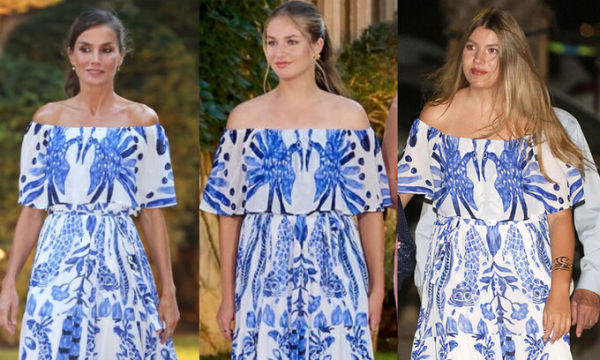
Spain’s Infanta Sofía wears dress previously seen on Queen Letizia and Princess Leonor
-
What gift to give on Rakshabandhan? Choose special gift for brother or sister according to zodiac sign